 Claire
There is a play running right now at the La Jolla Playhouse in San Diego. It is called The Recipe, and it has just been extended through March 29 because it keeps selling out.
It is not about the Julia Child you think you know.
It is not about the TV show or the warbling voice or the chicken that fell on the floor. It is about a woman in her twenties who had no idea what she wanted to do with her life. Who got rejected from the military for being too tall. Who drifted through New York, tried advertising, got fired. Who was still figuring things out at an age when most people around her had already settled down.
I read that and thought: that is the Julia Child I wish more people knew about.
What Is “The Recipe” About?
The play was written by Claudia Shear, a two-time Tony Award nominee who spent years researching Julia’s early life. She read the letters, the diary entries, studied photographs that most people have never seen. The script is based partly on Bob Spitz’s biography Dearie, but Shear went far beyond it.
Christina Kirk plays Julia. Norbert Leo Butz, a two-time Tony winner, plays Paul Child. Every review mentions their chemistry. One critic called their marriage the show’s secret sauce. Another described Kirk as gangly, exuberant, stubborn, and deeply human in her flashes of self-doubt.
The play follows Julia from Pasadena to Smith College, through her work with the OSS during World War II, to Ceylon where she met Paul, and finally to Paris, where she walked into a restaurant and ate a sole meunière that changed everything.
That last part is the moment I always come back to.
The Meal That Changed Her Life
Julia was 36 years old when she and Paul arrived in France in 1948. She had never cooked anything remarkable. She had never been to culinary school. She had spent most of her twenties and thirties trying to figure out what she was supposed to be doing.
And then, in Rouen, on the way to their new home in Paris, they stopped for lunch. The restaurant served sole meunière. A filet of sole, lightly floured, cooked in foaming butter, finished with lemon and parsley.
Julia described it later as a kind of awakening. Not just the flavor, but the idea that food could be this. That a simple fish could be prepared with such care and attention that it became art.
She enrolled at Le Cordon Bleu shortly after. She was the only woman in a class full of former GIs on the GI Bill. Madame Brassart, the head of the school, was not impressed by the tall American lady. Julia did not care.
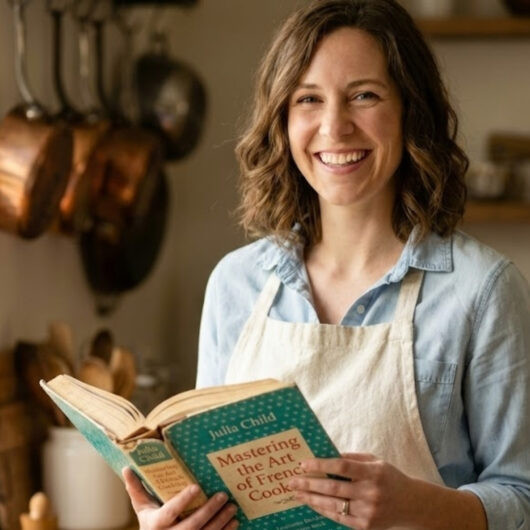
I think about her sometimes when I am standing in my kitchen, attempting something new and feeling ridiculous about it. Julia was 37 before she ever cooked a serious meal. She was 49 when Mastering the Art of French Cooking was finally published. She was 51 when she appeared on television for the first time.
There is no such thing as too late.
The Recipes That Came From That Journey
What makes the play meaningful to me as someone who cooks from Julia’s books almost every week is that you can trace a direct line from the events onstage to the recipes sitting on my shelf.
That sole meunière in Rouen led to everything that followed. Without it, there is no Cordon Bleu. Without Cordon Bleu, there is no partnership with Simone Beck and Louisette Bertholle. Without that partnership, there is no Mastering the Art of French Cooking. And without that book, there is no boeuf bourguignon, no coq au vin, no French onion soup the way Julia taught us to make it.
Every one of those recipes exists because a 36-year-old woman who had never cooked anything sat down in a French restaurant and thought: I want to learn how to do this.
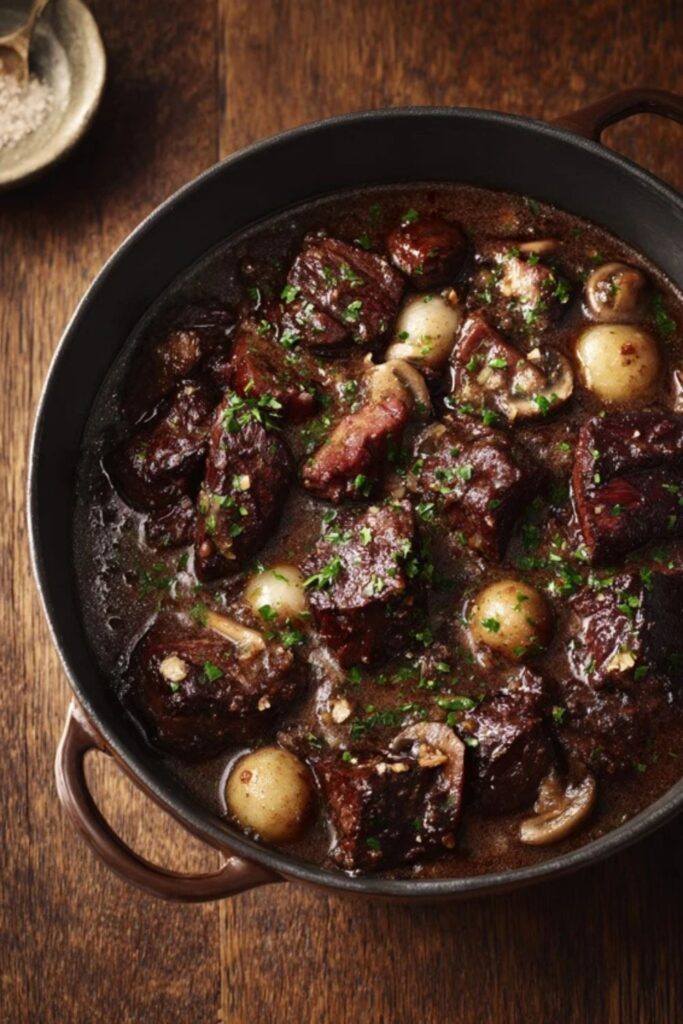
If you have never made Julia’s beef bourguignon, it is the recipe I would start with. Not because it is the easiest, but because it is the one she cared about most. Page 315 of Mastering the Art. My copy has butter stains on that page from years of returning to it. The key is browning the beef in batches until each piece has a proper crust, and then being patient enough to let it braise for three hours until the sauce reduces into something almost impossibly rich.
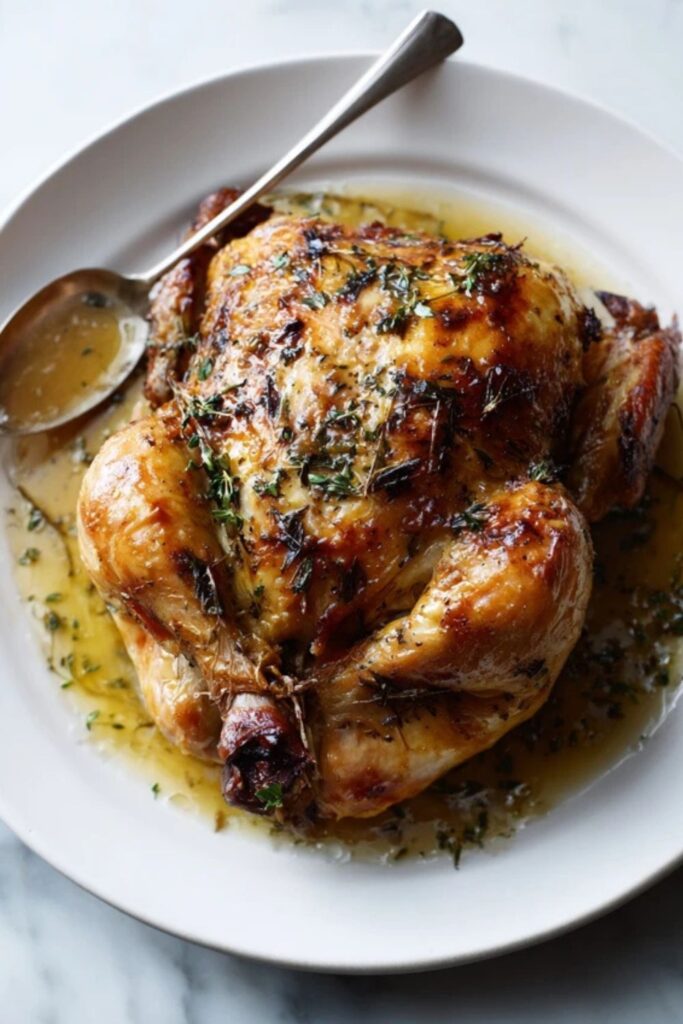
Her roast chicken is the one I make when I want to feel competent. It is also the recipe Paul probably ate more than any other. Julia believed a properly roasted chicken was the true test of a cook. No sauce to hide behind. Just heat, butter, salt, and technique.
And the French onion soup is the recipe I think Julia would have eaten at those small Parisian restaurants she and Paul loved. The kind of food that feels simple but requires real care to get right. Caramelizing onions slowly for 40 minutes until they are sweet and dark. Building the broth with good stock and a splash of cognac. The gruyère on top, melted and bubbling under the broiler until it is almost burnt at the edges.
What the Play Gets Right
I have not seen The Recipe in person. San Diego is a long way from Massachusetts. But I have read every review I can find, and the thing that keeps coming through is how honest it is about Julia’s struggles.
She did not just walk into a kitchen and become Julia Child. She fought for it. She was rejected by publishers. She argued with her co-authors. She battled self-doubt constantly. The play apparently handles this without sentimentality, which is exactly how Julia would have wanted it.
One review described a moment near the end where Christina Kirk steps in front of a camera and transforms into the mature Julia Child we remember. Apparently the audience gasped. After two and a half hours of watching this woman struggle and push and refuse to give up, seeing her finally become the person the world would know must hit differently than any documentary or biopic ever could.
The play also digs into her marriage with Paul in a way that feels real. He was the one who introduced her to good food. He photographed dishes for her cookbooks. He supported her when everyone else doubted her. Their partnership lasted nearly fifty years. If you want to know more about their life together, I wrote about the homes they shared and Julia’s surprising wartime career.
Why This Matters Now
Julia Child has been dead for more than twenty years. There have been films, an HBO series, a Food Network competition, and now a play. People keep telling her story because it keeps being relevant.
A woman who did not find her calling until her late thirties. Who faced rejection and kept going. Who insisted that cooking should be joyful, never intimidating. Who made mistakes on camera and laughed them off.
In a time when most cooking content is designed to look perfect and perform well on algorithms, Julia’s approach feels almost radical. She was messy. She was real. She was more interested in whether the food tasted good than whether the photograph looked right.
I think that is why The Recipe is selling out.
If you are near San Diego before March 29, tickets are available at La Jolla Playhouse. If not, you can do what I am doing this weekend: pull Mastering the Art of French Cooking off the shelf, turn to page 315, and cook the dish that started it all.
Have you seen the play, or have you been cooking Julia’s recipes for years? I would love to hear which recipe first made you fall in love with her cooking. Leave a comment I read every one.