 Claire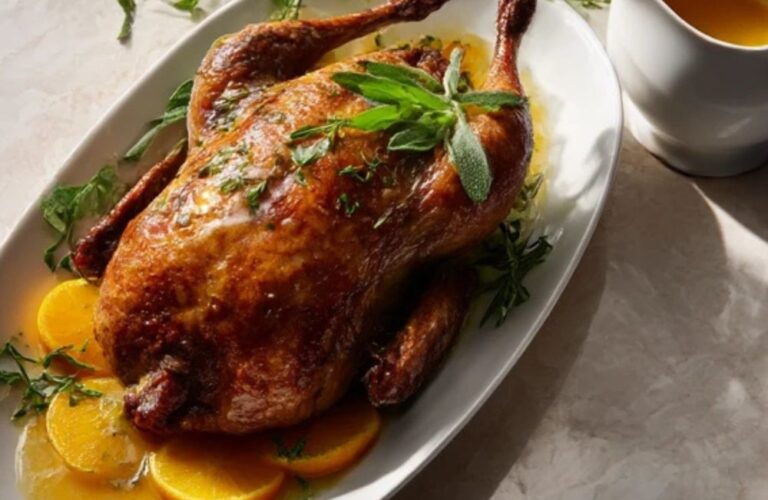
Prep Time: 45 minutes (plus 2 hours for stock) | Cook Time: 1 hour 45 minutes | Total Time: About 4 hours | Serves: 5-6
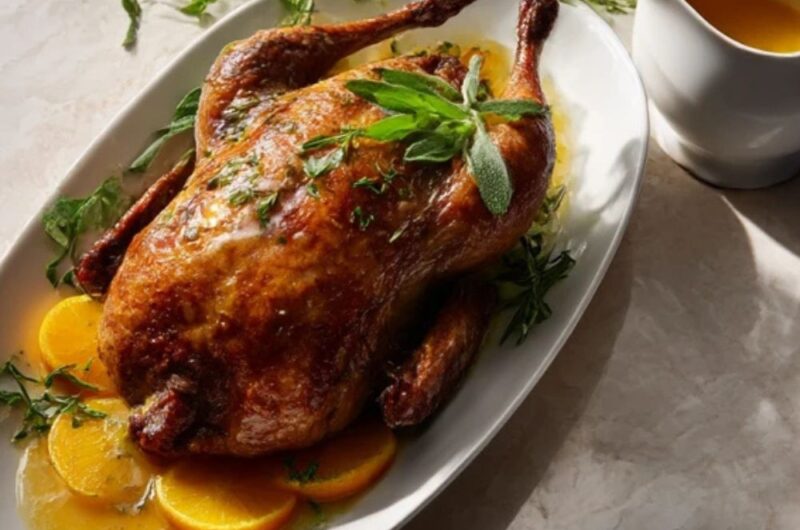
Julia Child Duck à l’Orange is roasted duck with a glossy orange sauce. You might see it called Caneton à l’Orange or Canard à l’Orange. Same dish. Same elegance.
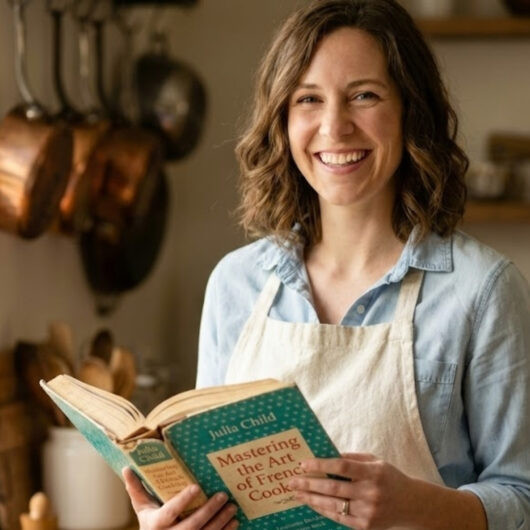
This recipe comes from Mastering the Art of French Cooking, pages 276-278. I made this for a dinner party once. Spent a whole afternoon on the sauce, panicked about the duck, and then watched my guests go silent when they tasted it. The good kind of silent.
Julia called it “one of the most well known of all the duck dishes.” She described it as “roast duck decorated with fresh orange segments and accompanied by an orange-flavored brown sauce.” But here’s what she really wants you to understand: the sauce is everything. Julia wrote that “its most important element is its sauce – a rich, strong, meaty, duck essence darkened with caramel, flavored with wine and orange peel.”
The secret? Make the sauce ahead. Julia says once the duck is roasted, the dish is within 2-3 minutes of being done. That’s her wisdom, not mine.
What is Duck à l’Orange? Roasted duck with a sweet-and-sour orange sauce, garnished with fresh orange segments. Takes 4 hours. Worth every minute.
Jump to RecipeWhy You’ll Love This Recipe
- The sauce is the star. Caramelized sugar, red wine vinegar, port, orange liqueur. Complex but not fussy. The kind of sauce you want to drink straight from the pan.
- Crispy skin, tender meat. Julia’s roasting method delivers both. Score the skin, start hot, baste often.
- Make-ahead friendly. The sauce base can be done hours before the duck even goes in the oven.
- Two variations included. Cherries or peaches instead of orange. Same technique, different fruit.
- Stunning presentation. Orange segments lined down the duck. Looks like you trained in Paris.
Julia Child Brown Duck Stock
You need 2 cups of strong brown duck stock. Julia notes: “This should be prepared ahead of time, as it must simmer about 2 hours.” Here’s how:
Ingredients:
- Duck giblets (neck, gizzard, heart)
- 1 Tb butter
- 1 onion, sliced
- 1 carrot, sliced
- 3 cups water
- 1 cup dry white wine
- Thyme, bay leaf, parsley stems
Instructions:
- Brown the giblets in butter until deeply colored on all sides.
- Add onion and carrot. Brown those too.
- Pour in water and wine. Add herbs.
- Simmer for 2 hours, skimming occasionally.
- Strain and reduce to 2 cups.
No time? Use chicken stock mixed with a splash of port. Not authentic, but it works in a pinch.
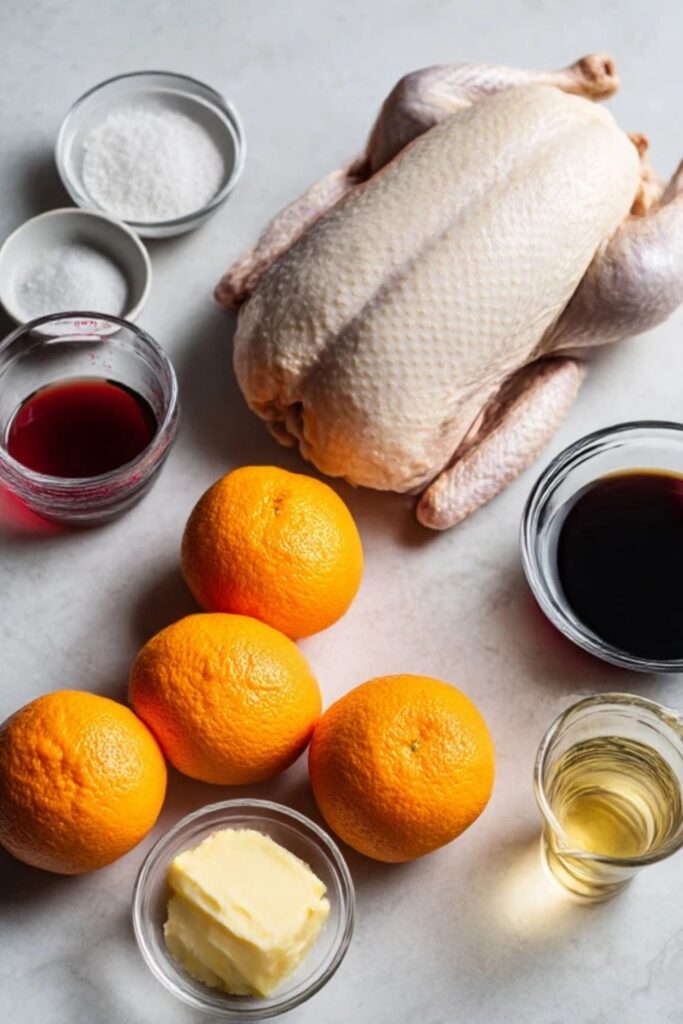
Julia Child Duck à l’Orange Ingredients
From Mastering the Art of French Cooking, Vol. 1, Pages 276-278. Serves 5-6.
For the Orange Peel:
- 4 brightly colored navel oranges
For the Duck:
- 1 (5½ lb) ready-to-cook duckling
- ½ tsp salt
- Pinch of pepper
- ⅓ of the prepared orange peel (goes in the cavity)
For the Sauce Base:
- 3 Tb granulated sugar
- ¼ cup red wine vinegar
- 2 cups strong brown duck stock
- 2 Tb arrowroot blended with 3 Tb port or Madeira
- The remaining blanched orange peel
For the Final Assembly:
- ½ cup port or Madeira
- 2-3 Tb orange liqueur (Grand Marnier or Cointreau)
- Drops of orange bitters or lemon juice
- 2 Tb softened butter
Substitutions:
- No arrowroot? Cornstarch works. Same amount. Sauce won’t be quite as glossy.
- No Grand Marnier? Triple sec or Cointreau. Or skip it entirely and add extra port.
- No duck stock? Chicken stock plus 2 Tb port. Not ideal, but acceptable.
How To Make Julia Child Duck à l’Orange
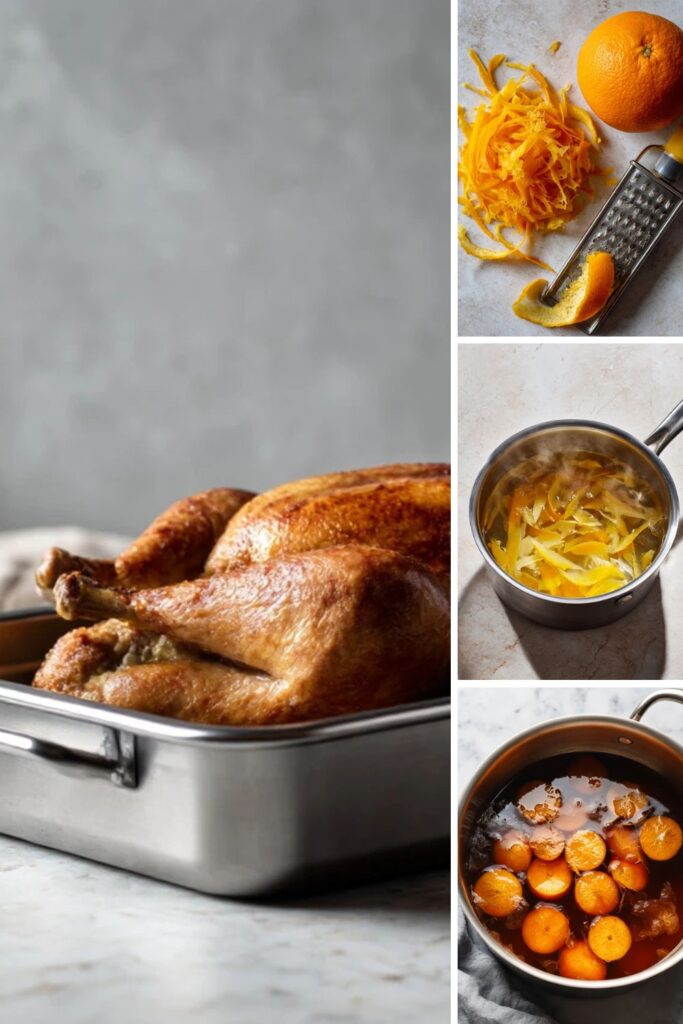
- Prep the orange peel. Use a vegetable peeler to remove just the orange part of the skin. No white pith. Cut into thin strips about 1/16 inch wide and 1½ inches long. Julia calls this julienne.
- Blanch the peel. Simmer those strips in a quart of water for 15 minutes. Drain and pat dry. This removes the bitterness but keeps the aromatic oils. Julia says blanching is essential. Don’t skip it.
- Prep the duck. Season the cavity with salt and pepper. Stuff one-third of the orange peel inside. Truss the duck so it cooks evenly.
- Score the skin. This is the crispy skin secret. Use a sharp knife to score the duck skin in a crosshatch pattern. Cut through the fat but not into the meat. Then prick all over with a fork. This helps the fat render out during roasting.
- Roast the duck. Start hot at 425°F for 15 minutes. This gets the fat rendering quickly. Then reduce to 350°F for about 1 hour 30 minutes. Baste occasionally with the pan juices. The fat bastes the duck as it renders, crisping the skin while keeping the meat moist.
- Make the caramel. While the duck roasts, start your sauce. Combine the sugar and vinegar in a saucepan. Boil over medium-high heat until it turns mahogany brown. Julia emphasizes this color. Not amber. Mahogany. Watch it carefully. This takes only a few minutes.
- Build the sauce base. Pull the pan off the heat. Carefully pour in ½ cup of duck stock. It will sputter. Don’t burn yourself. Return to heat and simmer for a minute, stirring to dissolve the caramel.
- Thicken the sauce. Add the rest of the stock. Beat in the arrowroot mixture. Stir in the blanched orange peel. Simmer 3-4 minutes until the sauce is clear and lightly thickened. Set aside. Julia says it should be “clear, limpid, and lightly thickened.”
- Prep the orange segments. Cut the peeled oranges into neat, skinless segments. Cover and set aside. Now you wait. Read a book. Pour yourself some of that wine. The hard work is done.
- Rest the duck. When the duck is done (juices run clear yellow when you prick the thigh), remove the trussing strings. Place on a platter and keep warm in the turned-off oven with the door ajar.
- Deglaze the roasting pan. Pour off as much fat as you can. Add the port or Madeira and crank the heat. Scrape up all the good browned bits from the bottom. Boil until reduced to 2-3 tablespoons.
- Finish the sauce. Strain the wine reduction into your sauce base. Bring to a simmer. Stir in the orange liqueur by the tablespoon, tasting as you go. Julia warns: “The sauce should have a pleasant orange flavor but not be too sweet.” Add drops of orange bitters or lemon juice to balance.
- Enrich with butter. Just before serving, off the heat, swirl in the softened butter. This makes the sauce glossy and rich.
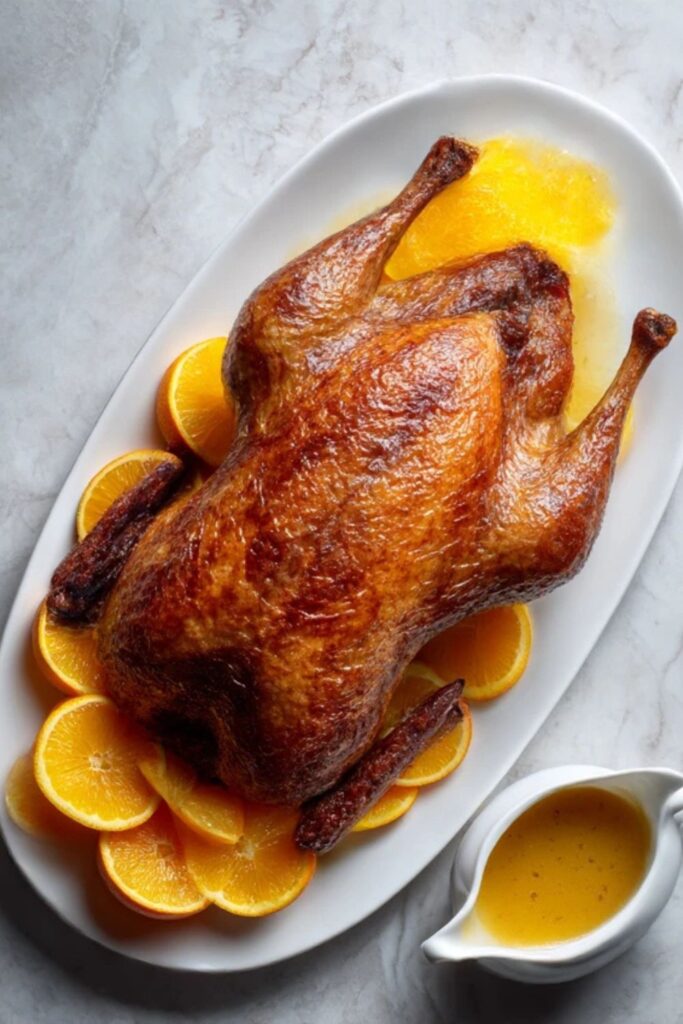
- Serve. Arrange orange segments in a line down the center of the duck. Heap the rest at both ends of the platter. Spoon a bit of sauce over the duck and serve the rest in a sauceboat.
Recipe Tips
- Make the stock ahead. Julia is firm on this. Two hours of simmering. Use the giblets. Make it the day before and refrigerate.
- Score and prick for crispy skin. The crosshatch scoring lets fat escape. The fork pricks help it render. Start at high heat to get the process going quickly.
- The caramel color matters. Julia says mahogany-brown. That deep color gives the sauce its distinctive look and contributes sweet-and-sour depth.
- Balance the sweetness. Julia notes the sauce should have “a pleasant orange flavor but not be too sweet.” Add lemon juice or orange bitters to adjust.
- Blanch the peel. Every time. 15 minutes of simmering removes bitterness. Skip this and your sauce tastes harsh.
- Prep everything ahead. Have your sauce, segments, and garnishes ready. Final assembly takes just minutes. That’s Julia’s whole strategy with this dish.
- Scared of duck? This technique works with chicken too. Chicken à l’Orange uses the same sauce. Roast a chicken instead and you’ll still impress everyone at the table.
Recipe Variations
- Duck with Cherries (Caneton aux Cerises / Caneton Montmorency): Make the caramel sauce but skip the orange peel and liqueur. Toss 36-48 pitted cherries with 1 Tb lemon juice, 3 Tb port or cognac, and 2-3 Tb sugar. Let them soak for 20-30 minutes. Add the sauce to the cherries. Heat gently below a simmer for 3-4 minutes. Julia warns: if the liquid simmers, the cherries shrivel.
- Duck with Peaches (Caneton aux Pêches): Use 3 large or 6 small ripe freestone peaches (or drained canned peaches). Peel and halve fresh peaches no more than 30 minutes before serving to prevent discoloring. Proceed like the cherry version.
- Chicken à l’Orange: Intimidated by duck? Roast a whole chicken using Julia’s method (high heat, butter basting) and serve with this same orange sauce. Not as traditional, but delicious.
What To Serve With Duck à l’Orange
Julia’s advice: “Nothing should interfere with the flavors of the duck, the sauce, and the oranges.”
Keep it simple:
- Sautéed potatoes or shoestring fries
- Homemade potato chips
- Steamed green beans or asparagus
Wine: Julia suggests a good red Bordeaux-Médoc. Or go with a chilled white Burgundy like Meursault or Montrachet. Both work beautifully.
Make-Ahead Strategy
Up to 2 Days Ahead:
- Make the duck stock and refrigerate
- Blanch and store the orange peel
Morning Of:
- Prepare the sauce base through step 8
- Cut the orange segments and refrigerate covered
- Bring duck to room temperature 1 hour before roasting
Last Minute:
- Roast the duck (about 1 hour 45 minutes)
- Reheat sauce, deglaze pan, finish with liqueur and butter
- Assemble and serve
Julia’s whole point: “You can and should prepare the sauce well ahead of time so that when the duck is roasted, the dish is within 2 to 3 minutes of being done.”
How To Store
Refrigerator: Store duck and sauce separately, covered, for up to 3 days.
Freezer: Duck meat freezes well for 2 months. Sauce can be frozen but may need whisking to restore smoothness.
Reheat: Warm duck in a 350°F oven until heated through. Reheat sauce gently on the stovetop, whisking. Crisp the skin briefly under the broiler if needed.
Nutrition Facts
Per serving (1/6 of recipe):
- Calories: 520 kcal
- Protein: 28g
- Total Fat: 34g
- Saturated Fat: 11g
- Carbohydrates: 22g
- Fiber: 2g
- Sugar: 18g
- Sodium: 420mg
- Cholesterol: 145mg
FAQs
Same dish. “Caneton” means duckling, “Canard” means duck. Julia uses Caneton à l’Orange in her recipe. You’ll see all three names used interchangeably.
Simmering for 15 minutes removes bitter compounds from the pith while keeping the fragrant oils. Skip this and the sauce tastes harsh.
You can. But homemade duck stock from the giblets makes a richer, more flavorful sauce. It’s what separates good from great.
Cornstarch works. Use the same amount. The sauce won’t be quite as clear and glossy, but it’ll taste great.
Juices run clear yellow when you prick the thigh. Internal temp should hit 165°F. The leg should move easily in its socket.
Add drops of lemon juice or orange bitters. Julia says the sauce should taste of orange, not syrup. Balance is everything.
Traditional bigarade uses bitter Seville oranges. Julia’s version uses sweet navel oranges with vinegar to create similar sweet-tart notes. Same effect, easier to find ingredients.
Yes. Chicken à l’Orange uses the same sauce technique. Roast a chicken and serve with the orange sauce. Great option if duck intimidates you.
Julia Child Duck à l’Orange Recipe
Course: Dinner, MainCuisine: American, FrenchDifficulty: Easy4
servings30
minutes2
hours520
kcalJulia Child Duck à l’Orange features a tender roast duck with crispy skin, served with a rich, sweet, and tangy sauce made from oranges and stock. The recipe creates a sophisticated French classic that balances savory meat with bright citrus notes.
Ingredients
- For the Orange Peel:
4 brightly colored navel oranges
- For the Duck:
1 (5½ lb) ready-to-cook duckling
½ tsp salt
Pinch of pepper
⅓ of the prepared orange peel (goes in the cavity)
- For the Sauce Base:
3 Tb granulated sugar
¼ cup red wine vinegar
2 cups strong brown duck stock
2 Tb arrowroot blended with 3 Tb port or Madeira
The remaining blanched orange peel
- For the Final Assembly:
½ cup port or Madeira
2-3 Tb orange liqueur (Grand Marnier or Cointreau)
Drops of orange bitters or lemon juice
2 Tb softened butter
Directions
- Prep the orange peel. Use a vegetable peeler to remove just the orange part of the skin. No white pith. Cut into thin strips about 1/16 inch wide and 1½ inches long. Julia calls this julienne.
- Blanch the peel. Simmer those strips in a quart of water for 15 minutes. Drain and pat dry. This removes the bitterness but keeps the aromatic oils. Julia says blanching is essential. Don’t skip it.
- Prep the duck. Season the cavity with salt and pepper. Stuff one-third of the orange peel inside. Truss the duck so it cooks evenly.
- Score the skin. This is the crispy skin secret. Use a sharp knife to score the duck skin in a crosshatch pattern. Cut through the fat but not into the meat. Then prick all over with a fork. This helps the fat render out during roasting.
- Roast the duck. Start hot at 425°F for 15 minutes. This gets the fat rendering quickly. Then reduce to 350°F for about 1 hour 30 minutes. Baste occasionally with the pan juices. The fat bastes the duck as it renders, crisping the skin while keeping the meat moist.
- Make the caramel. While the duck roasts, start your sauce. Combine the sugar and vinegar in a saucepan. Boil over medium-high heat until it turns mahogany brown. Julia emphasizes this color. Not amber. Mahogany. Watch it carefully. This takes only a few minutes.
- Build the sauce base. Pull the pan off the heat. Carefully pour in ½ cup of duck stock. It will sputter. Don’t burn yourself. Return to heat and simmer for a minute, stirring to dissolve the caramel.
- Thicken the sauce. Add the rest of the stock. Beat in the arrowroot mixture. Stir in the blanched orange peel. Simmer 3-4 minutes until the sauce is clear and lightly thickened. Set aside. Julia says it should be “clear, limpid, and lightly thickened.”
- Prep the orange segments. Cut the peeled oranges into neat, skinless segments. Cover and set aside. Now you wait. Read a book. Pour yourself some of that wine. The hard work is done.
- Rest the duck. When the duck is done (juices run clear yellow when you prick the thigh), remove the trussing strings. Place on a platter and keep warm in the turned-off oven with the door ajar.
- Deglaze the roasting pan. Pour off as much fat as you can. Add the port or Madeira and crank the heat. Scrape up all the good browned bits from the bottom. Boil until reduced to 2-3 tablespoons.
- Finish the sauce. Strain the wine reduction into your sauce base. Bring to a simmer. Stir in the orange liqueur by the tablespoon, tasting as you go. Julia warns: “The sauce should have a pleasant orange flavor but not be too sweet.” Add drops of orange bitters or lemon juice to balance.
- Enrich with butter. Just before serving, off the heat, swirl in the softened butter. This makes the sauce glossy and rich.
- Serve. Arrange orange segments in a line down the center of the duck. Heap the rest at both ends of the platter. Spoon a bit of sauce over the duck and serve the rest in a sauceboat.
Notes
- Make the stock ahead. Julia is firm on this. Two hours of simmering. Use the giblets. Make it the day before and refrigerate.
- Score and prick for crispy skin. The crosshatch scoring lets fat escape. The fork pricks help it render. Start at high heat to get the process going quickly.
- The caramel color matters. Julia says mahogany-brown. That deep color gives the sauce its distinctive look and contributes sweet-and-sour depth.
- Balance the sweetness. Julia notes the sauce should have “a pleasant orange flavor but not be too sweet.” Add lemon juice or orange bitters to adjust.
- Blanch the peel. Every time. 15 minutes of simmering removes bitterness. Skip this and your sauce tastes harsh.
- Prep everything ahead. Have your sauce, segments, and garnishes ready. Final assembly takes just minutes. That’s Julia’s whole strategy with this dish.
- Scared of duck? This technique works with chicken too. Chicken à l’Orange uses the same sauce. Roast a chicken instead and you’ll still impress everyone at the table.
Source: Mastering the Art of French Cooking, Vol. 1 by Julia Child, Pages 276-278
– Claire