 Claire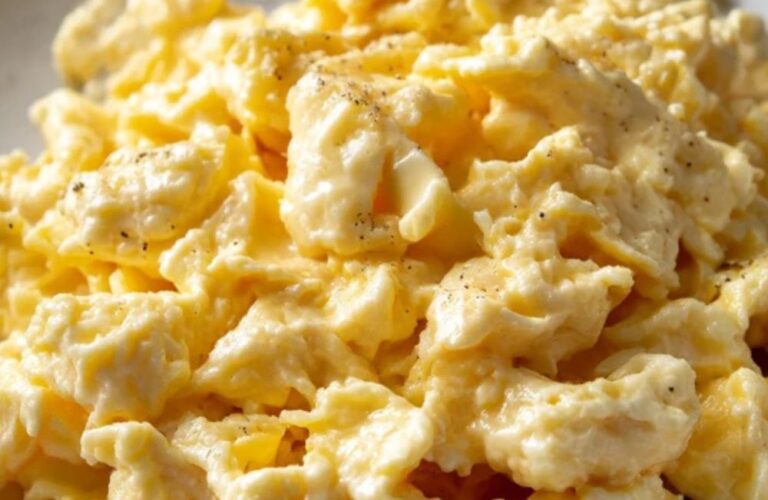
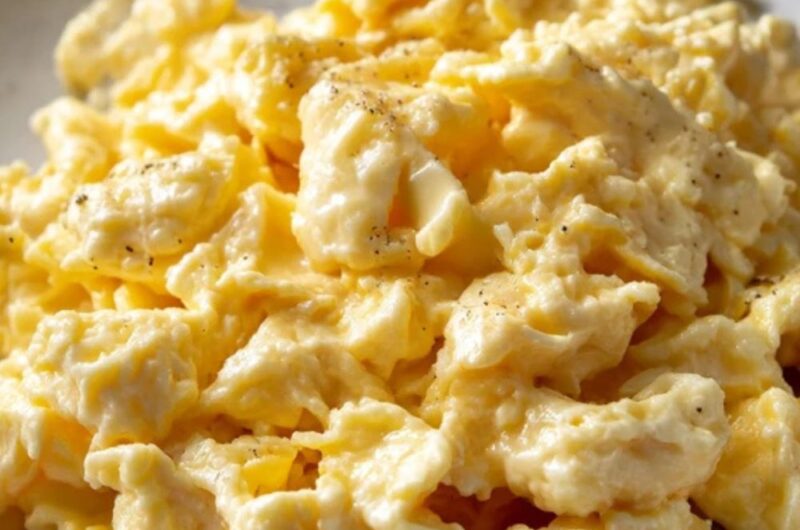
Most people have been cooking scrambled eggs wrong their whole lives. Julia Child Scrambled Eggs are nothing like the rubbery curds you grew up with. French-style scrambled eggs are soft, creamy, almost like a custard that barely holds its shape. You eat them with a fork, but they could almost be spooned.
On pages 125-126 of Mastering the Art of French Cooking, Julia explains it simply: stir the eggs over gentle heat until they slowly thicken as a mass. That’s it. Low heat. Patience. Keep stirring.
The first time I made them this way, I genuinely thought I’d been eating the wrong thing for thirty years. I had.
What are French scrambled eggs? Creamy, custard-like soft curds made by stirring eggs slowly over low heat. Richer than American scrambled eggs. Silkier. A completely different dish.
Jump to RecipeWhy You’ll Love This Recipe
- Like velvet on your fork: Soft, creamy curds that barely hold together.
- So much better than what you’re used to: Once you’ve had French-style, there’s no going back.
- Takes seven minutes: Not fast, but not long. Worth every second.
- Just eggs and butter: The simplicity is the point.
- Infinitely garnishable: Herbs, cheese, truffles if you’re feeling fancy.
French vs. American Scrambled Eggs
Two completely different dishes sharing the same name.
| French | American |
|---|---|
| Creamy, custard-like curds | Drier, larger curds |
| Low heat, 5-7 minutes | High heat, 2-3 minutes |
| Constant stirring | Occasional stirring |
| Silky texture | Fluffy texture |
Neither is wrong. But French-style is something special.
Julia Child Scrambled Eggs Ingredients
From Mastering the Art of French Cooking, Vol. 1, Pages 125-126. Serves 4-5.
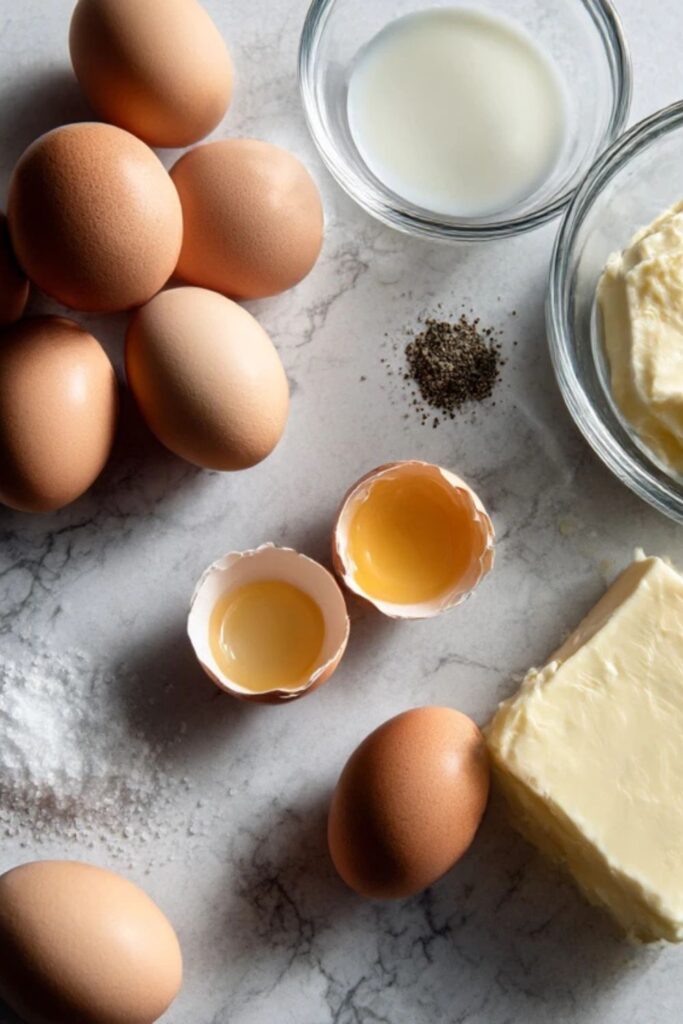
- 8 eggs (or 7 eggs plus 2 extra yolks for richness)
- Salt and pepper
- 4 tsp water or milk
- 2 Tb butter (for cooking)
- 1½-2 Tb butter or cream (for finishing)
Equipment:
- Heavy saucepan or nonstick skillet, 7-8 inches
- Rubber spatula or wooden spoon
How To Make Julia Child Scrambled Eggs
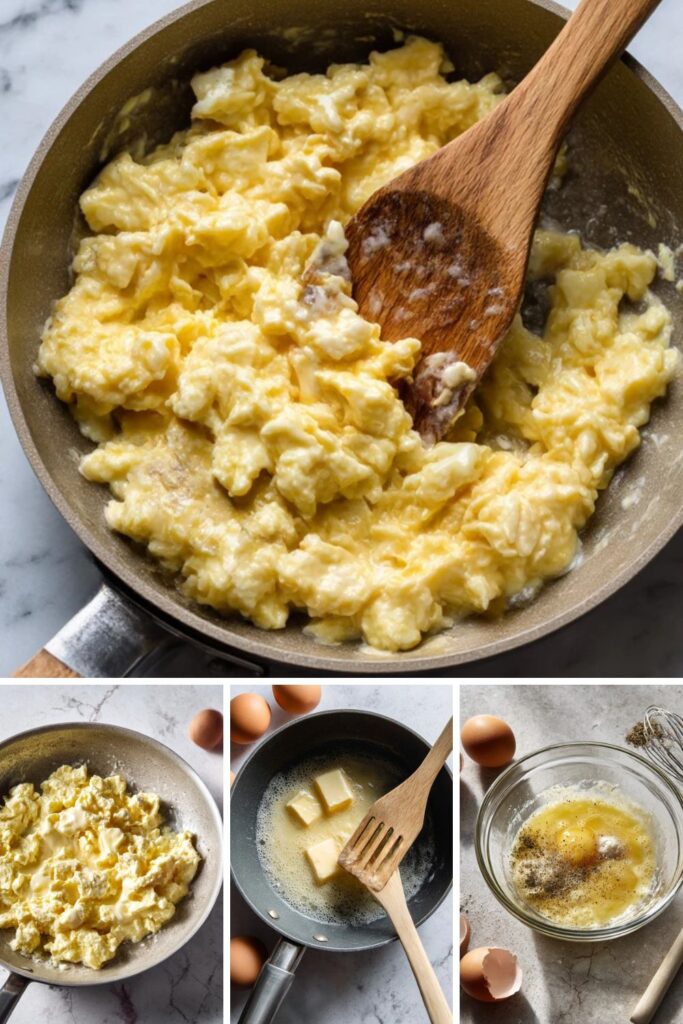
Step 1: Beat the Eggs
- Blend yolks and whites: Beat eggs with salt, pepper, and liquid for 20-30 seconds. Just until combined.
- Don’t overbeat: You want them blended, not frothy.
Step 2: Cook Low and Slow
- Butter the pan: Smear bottom and sides with 2 Tb butter.
- Add eggs, set over low heat: This is where patience comes in.
- Stir continuously: Reach all over the bottom with your spatula. Nothing happens for 2-3 minutes as eggs slowly warm.
- Watch for thickening: Suddenly they’ll start to set into soft curds.
- Move pan on and off heat: Control the temperature. Keep stirring.
Step 3: Finish
- Remove from heat just before perfect: They keep cooking. If they look done in the pan, they’ll be overdone on the plate.
- Stir in enrichment: Add butter or cream. This stops cooking and adds richness.
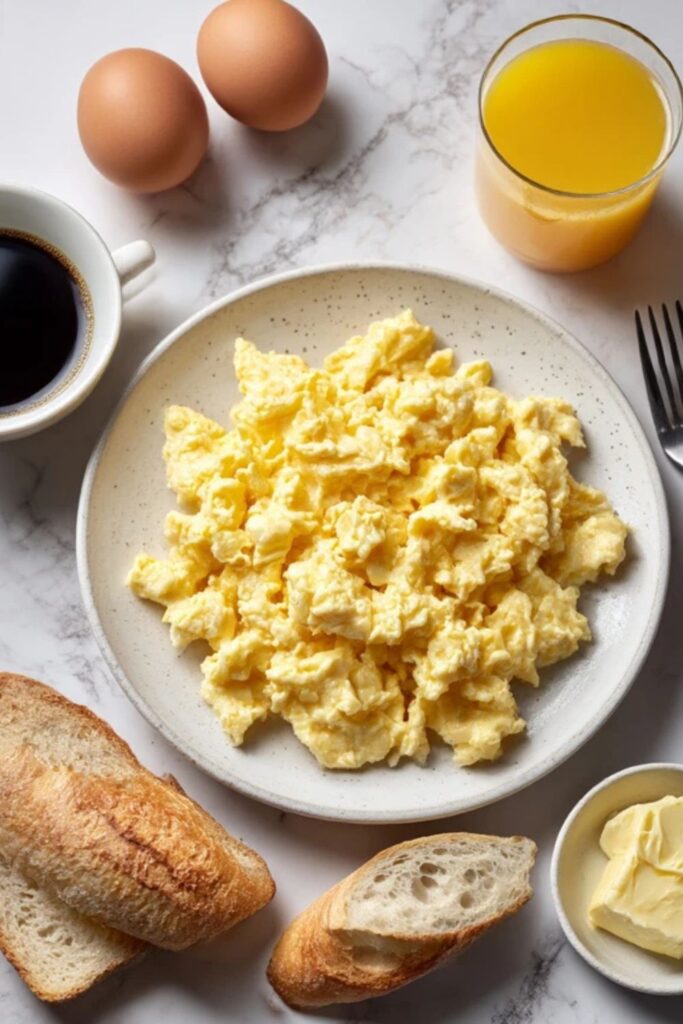
- Taste and season: Turn onto warm platter. Serve immediately.
Recipe Tips
- Low heat is everything: This isn’t a fast dish. The eggs should take 5-7 minutes to thicken. If they set in 2 minutes, your heat is too high.
- Stir constantly: Not occasionally. Constantly. Reach every part of the pan.
- Pull off early: The eggs continue cooking in their own heat. Remove when they’re slightly softer than you ultimately want.
- The butter at the end matters: It stops the cooking and makes them silkier. Don’t skip it.
- Half teaspoon liquid per egg, no more: Too much liquid makes watery eggs.
- Depth matters: Eggs should be ⅔ to 1 inch deep in the pan. Too thin and they cook too fast.
Variations
Aux Fines Herbes (With Herbs): Beat a tablespoon of minced parsley, chervil, chives, and tarragon into the eggs before cooking. Garnish with more.
Au Fromage (With Cheese): Stir 4-6 spoonfuls of grated Swiss into the finished eggs with the enrichment butter.
Aux Truffes (With Truffles): Fold diced truffles into the eggs before scrambling. Yes, this is extravagant. Yes, it’s worth it.
Garnishing Ideas
Beyond bacon and sausage:
- Sautéed mushrooms
- Chicken livers
- Broiled tomatoes
- Buttered asparagus tips
- Diced sautéed potatoes
- Piperade (peppers, onions, tomatoes)
How To Hold Them
In a perfect world, you’d serve immediately. But if you need to wait:
Keep the saucepan over tepid (not hot) water. They’ll hold for a short while but the sooner they reach the plate, the better.
Nutrition Facts
Per serving (1/5 of recipe):
- Calories: 210 kcal
- Protein: 11g
- Total Fat: 17g
- Saturated Fat: 8g
- Carbohydrates: 1g
- Fiber: 0g
- Sugar: 1g
- Sodium: 260mg
- Cholesterol: 350mg
FAQs
Too much liquid added, or cooked too fast over high heat.
Cooked too long or over too high heat. These should be creamy, almost runny.
You can, but you’ll lose the richness. Add extra yolks if anything.
It stops residual cooking and adds silkiness. This is non-negotiable.
His uses even lower heat and removes from burner repeatedly. Julia’s is similar in spirit. Both are French-style
Julia Child Scrambled Eggs Recipe
Course: BreakfastCuisine: American, FrenchDifficulty: Easy6
servings2
minutes2
minutes210
kcalExperience the difference of Julia Child Scrambled Eggs. Unlike fast, fluffy diner eggs, this French method uses low heat and constant stirring to create a rich, creamy, custard-like dish. Enriched with butter and cream, it is the ultimate comfort breakfast
Ingredients
8 eggs (or 7 eggs plus 2 extra yolks for richness)
Salt and pepper
4 tsp water or milk
2 Tb butter (for cooking)
1½-2 Tb butter or cream (for finishing)
Directions
- Step 1: Beat the Eggs
- Blend yolks and whites: Beat eggs with salt, pepper, and liquid for 20-30 seconds. Just until combined.
- Don’t overbeat: You want them blended, not frothy.
- Step 2: Cook Low and Slow
- Butter the pan: Smear bottom and sides with 2 Tb butter.
- Add eggs, set over low heat: This is where patience comes in.
- Stir continuously: Reach all over the bottom with your spatula. Nothing happens for 2-3 minutes as eggs slowly warm.
- Watch for thickening: Suddenly they’ll start to set into soft curds.
- Move pan on and off heat: Control the temperature. Keep stirring.
- Step 3: Finish
- Remove from heat just before perfect: They keep cooking. If they look done in the pan, they’ll be overdone on the plate.
- Stir in enrichment: Add butter or cream. This stops cooking and adds richness.
- Taste and season: Turn onto warm platter. Serve immediately.
Notes
- Low heat is everything: This isn’t a fast dish. The eggs should take 5-7 minutes to thicken. If they set in 2 minutes, your heat is too high.
- Stir constantly: Not occasionally. Constantly. Reach every part of the pan.
- Pull off early: The eggs continue cooking in their own heat. Remove when they’re slightly softer than you ultimately want.
- The butter at the end matters: It stops the cooking and makes them silkier. Don’t skip it.
- Half teaspoon liquid per egg, no more: Too much liquid makes watery eggs.
- Depth matters: Eggs should be ⅔ to 1 inch deep in the pan. Too thin and they cook too fast.
Source: Mastering the Art of French Cooking, Vol. 1 by Julia Child, Pages 125-126
– Claire