 Claire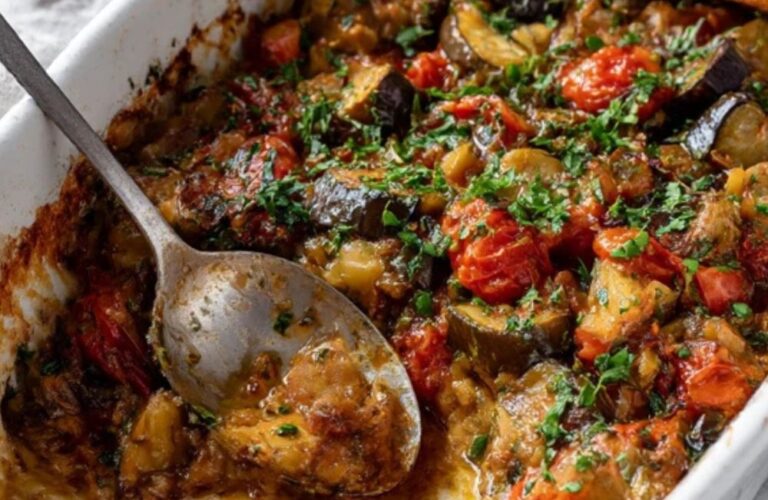
Julia Child Ratatouille is the legendary Provençal vegetable stew where each ingredient maintains its identity. From Mastering the Art of French Cooking (pages 503-505), this French vegetable stew celebrates summer: eggplant, zucchini, tomatoes, peppers, onions, and garlic, layered and simmered until they perfume your kitchen with the essence of Provence.
Julia writes: “A really good ratatouille is not one of the quicker dishes to make, as each element is cooked separately before it is arranged in the casserole to partake of a brief communal simmer. This recipe is the only one we know of which produces a ratatouille in which each vegetable retains its own shape and character.”
I’ve made lazy ratatouille, throwing everything in one pot. It’s fine. Then I made Julia’s version, cooking each vegetable separately. The difference is staggering. You can actually taste each component: the silky eggplant, the tender zucchini, the sweet peppers, the bright tomatoes. It takes more time. It’s worth every minute.
Julia’s secret: Cook each vegetable separately, then layer and simmer briefly. This is the ONLY method that preserves individual textures.
Jump to RecipeWhy You’ll Love This Recipe
- Each vegetable distinct: Not a mushy stew, but a layered composition.
- Hot or cold: Equally delicious either way.
- Better the next day: Flavors meld and deepen overnight.
- Summer in a dish: Celebrates peak-season vegetables.
- Versatile serving: Side dish, cold appetizer, or vegetarian main.
Julia Child Ratatouille Ingredients
From Mastering the Art of French Cooking, Vol. 1, pages 503-505. Serves 6-8.
For the Eggplant and Zucchini:
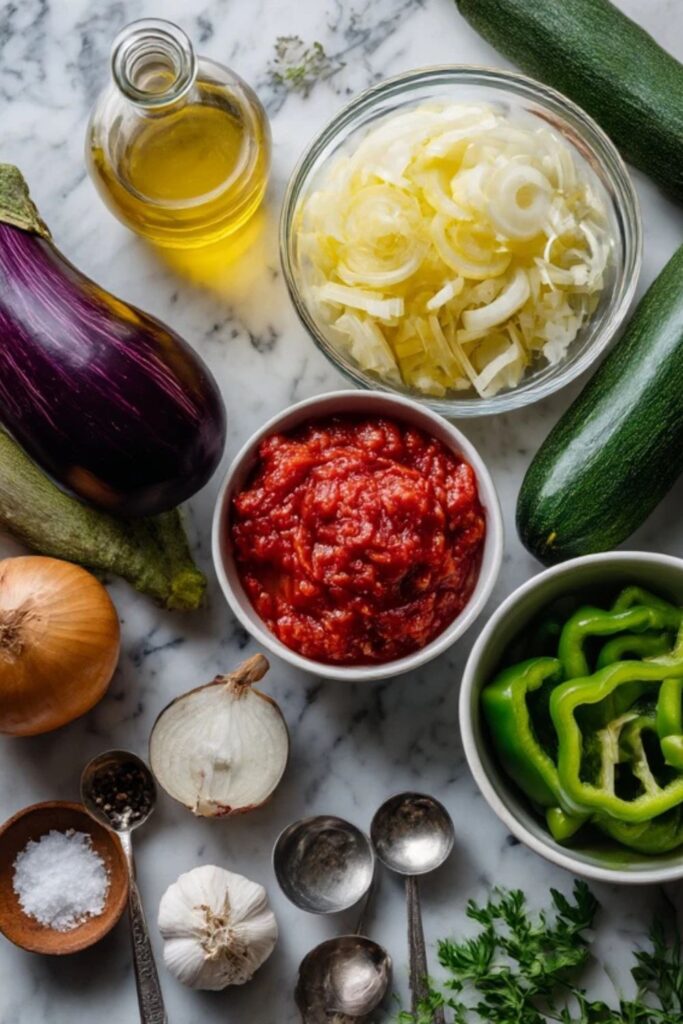
- 1 lb eggplant
- 1 lb zucchini
- 1 tsp salt (for salting)
- 4 Tb olive oil (more as needed)
For the Onion-Pepper-Tomato Mixture:
- ½ lb yellow onions (about 1½ cups), thinly sliced
- 2 green bell peppers (about 1 cup), sliced
- 2-3 Tb olive oil
- 2 cloves garlic, mashed
- 1 lb firm, ripe tomatoes, peeled, seeded, and juiced (about 1½ cups pulp)
- Salt and pepper
For Assembly:
- 3 Tb minced fresh parsley
How To Make Julia Child Ratatouille
Step 1: Prep and Salt Eggplant and Zucchini (30 minutes)
- Peel eggplant. Cut into slices about ⅜ inch thick, 3 inches long, 1 inch wide.
- Scrub zucchini. Trim ends. Cut into similar-sized pieces.
- Toss with salt in a bowl. Let stand 30 minutes.
- Drain and dry each slice thoroughly. This step is essential. Wet vegetables will steam, not sauté.
Step 2: Sauté Eggplant and Zucchini Separately
- Heat olive oil in skillet.
- Sauté eggplant one layer at a time: About 1 minute per side. Brown very lightly. Remove to a plate.
- Repeat with zucchini. Add more oil as needed. Set aside.
Step 3: Cook the Onion-Pepper-Tomato Mixture
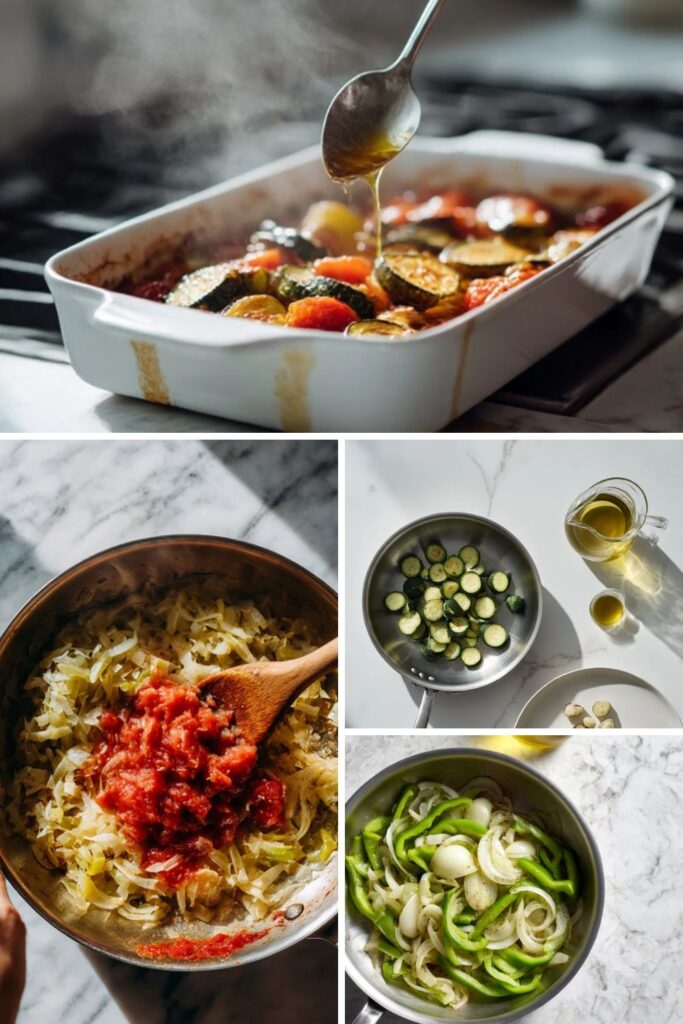
- Slow-cook onions and peppers: In the same skillet, cook in olive oil about 10 minutes. Tender but not browned.
- Add garlic. Stir in, season with salt and pepper.
- Add tomato pulp on top of onions. Season.
- Cover and cook 5 minutes until tomatoes release juice.
- Uncover, raise heat, boil until juice has almost entirely evaporated. This prevents watery ratatouille.
Step 4: Layer in Casserole
- First layer: ⅓ of tomato mixture on bottom. Sprinkle with 1 Tb parsley.
- Second layer: Half the eggplant and zucchini, then half remaining tomato mixture and parsley.
- Final layer: Rest of eggplant and zucchini, top with remaining tomato mixture and parsley.
Step 5: Final Simmer
- Cover and simmer 10 minutes over low heat.
- Uncover. Tip casserole and baste with rendered juices.
- Raise heat slightly. Cook uncovered 15 minutes more, basting several times. Done when juices have evaporated, leaving only a spoonful or two of flavored olive oil.
- Watch carefully: Low heat prevents scorching.
Why Cook Vegetables Separately?
Julia tested this exhaustively. Most ratatouille recipes dump everything in one pot and stew it together. The result: mushy, indistinguishable vegetables.
Her method: cooking each element separately, then layering and briefly simmering produces a dish where you can:
- See each vegetable distinctly
- Taste each vegetable’s character
- Enjoy proper texture, not mush
It takes more time. It produces a genuinely superior dish.
The Salting Technique for Eggplant
Salting serves two purposes:
- Removes excess moisture: Prevents watery, soggy ratatouille.
- Removes bitterness: Especially in older eggplants.
How: Cut, salt, wait 30 minutes, drain, pat completely dry.
Don’t skip this step. It’s the difference between good and great.
Recipe Tips
- Salt and dry thoroughly: Moisture is the enemy.
- Light browning only: About 1 minute per side for eggplant and zucchini.
- Evaporate the tomato juice: Before layering, juice should be almost gone.
- Low heat for final simmer: Prevents scorching.
- Baste repeatedly: Tip the casserole, spoon juices over.
- Makes ahead beautifully: Actually improves overnight.
Achieving the Right Consistency
The finished ratatouille should have:
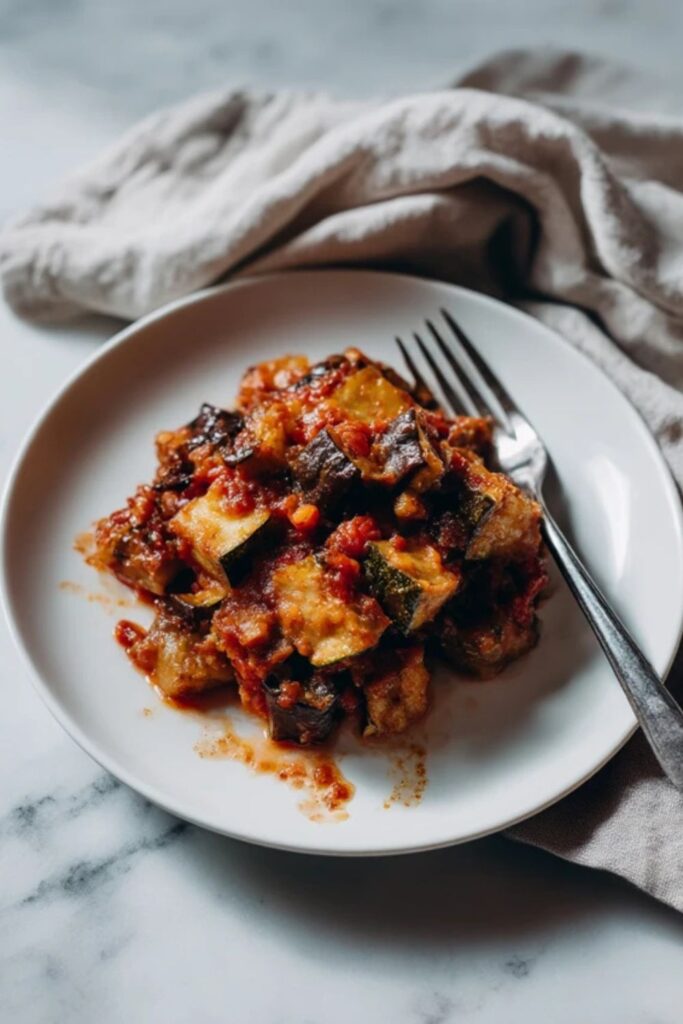
- Vegetables that hold their shape
- Only a spoonful or two of flavored olive oil (not watery)
- Each component distinguishable
- Tender but not mushy texture
If too wet: cook uncovered longer to evaporate liquid.
Serving Suggestions
Hot: Alongside plain roast lamb, beef, or chicken. The strong Provençal flavors pair best with simply prepared proteins.
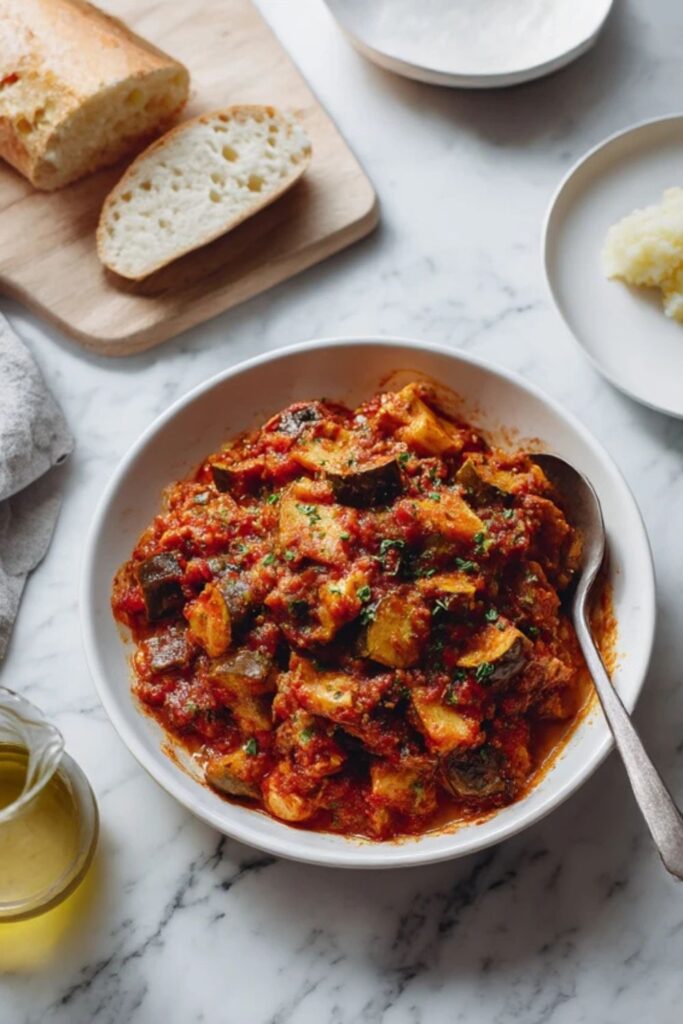
Cold: As a first course, with crusty bread. Or alongside cold roast meats for a summer meal.
Room temperature: Perfect for picnics and buffets.
As a main: Vegetarian main course with crusty bread and goat cheese.
Make-Ahead Strategy
Ratatouille is ideal for advance preparation:
One day ahead (recommended): Complete the recipe. Let cool uncovered. Refrigerate. Reheat gently before serving. Julia notes it “seems to gain in flavor when reheated.”
Same day: Can sit at room temperature for hours. Serve cold or reheat.
Leftover Ideas
- Fold into omelettes
- Top pasta or polenta
- Fill stuffed eggs or tomatoes (purée with hard-boiled yolk)
- Serve on crostini as appetizer
- Layer in sandwiches
How To Store
Refrigerator: Covered, up to 5 days. Actually improves over time.
Freezer: Up to 3 months. Texture softens slightly but flavor remains excellent.
Nutrition Facts
Per serving (about 1 cup):
- Calories: 145 kcal
- Protein: 3g
- Total Fat: 10g
- Saturated Fat: 1g
- Carbohydrates: 14g
- Fiber: 4g
- Sugar: 8g
- Sodium: 240mg
- Cholesterol: 0mg
FAQs
Julia’s signature technique. It’s the only method that preserves each vegetable’s shape and character instead of producing mush.
Traditional Provençal ratatouille uses these specific vegetables. Variations exist, but this is the authentic composition.
Either vegetables weren’t salted/dried properly, tomato juice wasn’t evaporated, or it wasn’t cooked uncovered long enough at the end.
Julia says “equally good hot or cold.” Personal preference. Try both.
Yes. The flavors meld and deepen. Many prefer it reheated.
Source: Mastering the Art of French Cooking, Vol. 1 by Julia Child, pages 503-505
– Claire