 Claire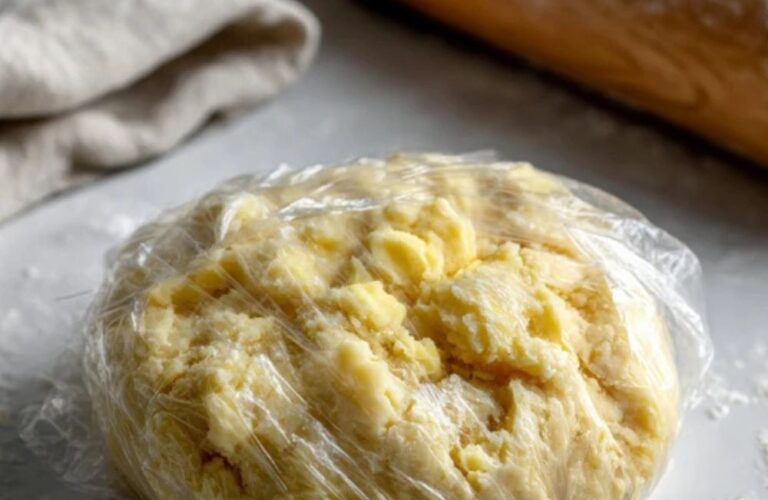
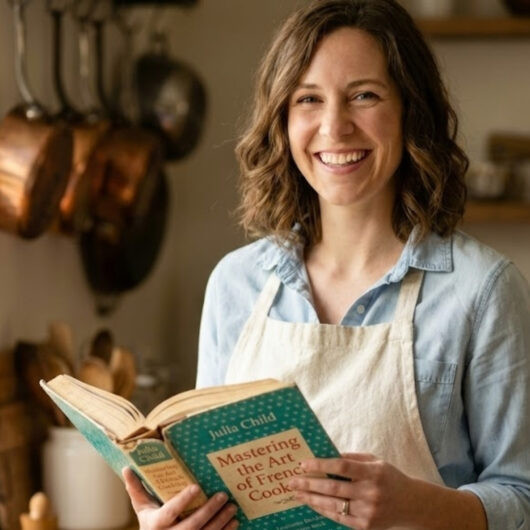
Julia Child Pie Crust (Pâte Brisée) is the flaky French pastry dough that forms the foundation for countless tarts, quiches, and pies. From Mastering the Art of French Cooking (pages 139-145), her technique produces tender, crunchy, buttery crust through the classic “fraisage” method: a final blending that ensures even distribution of fat throughout the flour.
Julia says: “Il faut mettre la main à la pâte!” (You must get your hands in the dough!) Part of learning to cook is feeling the dough in your fingers.
I was a pie crust failure for years. Tough, shrinking, cracking disasters. Then I learned Julia’s fraisage technique and everything changed. That final smear with the heel of your hand blends fat and flour perfectly. Now my crusts are what I dreamed they could be.
The French secret: The fraisage. A short pushing-out of dough with the heel of the hand ensures even blending of fat and flour.
Why You’ll Love This Recipe
- Tender and flaky: The butter/shortening combination creates perfect texture.
- Works for sweet and savory: Quiche, fruit tarts, meat pies.
- Two methods: Hand or food processor, both produce excellent results.
- Make-ahead friendly: Freezes beautifully for weeks.
- Foundation technique: Once mastered, opens countless recipes.
Understanding Pâte Brisée
Pâte Brisée (pronounced “paht bree-ZAY”) means “short paste” or “broken paste.” The fat is cut into the flour, creating small pockets that make the crust flaky. It’s the French equivalent of American pie crust, but with refined technique.
Why butter AND shortening? Julia explains: American all-purpose flour produces a slightly brittle crust if only butter is used. The combination gives tender texture with good buttery flavor.
Julia Child Pie Crust Ingredients
From Mastering the Art of French Cooking, Vol. 1, pages 139-145. Makes one 8-9 inch shell.
Standard Batch (2 cups flour):
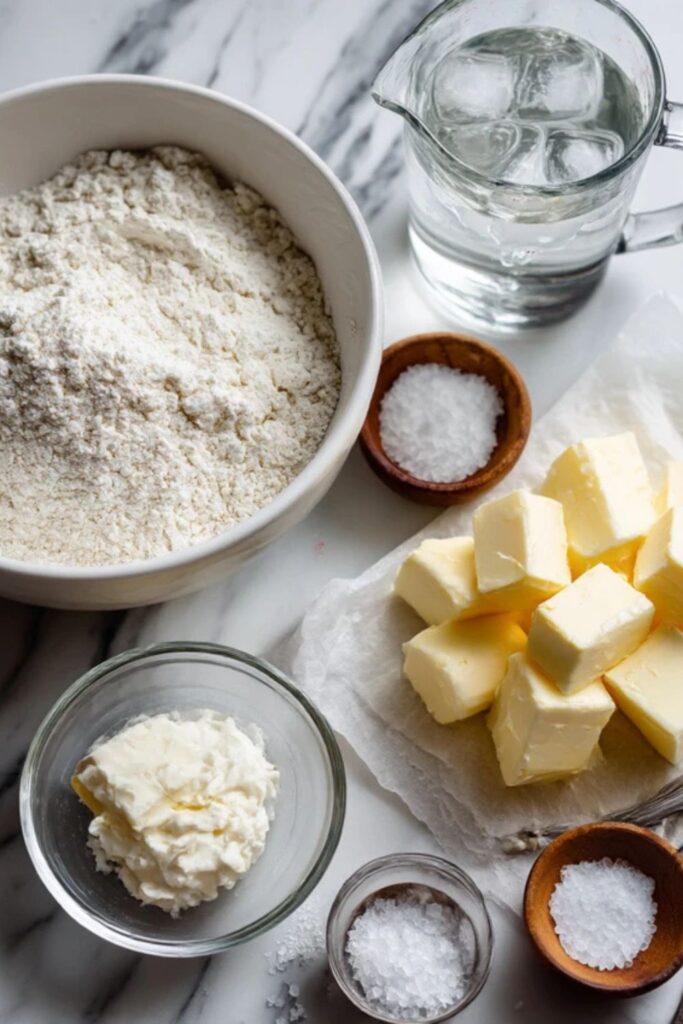
- 2 cups all-purpose flour
- 1 tsp salt
- ¼ tsp sugar (for color)
- 6 oz (1½ sticks) chilled butter, cut into ½-inch pieces
- 4 Tb chilled vegetable shortening
- Scant ½ cup ice water (plus more if needed)
Per Cup Ratio (for scaling):
- 1 cup flour : ¾ stick butter : 2 Tb shortening : 3-4½ Tb water
How To Make Julia Child Pie Crust
Method 1: By Hand
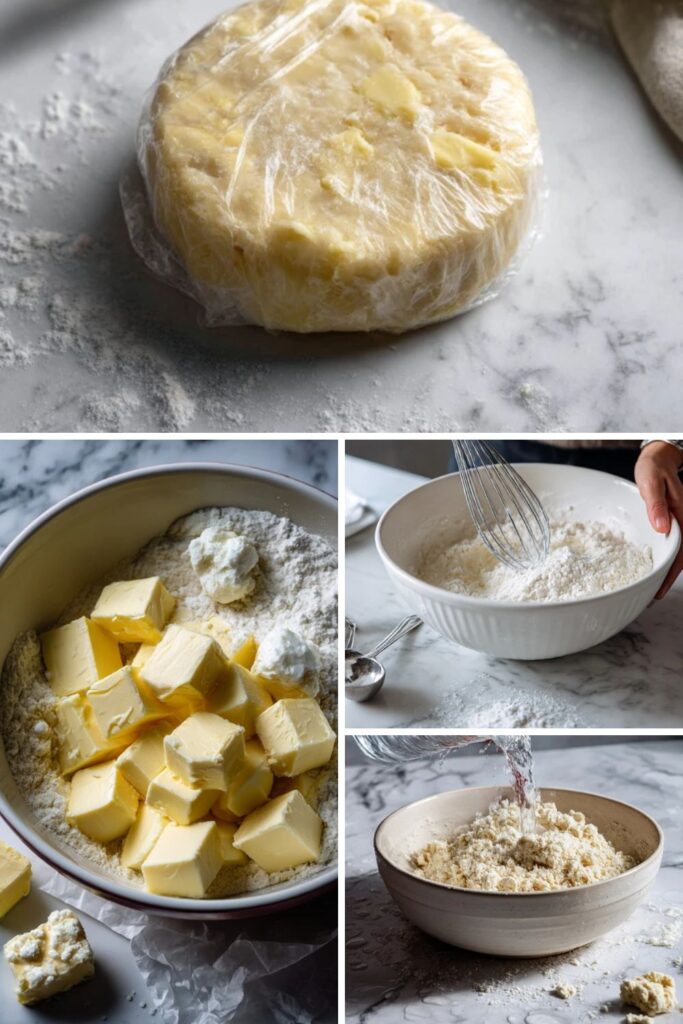
- Combine dry ingredients: Flour, salt, sugar in large bowl.
- Add cold fats: Butter pieces and shortening.
- Cut in fat rapidly: Using fingertips (not warm palms), rub flour and fat together until pieces are size of oatmeal flakes. Work quickly.
- Add ice water: Blend with one cupped hand, rapidly gathering dough into a mass.
- Finish forming: Sprinkle any remaining bits with water droplets, press into ball. Dough should be pliable but not sticky.
Method 2: Food Processor
- Pulse dry ingredients: With steel blade.
- Add cold fats: Butter and shortening.
- Pulse 4-5 times: Until oatmeal-sized pieces.
- Add water all at once: With machine running.
- Pulse until massing: Stop immediately when dough begins to clump. Do not overmix.
The Fraisage (Essential Final Step)
This French technique is what makes the difference:
- Place dough on floured board.
- Using heel of hand (not palm): Push small portions of dough away from you in a firm, quick 6-inch smear.
- Work through all dough: Two-spoonful bits at a time.
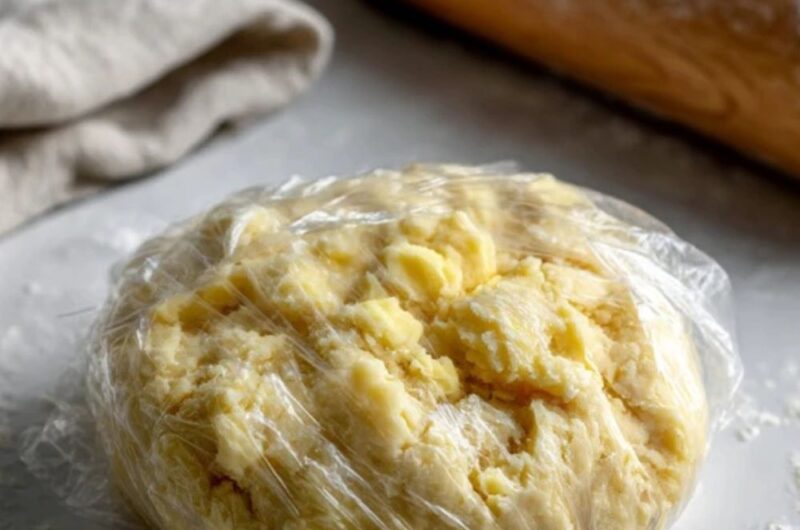
- Gather and knead briefly: Into smooth round ball.
- Wrap and chill: 1 hour in freezer OR 2 hours in refrigerator.
Why it matters: The fraisage ensures fat is evenly distributed without overworking, creating the most tender, flaky result.
Rolling Out the Dough
- If cold: Beat with rolling pin to soften, knead into flat circle.
- Flour lightly: Board and top of dough.
- Roll from center outward: Always rolling away from you.
- Lift and turn: After each roll, rotate dough slightly.
- Roll to ⅛ inch thick: About 2 inches larger than your pan.
Fitting into the Pan
- Butter the mold.
- Transfer dough: Roll onto pin and unroll over pan, OR fold in quarters and unfold.
- Ease into bottom: Don’t stretch.
- Press sides gently: Taking in about ⅜ inch all around.
- Trim excess: Roll pin across top of mold.
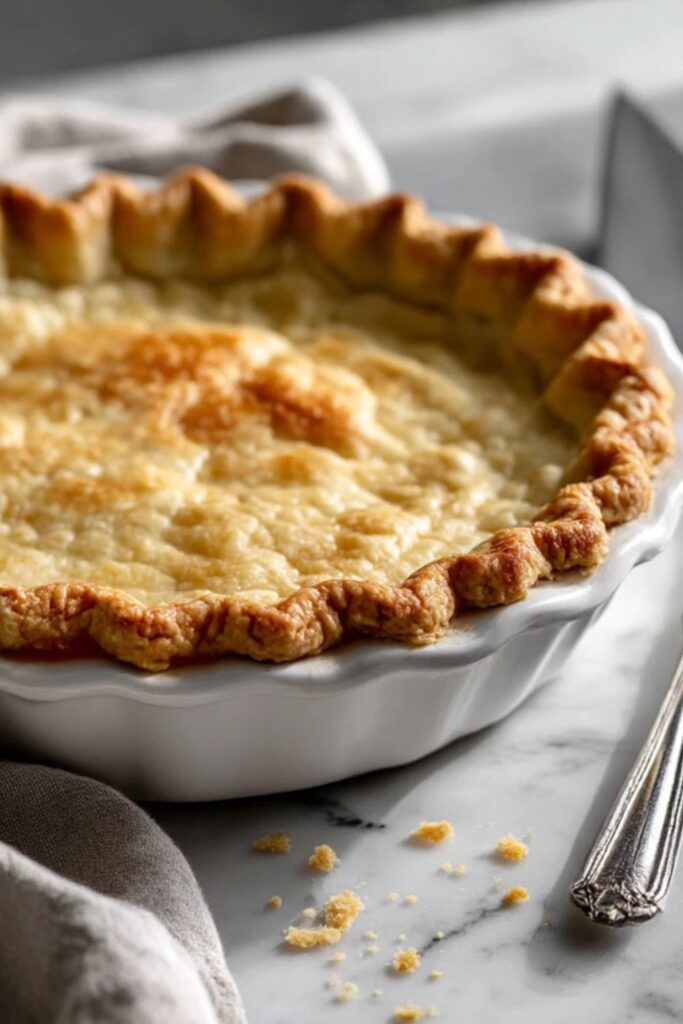
- Crimp edges: Decorative pattern with fork or fingers.
- Prick bottom: At ½-inch intervals.
- Chill if not baking immediately.
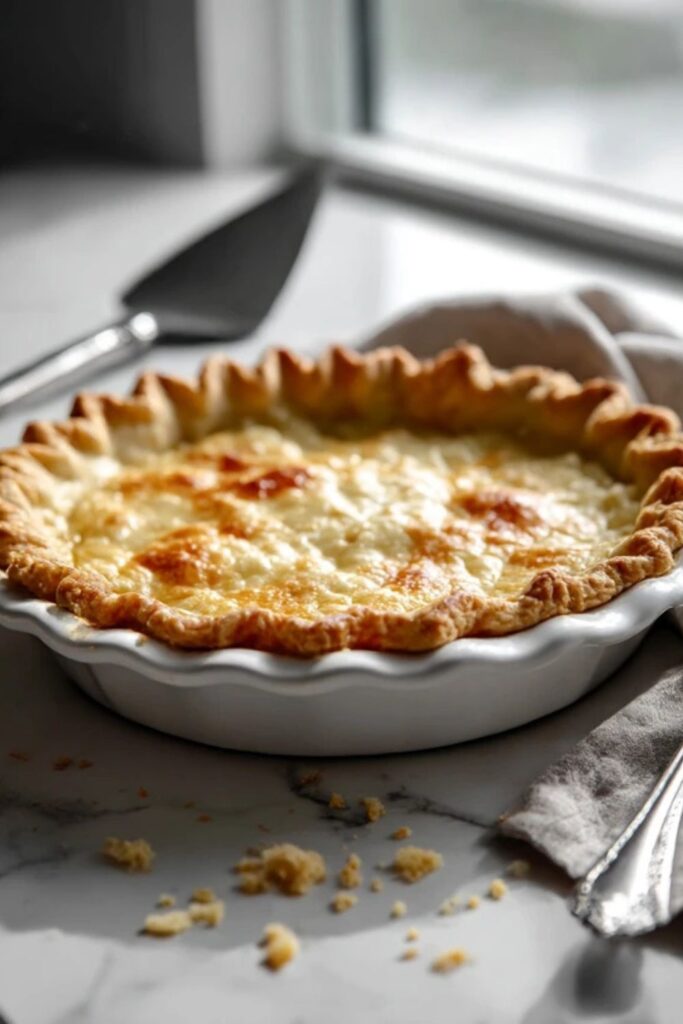
Blind Baking (Pre-Baking)
Partially Baked (for quiche, custard tarts):
- Line with buttered foil, fill with dried beans
- Bake 400°F, 8-9 minutes until set
- Remove foil and beans, prick again
- Return 2-3 minutes until starting to color
Fully Baked (for no-bake fillings):
- Continue 7-10 minutes more until lightly browned
Troubleshooting
Tough crust: Overworked the dough. Handle less next time.
Shrinking: Dough was stretched during fitting. Ease into pan, don’t pull.
Soggy bottom: Didn’t blind bake, or filling was too wet.
Cracks when rolling: Dough too cold. Let warm slightly and knead gently.
Recipe Tips
- Everything cold: Butter, shortening, water, even the bowl.
- Work quickly: Warmth is the enemy of flaky crust.
- Don’t overwork: Stop as soon as dough comes together.
- Fraisage once only: Don’t repeat the smearing step.
- Rest is essential: Chilling relaxes gluten, prevents shrinking.
Make-Ahead Strategy
Refrigerator: Wrapped airtight, 2-3 days.
Freezer: Wrapped airtight, several weeks. Thaw in refrigerator overnight.
Pre-rolled in pan: Freeze unbaked, bake directly from frozen (add 2-3 minutes).
How To Store
Unbaked dough: Refrigerator 2-3 days, freezer several weeks.
Baked shell: Room temperature 1 day, refrigerator 2-3 days. Crisp in 350°F oven before filling.
Nutrition Facts
Per serving (⅛ of crust):
- Calories: 180 kcal
- Protein: 2g
- Total Fat: 12g
- Saturated Fat: 6g
- Carbohydrates: 16g
- Fiber: 0g
- Sugar: 0g
- Sodium: 200mg
- Cholesterol: 23mg
FAQs
Yes, but Julia notes American flour can produce a brittle crust with all butter. The shortening adds tenderness.
Either stretched during fitting, not chilled enough, or overworked. Rest the dough properly.
Both work. Processor is faster but easier to overwork. Hand method gives more control.
The final smearing with heel of hand. It’s what makes French pastry superior. Don’t skip it.
Yes. Wrapped airtight, several weeks. One of the best make-ahead components.
Julia Child Pie Crust Recipe
Course: DessertCuisine: American, FrenchDifficulty: Easy4
servings30
minutes40
minutes300
kcalThe Julia Child Pie Crust Recipe (Pâte Brisée) is a masterclass in French pastry. Using a blend of butter and shortening combined with the professional “fraisage” technique, it delivers a consistently flaky, golden, and delicious crust for any pie or tart.
Ingredients
Standard Batch (2 cups flour):
2 cups all-purpose flour
1 tsp salt
¼ tsp sugar (for color)
6 oz (1½ sticks) chilled butter, cut into ½-inch pieces
4 Tb chilled vegetable shortening
Scant ½ cup ice water (plus more if needed)
Per Cup Ratio (for scaling):
1 cup flour : ¾ stick butter : 2 Tb shortening : 3-4½ Tb water
Directions
- Combine dry ingredients: Flour, salt, sugar in large bowl.
- Add cold fats: Butter pieces and shortening.
- Cut in fat rapidly: Using fingertips (not warm palms), rub flour and fat together until pieces are size of oatmeal flakes. Work quickly.
- Add ice water: Blend with one cupped hand, rapidly gathering dough into a mass.
- Finish forming: Sprinkle any remaining bits with water droplets, press into ball. Dough should be pliable but not sticky.
- Method 2: Food Processor
Pulse dry ingredients: With steel blade.- Add cold fats: Butter and shortening.
- Pulse 4-5 times: Until oatmeal-sized pieces.
- Add water all at once: With machine running.
- Pulse until massing: Stop immediately when dough begins to clump. Do not overmix.
Notes
- Everything cold: Butter, shortening, water, even the bowl.
- Work quickly: Warmth is the enemy of flaky crust.
- Don’t overwork: Stop as soon as dough comes together.
- Fraisage once only: Don’t repeat the smearing step.
- Rest is essential: Chilling relaxes gluten, prevents shrinking.
Source: Mastering the Art of French Cooking, Vol. 1 by Julia Child, pages 139-145
– Claire