 Claire
Julia Child Beef Stock (Fonds Brun) is the foundation of French cooking. Rich, deeply flavored brown stock is what separates home cooking from restaurant-quality sauces and soups.
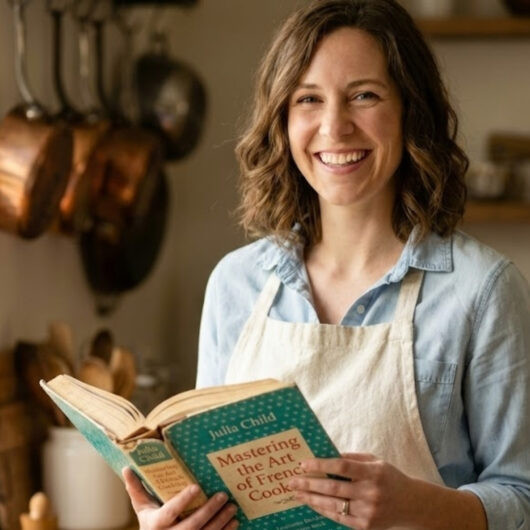
This recipe comes from Mastering the Art of French Cooking, Volume 1, page 110. Julia called stock the “fonds de cuisine,” literally the foundation and working capital of the kitchen. She wrote that this liquid “is the basis for soups, the moistening element for stews, braised meats, or vegetables, and the liquid used in making all the sauces that have a meat or fish flavoring.”
I make a big batch every few weeks and freeze it in portions. Once you cook with homemade stock, store-bought just doesn’t compare.
What is Beef Stock? Bones and meat simmered low and slow with vegetables and herbs. Brown stock means the bones are roasted first for deeper color and richer flavor.
Why You’ll Love This Recipe
- Restaurant-quality results. This is what makes French sauces taste like French sauces.
- Hands-off cooking. Once it’s simmering, it takes care of itself.
- Freezes perfectly. Make a big batch, freeze in portions, use for months.
- Better than store-bought. No comparison in flavor or body.
- Foundation for everything. Soups, stews, braises, sauces. All better with homemade stock.
Julia Child Beef Stock Ingredients
From Mastering the Art of French Cooking, Vol. 1, Page 110. Yields 3-4 quarts.
For Browning:
- 3 lbs beef shank meat
- 3-4 lbs cracked beef and veal bones
- 2 carrots, scrubbed and quartered
- 2 onions, halved and peeled
For Simmering:
- 2 tsp salt
- 2 celery stalks
- Cold water to cover
Herb Bouquet (tied in cheesecloth):
- ¼ tsp thyme
- 1 bay leaf
- 6 parsley sprigs
- 2 unpeeled garlic cloves
- 2 whole cloves
- Optional: 2 washed leeks
What bones to use:
- Marrow bones and knuckles are ideal
- Ask your butcher to crack them for you
- A mix of beef and veal gives the best body

How To Make Julia Child Beef Stock
Step 1: Brown the Bones
- Heat oven to 450°F: Arrange meat, bones, and vegetables in a shallow roasting pan.
- Roast until deeply browned: Place in middle of oven and roast 30-40 minutes, turning occasionally for even browning. Julia says this step is what gives brown stock its distinctive color and deeper flavor.
- Drain and transfer: Remove from oven, drain off the fat. Transfer everything to a large soup kettle.
- Deglaze the pan: Pour a cup or two of water into the roasting pan. Set over heat and scrape up all the browned bits. Pour into the kettle.
Step 2: Simmer the Stock
- Add cold water: Cover the ingredients in the kettle with cold water.
- Bring to a simmer and skim: As scum rises to the surface, skim it off. This is important for clarity.
- Add aromatics: Add salt, celery, and the herb bouquet.
- Simmer low and slow: Partially cover the kettle, leaving about 1 inch for steam to escape. Maintain a very quiet simmer for 4-5 hours. Julia is firm on this: “Never allow the liquid to boil; fat and scum incorporate themselves into the stock and will make it cloudy.”
Step 3: Strain and Degrease
- Strain: When you’ve simmered the most out of your ingredients, strain the stock into a bowl. Discard the solids.
- Degrease: Let settle for 5 minutes. Skim fat with a spoon, then blot the surface with paper towels. Or refrigerate until fat hardens and scrape it off.
- Concentrate if needed: Taste the stock. If the flavor is weak, boil it down to concentrate. Adjust seasoning.

Recipe Tips
- Roast for color: The 30-40 minutes of browning is what makes this brown stock. Don’t skip it or rush it.
- Never boil, only simmer: A rolling boil makes stock cloudy and greasy. You want just a bubble or two at the surface.
- Cold water start: Always start with cold water. It helps extract more flavor from the bones.
- Skim often: Removing the scum as it rises keeps your stock clear.
- Half meat, half bones: Julia notes this ratio gives the best balance of flavor and body.
- Reboil every 3-4 days: If storing in the fridge, bring to a boil every few days to prevent spoiling.
Recipe Variations
Meat Glaze (Glace de Viande): Boil stock down until it reduces to a syrup that becomes a hard jelly when cold. Three quarts reduces to about 1½ cups. Half a teaspoon stirred into a sauce gives it a tremendous boost of flavor.
Quick Version: In a pinch, canned beef bouillon works when simmered with meats, wine, and aromatic vegetables. Bouillon cubes are less successful.
What To Use Beef Stock For
Stock is the base for countless French dishes:
- Brown sauces (sauce bordelaise, sauce chasseur)
- Consommés and beef soups
- Braised meats and vegetables
- Beef stew and bourguignon
- Deglazing pans for quick pan sauces
Make-Ahead Strategy
Stock is the ultimate make-ahead project.
The Process:
- Roast bones and simmer for 4-5 hours
- Strain, degrease, cool completely
- Refrigerate or freeze in portions
Freezing Tips:
- Freeze in 1-cup and 2-cup portions for easy use
- Ice cube trays work for small amounts
- Leave headspace for expansion

How To Store
- Refrigerator: Store in a covered container for up to 1 week. The fat that solidifies on top actually helps preserve it. Remove before using.
- Reboil to keep fresh: Bring refrigerated stock to a boil every 3-4 days to prevent spoiling.
- Freezer: Freeze in portions for up to 6 months. Thaw overnight in the fridge or melt directly in your pot.
- Never cover hot stock: Let it cool completely before covering, or it will sour.
Nutrition Facts
Per 1 cup serving:
- Calories: 30 kcal
- Protein: 5g
- Total Fat: 0g
- Saturated Fat: 0g
- Carbohydrates: 1g
- Fiber: 0g
- Sugar: 0g
- Sodium: 150mg
- Cholesterol: 0mg
FAQs
Marrow bones and knuckles are ideal. Ask your butcher to crack them. A mix of beef and veal gives the best body.
Roasting creates the deep brown color and richer flavor that distinguishes brown stock from white stock.
Yes. Canned beef bouillon works in a pinch. Bouillon cubes are less successful. Canned consommé tends to be sweet.
When you’ve simmered the most out of your ingredients. The liquid should be rich, flavorful, and have good body.
You let it boil. Stock should only simmer with a bubble or two at the surface. Boiling incorporates fat and scum.

Julia Child Beef Stock Recipe
Course: SidesCuisine: American, FrenchDifficulty: Easy1
servings30
minutes5
hours30
kcalThe Julia Child Beef Stock Recipe is a classic French “Fond Brun” made by roasting beef bones and aromatics before a long, gentle simmer. This recipe creates a crystal-clear, gelatin-rich stock that adds incredible depth to soups, stews, and sauces.
Ingredients
- For Browning:
3 lbs beef shank meat
3-4 lbs cracked beef and veal bones
2 carrots, scrubbed and quartered
2 onions, halved and peeled
- For Simmering:
2 tsp salt
2 celery stalks
Cold water to cover
- Herb Bouquet (tied in cheesecloth):
¼ tsp thyme
1 bay leaf
6 parsley sprigs
2 unpeeled garlic cloves
2 whole cloves
Optional: 2 washed leeks
Directions
- Step 1: Brown the Bones
- Heat oven to 450°F: Arrange meat, bones, and vegetables in a shallow roasting pan.
- Roast until deeply browned: Place in middle of oven and roast 30-40 minutes, turning occasionally for even browning. Julia says this step is what gives brown stock its distinctive color and deeper flavor.
- Drain and transfer: Remove from oven, drain off the fat. Transfer everything to a large soup kettle.
- Deglaze the pan: Pour a cup or two of water into the roasting pan. Set over heat and scrape up all the browned bits. Pour into the kettle.
- Step 2: Simmer the Stock
- Add cold water: Cover the ingredients in the kettle with cold water.
Bring to a simmer and skim: As scum rises to the surface, skim it off. This is important for clarity. - Add aromatics: Add salt, celery, and the herb bouquet.
- Simmer low and slow: Partially cover the kettle, leaving about 1 inch for steam to escape. Maintain a very quiet simmer for 4-5 hours. Julia is firm on this: “Never allow the liquid to boil; fat and scum incorporate themselves into the stock and will make it cloudy.”
- Step 3: Strain and Degrease
- Strain: When you’ve simmered the most out of your ingredients, strain the stock into a bowl. Discard the solids.
- Degrease: Let settle for 5 minutes. Skim fat with a spoon, then blot the surface with paper towels. Or refrigerate until fat hardens and scrape it off.
- Concentrate if needed: Taste the stock. If the flavor is weak, boil it down to concentrate. Adjust seasoning.
Notes
- Roast for color: The 30-40 minutes of browning is what makes this brown stock. Don’t skip it or rush it.
- Never boil, only simmer: A rolling boil makes stock cloudy and greasy. You want just a bubble or two at the surface.
- Cold water start: Always start with cold water. It helps extract more flavor from the bones.
- Skim often: Removing the scum as it rises keeps your stock clear.
- Half meat, half bones: Julia notes this ratio gives the best balance of flavor and body.
- Reboil every 3-4 days: If storing in the fridge, bring to a boil every few days to prevent spoiling.
Source: Mastering the Art of French Cooking, Vol. 1 by Julia Child, Page 110
– Claire