 Claire
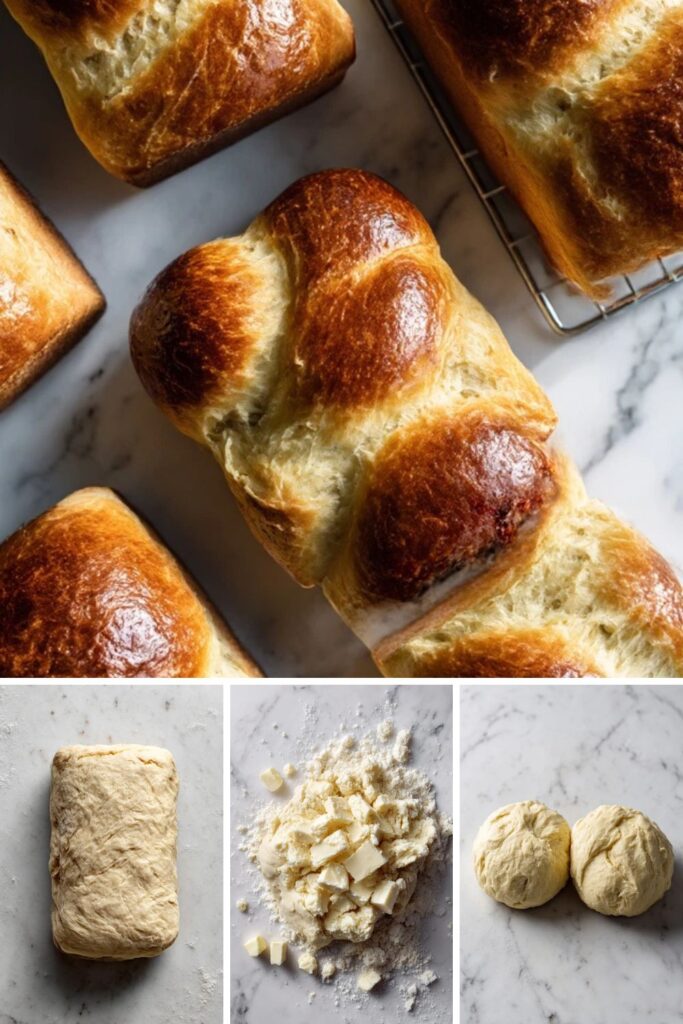
Julia Child Brioche is buttery, golden, impossibly light bread that tastes like it came from a Parisian bakery. The dough uses equal parts butter and flour, creating a texture so rich it practically melts.
Pages 84-96 of Mastering the Art of French Cooking, Volume 2 contain Julia’s definitive method. She writes that brioche “may persuade you they are manna from another planet,” but the technique is actually straightforward: eggs instead of milk, generous butter worked into kneaded dough, long slow rises. The result is worth every hour of waiting.
I bake these for Christmas morning. The house smells incredible, and everyone fights over the topknot.
What is Brioche? Rich French bread made with eggs and a high proportion of butter. Famous for its golden crust, tender crumb, and distinctive topknot shape (brioche à tête).
Why You’ll Love This Recipe
- Impossibly rich and tender. More butter than most breads use by half.
- That signature topknot. The classic brioche shape impresses everyone.
- Versatile. Breakfast with jam, afternoon tea, or base for savory dishes.
- Freezes perfectly. Make ahead for whenever you need it.
- Weekend project that’s mostly waiting. Hands-on time is under an hour total.
Julia Child Brioche Ingredients
From Mastering the Art of French Cooking, Vol. 2, Pages 84-96. Makes 1 large or about 10 small.
For the Dough:
- 3 large eggs (room temperature)
- 1 package active dry yeast
- 3 Tb warm water (not over 100°F)
- 1 tsp sugar (for yeast)
- 1¾ cups all-purpose flour
- 2 tsp sugar (additional)
- 1¼ tsp salt
- 6 oz (1½ sticks) cold unsalted butter
For Glazing:
- 1 egg beaten with 1 tsp water
Equipment:
- Fluted brioche mold (6-cup for large, or ½-cup sizes for petites brioches)
- Regular loaf pan or muffin tin works too

How To Make Julia Child Brioche
Step 1: Mix the Dough
- Dissolve yeast: Mix yeast, warm water, and 1 tsp sugar. Let liquefy.
- Combine: Make a well in flour. Add eggs, additional sugar, salt, and yeast mixture. Stir until a soft, sticky dough forms.
- Rest: Let sit briefly while preparing butter.
Step 2: Prepare the Butter
- Soften but keep cold: Beat butter with a rolling pin, then smear with heel of hand until malleable but still cold. Never let it get soft and oily.
Step 3: Knead
- Knead the dough: Flip, fold, and slap until dough becomes elastic and springs back when pushed. About 5 minutes. It will be sticky.
- Rest and knead again: Let rest 2-3 minutes, brief knead until smooth.
Step 4: Work in the Butter
- Add butter bit by bit: In 2 Tb pieces, fold and smear butter into dough with heel of hand. It gets messy, then comes together.
- Work quickly: Especially in warm kitchens. If butter turns oily, refrigerate dough 20 minutes.
Step 5: First Rise (5-6 hours)
- Mark the bowl: Fill with 7 cups water, mark level, empty and dry.
- Rise: Place dough in bowl, cover. Let rise at 70°F until it reaches the mark. Should feel light and springy.
Step 6: Deflate and Second Rise (2+ hours)
- Deflate: Pat into rectangle, fold like a letter twice. Return to bowl.
- Chill: Refrigerate until firm enough to shape, 30-40 minutes minimum. Can refrigerate overnight.
Step 7: Shape (Brioche à Tête)
- Butter the mold: Generously.
- Form the body: Roll ¾ of dough into a smooth ball. Place in mold.
- Make the funnel: Poke a hole in center 2½ inches wide and 2 inches deep with your fingers.
- Form the head: Roll remaining dough into a teardrop shape. Insert pointed end into the hole.
Step 8: Final Rise (1-2 hours)
- Rise uncovered: At 75°F until almost doubled and feels light and springy.
Step 9: Glaze and Bake
- Preheat to 475°F.
- Glaze carefully: Brush with egg wash twice. Do NOT glaze where head joins body or they’ll stick.
- Clip under the head: 4-5 scissor snips angled inward. Helps the head shape up.
- Bake: Start at 475°F for 15-20 minutes until risen and starting to brown. Reduce to 350°F, continue 25-30 minutes more.
- Test doneness: A knife inserted in center comes out clean. Slight shrinkage from mold.
- Cool: 15-20 minutes on rack before serving.
Recipe Tips
- Eggs at room temperature: Cold eggs slow down everything.
- Butter cold but soft: Malleable but not oily. This is critical.
- Don’t fear sticky dough: Brioche dough is sticky. That’s normal.
- Use the refrigerator liberally: Chilling firm up dough and slows butter from melting.
- Never glaze the joint: Where head meets body must stay unglued.
- Clip before baking: Those scissor snips help the head rise properly.
- Watch for browning: Cover with foil if getting too dark.
Recipe Variations
- Petites Brioches à Tête: Use ½-cup molds. Fill half full, shape with tiny topknots. Bake at 475°F for about 15 minutes.
- Brioche en Couronne (Ring): Form dough into ball, flatten, poke hole in center, stretch into 8-inch ring. Bake on sheet.
- Pain Brioché (Less Rich): Use less butter for a more bread-like texture. Good for wrapping sausages or pâtés.
What To Use Brioche For
Beyond breakfast:
- French toast (pain perdu) – the rich crumb absorbs custard beautifully
- Bread pudding
- Hamburger buns
- Hollowed out for savory fillings
- Toast points for foie gras or pâté
- Stale brioche for trifle or bread crumbs
How To Make-Ahead
- Freeze the dough: After the first rise and deflating is the ideal moment to freeze. Thaw overnight in refrigerator before shaping.
- Freeze shaped brioche: Cover formed, unrisen brioche airtight and freeze. Thaw and let rise before baking.
- Freeze baked brioche: Cool completely, wrap airtight. Thaw in 350°F oven for 30 minutes.
Brioche stales within 12 hours of baking, so freezing is essential if not eating immediately.

How To Store
- Fresh: Best within hours. Brioche stales quickly.
- Refrigerator: Not recommended. Accelerates staling.
- Freezer: Best option. Wrap airtight when cool. Thaw in 350°F oven.
- Reviving stale brioche: Slice and toast. Or use for French toast or bread pudding.
Nutrition Facts
Per serving (1/10 of large brioche):
- Calories: 220 kcal
- Protein: 5g
- Total Fat: 14g
- Saturated Fat: 8g
- Carbohydrates: 20g
- Fiber: 1g
- Sugar: 3g
- Sodium: 310mg
- Cholesterol: 95mg
FAQs
Brioche dough is supposed to be sticky because of all the butter. Work quickly and don’t add too much flour.
Yes. Mix on low until combined, then medium for kneading. Add butter gradually.
You probably glazed where head meets body, gluing them together. Keep egg wash away from that joint.
Insert a knife through the center. Should come out clean. You’ll also see slight shrinkage from the mold.
Yes. Skip the topknot. Shape into a loaf and bake in a buttered pan.

Julia Child Brioche Recipe
Course: BreakfastCuisine: American, FrenchDifficulty: Easy8
servings45
minutes45
minutes220
kcalThe classic Julia Child Brioche is a rich, egg-heavy yeast bread with a high butter content. This recipe uses a long rise and cold butter to create a tender, golden loaf with a pillowy texture
Ingredients
- For the Dough:
3 large eggs (room temperature)
1 package active dry yeast
3 Tb warm water (not over 100°F)
1 tsp sugar (for yeast)
1¾ cups all-purpose flour
2 tsp sugar (additional)
1¼ tsp salt
6 oz (1½ sticks) cold unsalted butter
- For Glazing:
1 egg beaten with 1 tsp water
Directions
- Step 1: Mix the Dough
- Dissolve yeast: Mix yeast, warm water, and 1 tsp sugar. Let liquefy.
- Combine: Make a well in flour. Add eggs, additional sugar, salt, and yeast mixture. Stir until a soft, sticky dough forms.
- Rest: Let sit briefly while preparing butter.
- Step 2: Prepare the Butter
- Soften but keep cold: Beat butter with a rolling pin, then smear with heel of hand until malleable but still cold. Never let it get soft and oily.
- Step 3: Knead
- Knead the dough: Flip, fold, and slap until dough becomes elastic and springs back when pushed. About 5 minutes. It will be sticky.
- Rest and knead again: Let rest 2-3 minutes, brief knead until smooth.
- Step 4: Work in the Butter
- Add butter bit by bit: In 2 Tb pieces, fold and smear butter into dough with heel of hand. It gets messy, then comes together.
- Work quickly: Especially in warm kitchens. If butter turns oily, refrigerate dough 20 minutes.
- Step 5: First Rise (5-6 hours)
- Mark the bowl: Fill with 7 cups water, mark level, empty and dry.
- Rise: Place dough in bowl, cover. Let rise at 70°F until it reaches the mark. Should feel light and springy.
- Step 6: Deflate and Second Rise (2+ hours)
- Deflate: Pat into rectangle, fold like a letter twice. Return to bowl.
- Chill: Refrigerate until firm enough to shape, 30-40 minutes minimum. Can refrigerate overnight.
- Step 7: Shape (Brioche à Tête)
- Butter the mold: Generously.
- Form the body: Roll ¾ of dough into a smooth ball. Place in mold.
- Make the funnel: Poke a hole in center 2½ inches wide and 2 inches deep with your fingers.
- Form the head: Roll remaining dough into a teardrop shape. Insert pointed end into the hole.
- Step 8: Final Rise (1-2 hours)
- Rise uncovered: At 75°F until almost doubled and feels light and springy.
- Step 9: Glaze and Bake
- Preheat to 475°F.
- Glaze carefully: Brush with egg wash twice. Do NOT glaze where head joins body or they’ll stick.
- Clip under the head: 4-5 scissor snips angled inward. Helps the head shape up.
- Bake: Start at 475°F for 15-20 minutes until risen and starting to brown. Reduce to 350°F, continue 25-30 minutes more.
- Test doneness: A knife inserted in center comes out clean. Slight shrinkage from mold.
- Cool: 15-20 minutes on rack before serving.
Notes
- Eggs at room temperature: Cold eggs slow down everything.
- Butter cold but soft: Malleable but not oily. This is critical.
- Don’t fear sticky dough: Brioche dough is sticky. That’s normal.
- Use the refrigerator liberally: Chilling firm up dough and slows butter from melting.
- Never glaze the joint: Where head meets body must stay unglued.
- Clip before baking: Those scissor snips help the head rise properly.
- Watch for browning: Cover with foil if getting too dark.
Source: Mastering the Art of French Cooking, Vol. 2 by Julia Child, Pages 84-96
– Claire