 Claire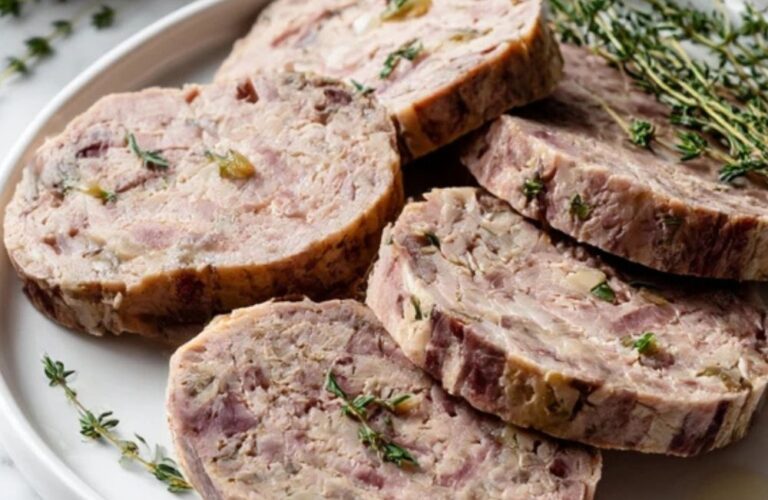
Julia Child Country Pâté (Pâté de Campagne) is the rustic French charcuterie classic that transforms humble pork, veal, and liver into something sublime. From Mastering the Art of French Cooking (pages 564-568), this pork and veal terrine is cooked in a bacon-lined dish, pressed under weights, and served cold with cornichons, mustard, and crusty bread.
Julia writes: “The memory of a good French pâté can haunt you for years. Fortunately they are easy to make, and you can even develop your own special pâté maison.”
I remember my first homemade pâté. I was terrified of grinding meat, intimidated by the technique. But I followed Julia’s steps exactly, and when I unmolded it two days later and cut through to see those decorative strips of ham and veal running through each slice, I understood. This is food that makes you feel accomplished. This is food worth the effort.
Julia’s promise: “A pork and veal pâté with decorative strips of veal and ham buried in its slices is the most classic of all pâté mixtures; the three elements blend themselves in a very savory manner.”
Why You’ll Love This Recipe
- Impressive and elegant: Stunning when sliced, revealing decorative layers.
- Keeps 10 days: Perfect for entertaining and impromptu meals.
- Develops flavor: Better after a day or two in the refrigerator.
- Classic technique: The foundation for all pâté making.
- Worth the effort: Results that far exceed store-bought.
What Is Country Pâté?
Terminology:
- Pâté or terrine: Cooked and served cold in its baking dish
- Pâté en croûte: The same mixture wrapped in pastry crust
- Galantine: A boned bird stuffed with the same mixture
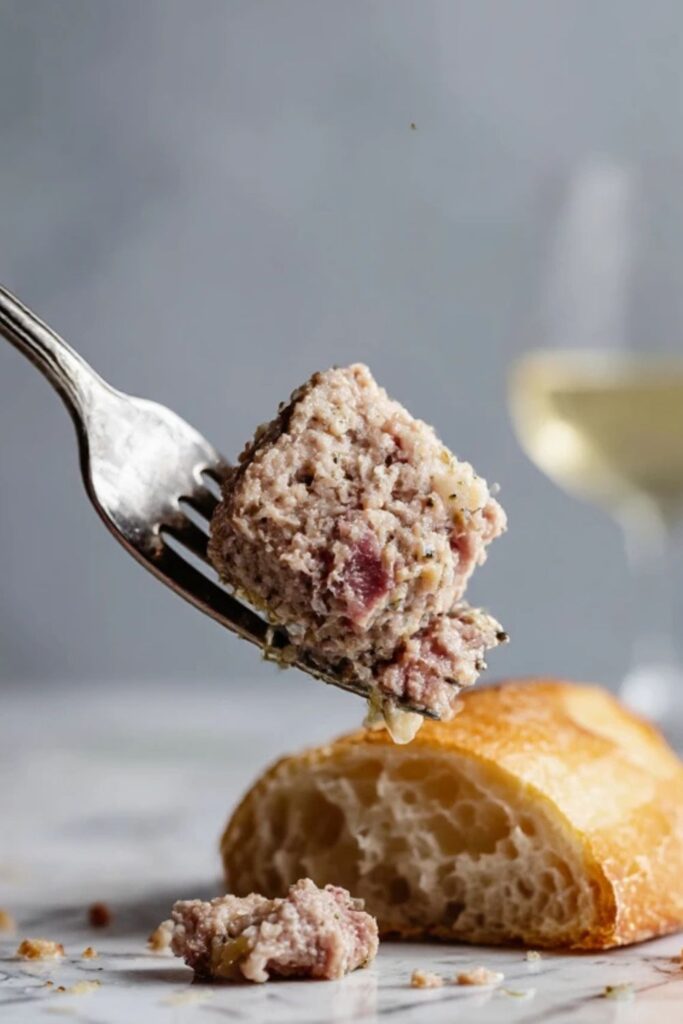
Country pâté (pâté de campagne) is characterized by its coarse, rustic texture. Unlike smooth liver pâté, you can see and taste the individual meat components.
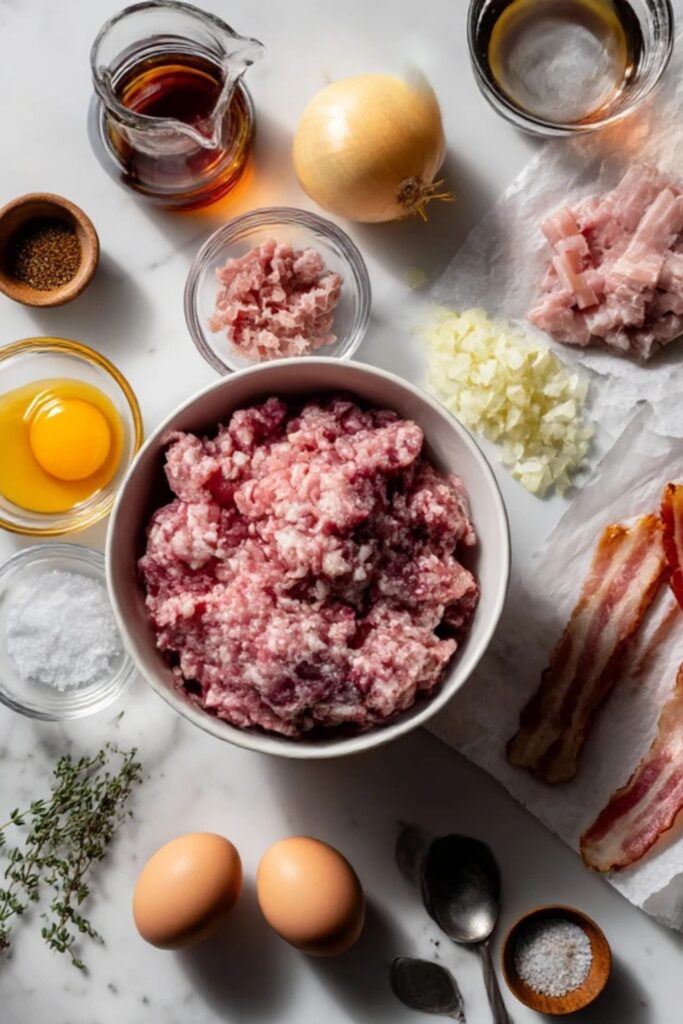
Julia Child Country Pâté Ingredients
From Mastering the Art of French Cooking, Vol. 1, pages 564-568. Makes about 7 cups.
For the Stuffing (Farce pour Pâtés):
- ½ cup very finely minced onions
- 2 Tb butter
- ½ cup port, Madeira, or cognac
- ¾ lb lean pork, ground
- ¾ lb lean veal, ground
- ½ lb fresh pork fat, ground (all meats ground together if possible)
- 2 lightly beaten eggs
- 1½ tsp salt
- ⅛ tsp pepper
- Big pinch allspice
- ½ tsp thyme
- Optional: 1 clove garlic, mashed
For the Marinated Veal Strips:
- ½ lb lean veal, cut into ¼-inch strips
- 3 Tb cognac
- Salt, pepper, thyme, allspice
- 1 Tb minced shallots
- Optional: 2-3 canned truffles, diced, with juice
For Molding:
- Sheets of fresh pork fat or blanched bacon
- ½ lb lean boiled ham, cut into ¼-inch strips
- 1 bay leaf
Understanding the Key Ingredients
Pork Fat: Julia says this is essential. “Blended with the meats, it prevents them from being dry and gives them a lighter texture.” Use fat back (lard gras), blanched salt pork, or thick bacon blanched 10 minutes.
The Grind: Coarse texture is key. Grind pork, veal, and fat together through the medium blade.
Port or Cognac: The alcohol cooks off, leaving complex flavor that distinguishes good pâté from great.
Decorative Strips: Thin strips of ham and veal marinated in cognac become beautiful patterns when sliced.
How To Make Julia Child Country Pâté
Step 1: Make the Stuffing (Farce)
- Soften onions: Cook slowly in butter 8-10 minutes until translucent, not browned.
- Reduce wine: Pour port/cognac into same pan, boil until reduced by half.
- Combine in bowl: Onions, reduced wine, ground meats, beaten eggs, salt, pepper, allspice, thyme, optional garlic.
- Beat vigorously: With wooden spoon until mixture lightens in texture and is thoroughly blended.
- Test seasoning: Sauté a small spoonful, taste. Adjust as needed. The mixture must be perfectly flavored before baking.
Step 2: Marinate the Veal Strips (Overnight Best)
- Combine in bowl: Veal strips, cognac, salt, pepper, thyme, allspice, shallots, optional truffles with juice.
- Marinate: While preparing other ingredients, or overnight for best flavor.
- Drain and reserve marinade for adding to stuffing.
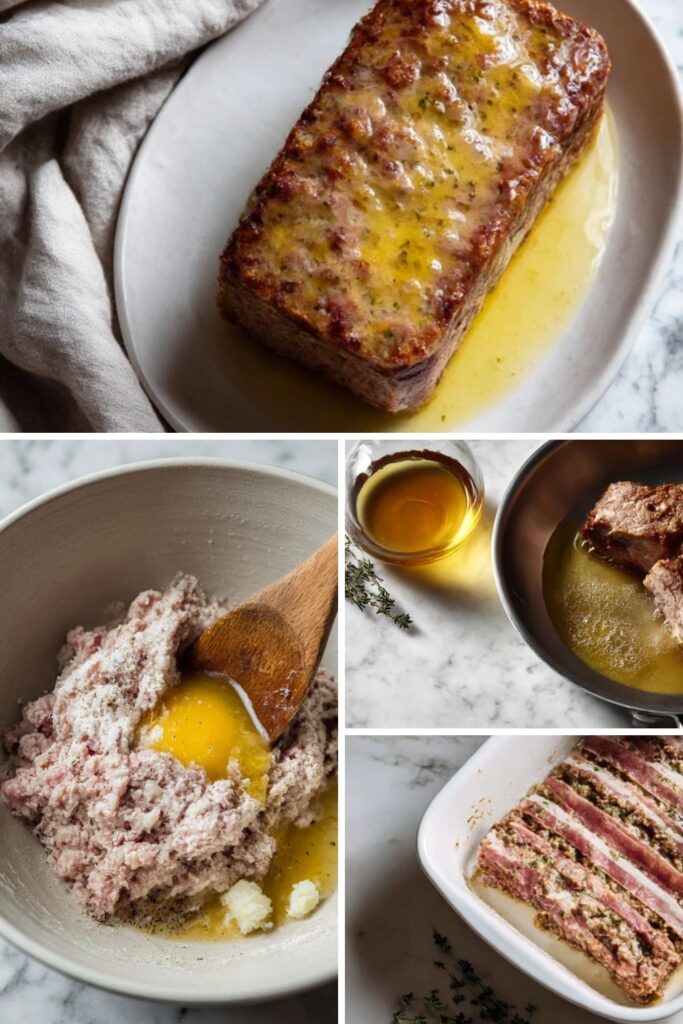
Step 3: Mold the Pâté
- Preheat oven to 350°F.
- Line terrine: Bottom and sides with sheets of pork fat or blanched bacon.
- Beat reserved marinade into stuffing. Divide stuffing into thirds.
- First layer: Dip hands in cold water, spread ⅓ of stuffing in bottom.
- Second layer: Half the marinated veal strips alternating with half the ham strips. Optional truffles down center.
- Third layer: Another ⅓ stuffing, then remaining veal and ham strips.
- Final layer: Last ⅓ of stuffing. Smooth top.
- Top with bay leaf, cover with sheet of pork fat or bacon strips.
Step 4: Bake in Water Bath
- Cover with foil, then heavy lid.
- Set in water bath: Boiling water halfway up sides of terrine.
- Bake 1½ hours in lower third of oven. Add boiling water as needed.
- Test doneness: Pâté shrinks slightly from sides. Surrounding fat and juices are clear yellow with no pink traces.
Step 5: Weight and Chill (Essential)
- Remove from water bath. Place terrine on plate.
- Remove lid. Place a board or pan that fits inside terrine on top of foil.
- Weight with 3-4 lbs: Meat grinder parts, canned goods, anything heavy.
- Cool at room temperature several hours or overnight, weighted.
- Chill weighted for at least 24 hours before serving.
Why Weighting Is Essential
The weight serves two purposes:
- Compacts the meat: Eliminates air pockets for better texture
- Improves sliceability: Makes clean, neat slices instead of crumbly ones
Never skip this step. Unweighted pâté will be acceptable; weighted pâté will be excellent.
Recipe Tips
- Test seasoning before baking: Julia says the mixture must be perfectly flavored. Sauté a spoonful and taste.
- Coarse grind matters: You want texture, not mush. Medium blade of meat grinder.
- Marinate overnight: The veal strips absorb cognac and seasonings much better.
- Blanch bacon properly: 10 minutes in simmering water removes smoky taste.
- Clear yellow juices: This is how you know it’s done. Pink means more time.
- Weight generously: 3-4 pounds minimum. More is fine.
- Wait 24 hours: Flavors develop and texture sets. Patience pays.
How To Serve
From the terrine: Slice directly from the dish at the table.
Unmolded: Turn out onto platter for fancier presentation.
In aspic: For elegant occasions, glaze with jellied stock.
Accompaniments: Cornichons, Dijon mustard, crusty French bread, butter lettuce.
Homemade brioche also makes excellent toast points.
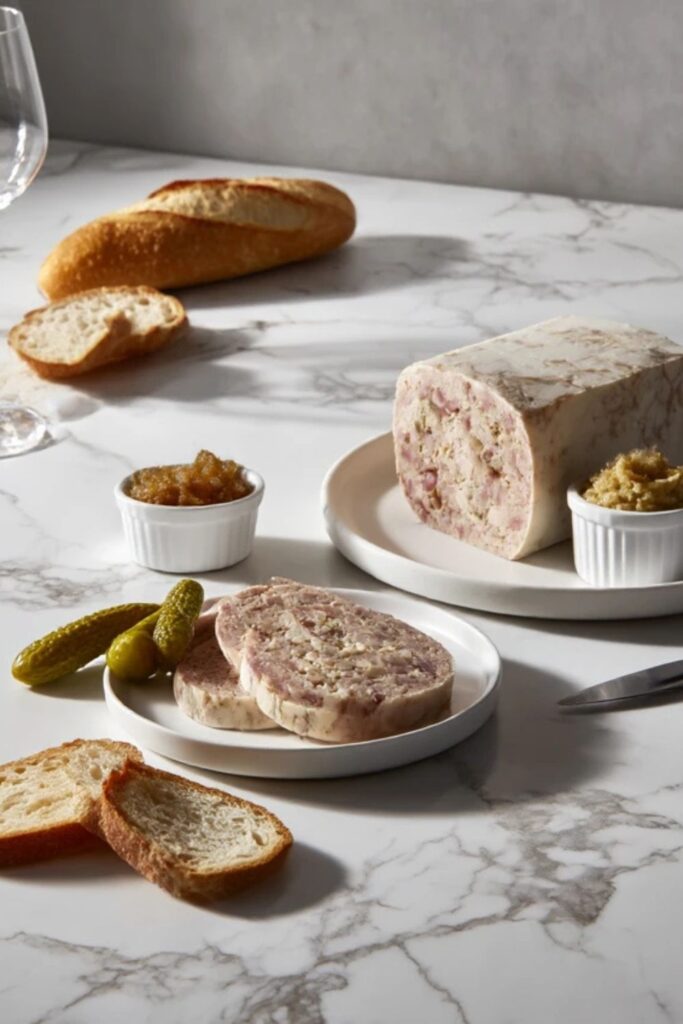
Serving Suggestions
Julia says pâté needs only simple accompaniments:
- French bread or toast points
- Cornichons (French pickles)
- Dijon mustard
- A simple green salad
Wine: Dry white (Chablis, Mâcon), rosé, or light red (Beaujolais, Chinon).
Variations
Game Pâté: Add 1 lb rabbit, duck, or pheasant. Cut into strips for layering, grind smaller pieces into stuffing.
Liver Pâté: Add 1 lb chicken, calf, or pork liver. Sauté briefly with onions before adding to stuffing.
Make-Ahead Strategy
Pâté is the ultimate make-ahead dish:
- Up to 10 days ahead: Make completely, keep refrigerated.
- For serving: Slice directly from fridge. Pâté is meant to be cold.
How To Store
- Refrigerator: In terrine, covered, up to 10 days. For longer storage, unmold, wipe off jelly, wrap airtight, or cover with melted pork fat.
- Freezer: Julia warns: “Pâtés may be frozen, but they will never again have their original texture. Once you have compared the two, you will always recognize the somewhat damp quality of thawed pâté.” Fresh is always better.
Nutrition Facts
Per serving (about ⅓ cup):
- Calories: 285 kcal
- Protein: 18g
- Total Fat: 22g
- Saturated Fat: 8g
- Carbohydrates: 2g
- Fiber: 0g
- Sugar: 1g
- Sodium: 420mg
- Cholesterol: 95mg
FAQs
Flavors meld and texture sets. Freshly baked pâté is good; properly chilled pâté is excellent.
Ask your butcher to grind the meats together. Or use a food processor in pulses (be careful not to make it too fine).
Removes the smoky flavor which would overpower the delicate pâté.
Pâté shrinks from sides of terrine, and surrounding juices are clear yellow with no pink traces.
Yes. Use small ramekins. Reduce baking time to about 45 minutes.
Small French pickles, more sour and crunchy than American pickles. Essential accompaniment.
Source: Mastering the Art of French Cooking, Vol. 1 by Julia Child, pages 564-568
– Claire