 Claire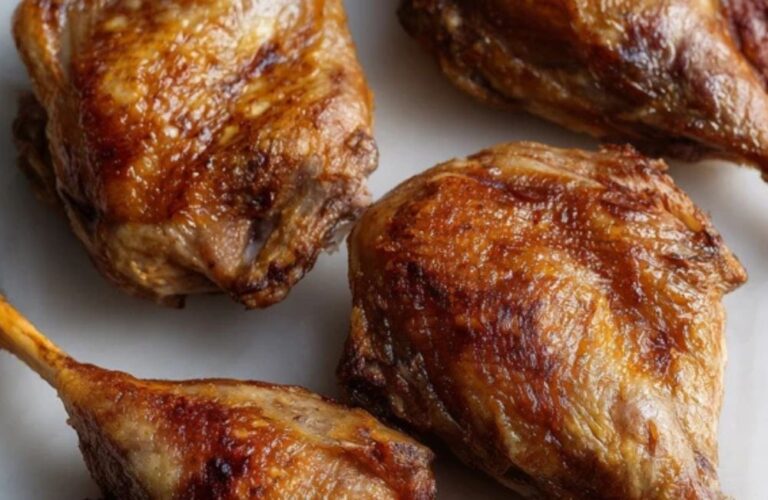
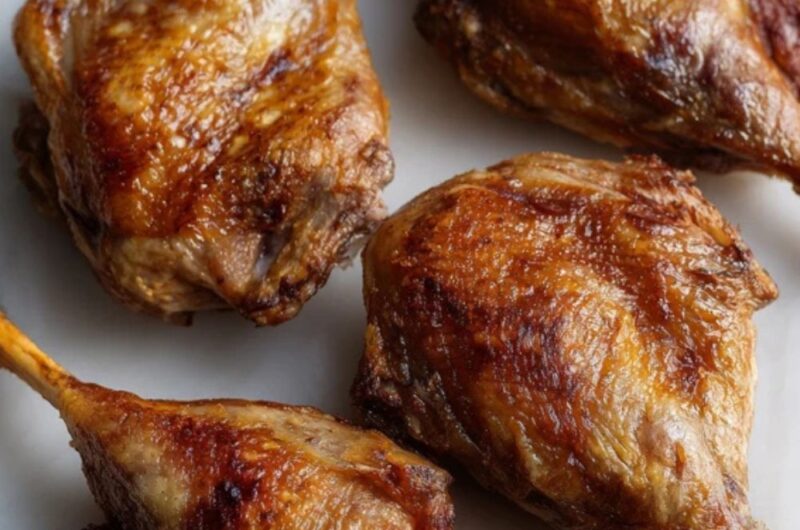
Julia Child Duck Confit (Confit de Canard) is duck legs slowly cooked in their own fat until meltingly tender. This is traditional French preservation cooking from Gascony.
This recipe comes from Mastering the Art of French Cooking, Volume 2, pages 312-317. Julia wrote about confit for goose, but the method works exactly the same for duck. I’ve made this more times than I can count. The first time took me two days and I was nervous the whole way through. Now? I keep a stash in my fridge at all times.
The process is simple: salt-cure the legs, then cook them submerged in fat at low temperature. The result is incredibly tender meat that keeps for months.
What is Duck Confit? Duck legs salt-cured and slow-cooked in fat. The meat becomes silky-tender. The skin crisps up beautifully when you sear it before serving.
Why You’ll Love This Recipe
- The texture. Silky, tender meat that falls off the bone. Nothing else compares.
- Keeps for months. Packed in fat, confit lasts 2-3 months in the fridge. I always have some on hand.
- The fat is gold. Use it for potatoes, eggs, vegetables. Don’t waste a drop.
- Classic cassoulet ingredient. You can’t make authentic cassoulet without it.
- Easier than it looks. Salt, wait, cook in fat. That’s it.
Let’s get into it.
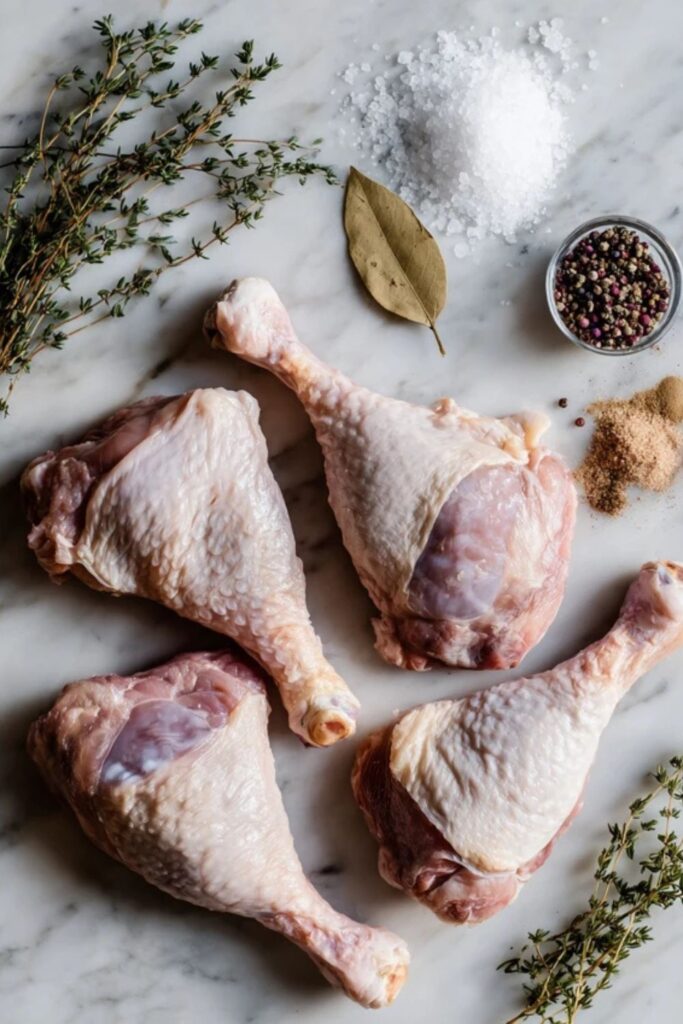
Julia Child Duck Confit Ingredients
From Mastering the Art of French Cooking, Vol. 2, Pages 312-317. Adapted for duck. Serves 4-6.
For the Salt Cure:
- 4 duck legs (thigh and drumstick attached)
- ¼ cup coarse salt (sea salt or kosher)
- 2 tsp sugar
- ¼ tsp crushed juniper berries (optional)
- ¼ tsp white pepper
- Pinch of allspice
- Pinch of thyme
- 1 bay leaf, crumbled
For Cooking:
- 4-6 cups duck fat (enough to cover legs completely)
Substitutions:
- No duck fat? Use lard or a mix of lard and olive oil. Not ideal, but it works.
- No juniper? Skip it. The salt and herbs do most of the work.
How To Make Julia Child Duck Confit
Day 1: Salt the Duck
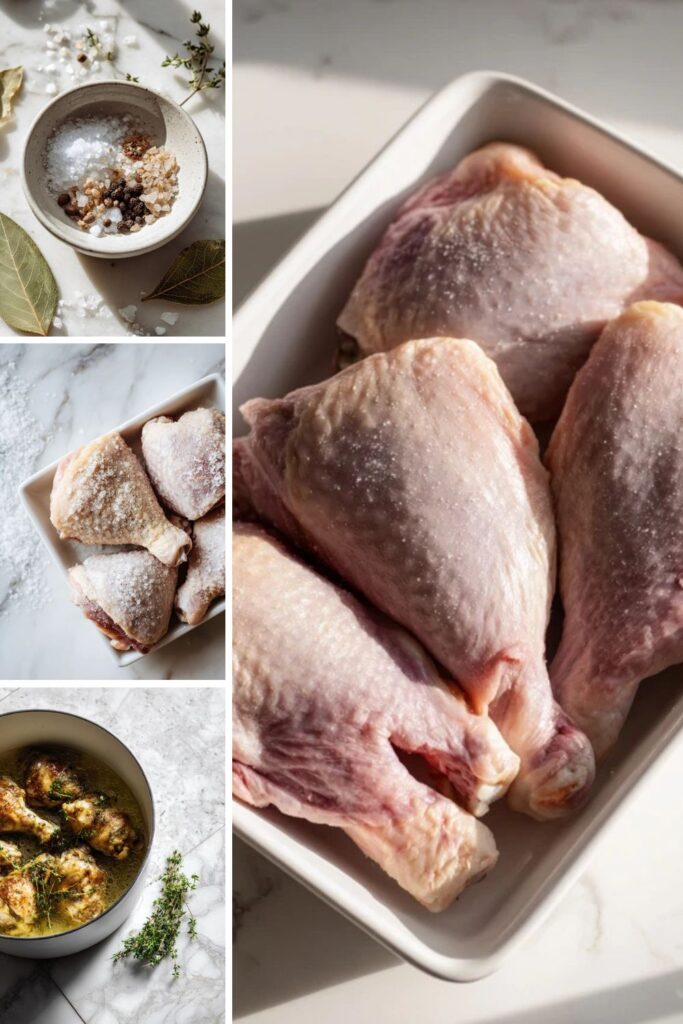
- Mix the cure. Combine salt, sugar, juniper, pepper, allspice, thyme, and crumbled bay leaf.
- Rub it in. Pat duck legs dry. Rub the salt mixture into all sides, corners, and crevices. Pat a thin layer over the meat.
- Pack and refrigerate. Place legs in a dish, cover with plastic wrap, and weight them down with a plate. Refrigerate for 24 hours. Don’t go longer or you’ll need to soak them to remove excess salt.
Day 2: Cook the Duck
- Prep the legs. Wipe off the salt and dry thoroughly with paper towels.
- Heat the fat. Melt duck fat in a heavy pot or Dutch oven. Keep it between 200 and 205 degrees. If it goes over 325, it’ll discolor.
- Submerge the duck. Place legs in the fat. They should be covered by at least an inch.
- Cook low and slow. Maintain that 200-205 degree temperature. Cook for 1¼ to 1½ hours. Done when meat is tender and juices run clear yellow.
- Cool and store. Remove legs and strain the fat. Pack legs in a container and cover completely with fat. Refrigerate for up to 2-3 months.
To Serve: Crisp the Skin
- Heat a pan. Remove legs from fat (let fat soften at room temperature first). Heat a skillet over medium-high.
- Sear skin-side down. Cook until skin is golden and crispy, about 5-7 minutes. Flip and warm through.
Recipe Tips
- 24 hours is the sweet spot. Less and the flavor doesn’t penetrate. More and you’ll need to desalt.
- Temperature control is everything. I use a thermometer. Keep fat at 200-205. Too hot and it turns dark.
- Save every drop of that fat. Best thing for potatoes, eggs, vegetables. Keeps for a month in the fridge.
- Covered by an inch. Legs must be fully submerged. Short on fat? Use a smaller pot.
- Always crisp before serving. Confit straight from the fat is tender but soft. A quick sear fixes that.
- Look for Moulard legs. They’re larger and fattier than Pekin. Worth seeking out.
Recipe Variations
- Traditional Storage: Pack cooked legs in a crock, cover with liquid fat, refrigerate. Keeps 2-3 months. To remove, let fat soften at room temperature, then lift out what you need.
- Quick Crisp: Skip the pan. Put legs on a baking sheet and broil skin-side up. Watch carefully. Takes only a few minutes.
- Shredded Confit: Pull the meat off the bone. Use for salads, pasta, or cassoulet.
What To Serve With Duck Confit
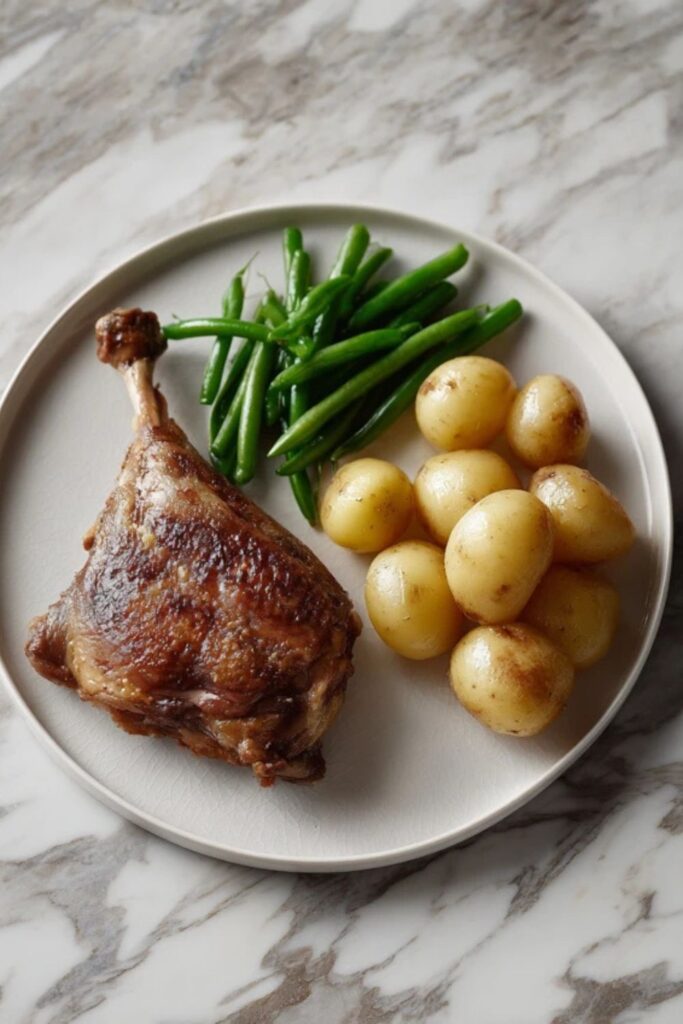
The classic pairing is potatoes sautéed in duck fat. Cut them into cubes, fry them in the rendered fat until golden and crispy. Nothing beats it.
Other good options:
- Garlic mashed potatoes
- French lentils with a mustard vinaigrette
- White beans with herbs
- Braised red cabbage or sauerkraut
- A simple frisée salad with warm bacon dressing
Wine: A light red like Pinot Noir or a dry rosé. Duck is rich, so don’t go too heavy.
Make-Ahead Strategy
This is the ultimate make-ahead dish.
- Salt legs 24 hours ahead (required)
- Cooked confit keeps 2-3 months under fat
- Crisp the skin just before serving
How To Store
- Refrigerator (Traditional Method): Pack cooked legs in a container and cover completely with the strained cooking fat. Make sure legs are fully submerged. Keeps 2-3 months.
- Refrigerator (Without Fat): Store in an airtight container. Keeps 4-5 days.
- Freezer: Wrap legs tightly in plastic, then foil. Keeps 6-8 weeks. Thaw overnight in the fridge before reheating.
- The Cooking Fat: Strain and store in covered jars. Keeps a month or more in the fridge. Use for potatoes, eggs, roasting vegetables.
- Reheat: Let legs come to room temperature. Heat a skillet over medium-high and sear skin-side down until crispy, about 5-7 minutes. Flip and cook another 2-3 minutes until warmed through. Alternatively, warm in a 350°F oven for 10-15 minutes, then finish under the broiler to crisp the skin.
Nutrition Facts
Per serving (1 duck leg):
- Calories: 380 kcal
- Protein: 26g
- Total Fat: 30g
- Saturated Fat: 9g
- Carbohydrates: 0g
- Fiber: 0g
- Sugar: 0g
- Sodium: 580mg
- Cholesterol: 145mg
FAQs
Butcher shops, specialty stores, or online. You can also render it yourself from duck trimmings.
Absolutely. Strain it, refrigerate it. Use for your next batch or for potatoes.
Temperature went too high. Keep it under 325. Use a thermometer.
Tender when pierced with a knife. Juices run clear yellow. Deep golden color.
No. Deep frying is high heat, quick. Confit is low heat, slow. Totally different.
Yes. Same method, same timing. Works great.
Julia Child Duck Confit Recipe
Course: DinnerCuisine: FrenchDifficulty: Easy4
servings30
minutes1
hour30
minutes380
kcalJulia Child Duck Confit is a traditional French preservation method where duck legs are cured in salt and aromatics, then slow-cooked in their own fat. This results in incredibly tender meat that can be stored for months or crisped up immediately for a gourmet dinner.
Ingredients
- For the Salt Cure:
4 duck legs (thigh and drumstick attached)
¼ cup coarse salt (sea salt or kosher)
2 tsp sugar
¼ tsp crushed juniper berries (optional)
¼ tsp white pepper
Pinch of allspice
Pinch of thyme
1 bay leaf, crumbled
- For Cooking:
4-6 cups duck fat (enough to cover legs completely)
Directions
- Day 1: Salt the Duck
- Mix the cure. Combine salt, sugar, juniper, pepper, allspice, thyme, and crumbled bay leaf.
- Rub it in. Pat duck legs dry. Rub the salt mixture into all sides, corners, and crevices. Pat a thin layer over the meat.
- Pack and refrigerate. Place legs in a dish, cover with plastic wrap, and weight them down with a plate. Refrigerate for 24 hours. Don’t go longer or you’ll need to soak them to remove excess salt.
- Day 2: Cook the Duck
- Prep the legs. Wipe off the salt and dry thoroughly with paper towels.
- Heat the fat. Melt duck fat in a heavy pot or Dutch oven. Keep it between 200 and 205 degrees. If it goes over 325, it’ll discolor.
- Submerge the duck. Place legs in the fat. They should be covered by at least an inch.
- Cook low and slow. Maintain that 200-205 degree temperature. Cook for 1¼ to 1½ hours. Done when meat is tender and juices run clear yellow.
- Cool and store. Remove legs and strain the fat. Pack legs in a container and cover completely with fat. Refrigerate for up to 2-3 months.
Notes
- 24 hours is the sweet spot. Less and the flavor doesn’t penetrate. More and you’ll need to desalt.
- Temperature control is everything. I use a thermometer. Keep fat at 200-205. Too hot and it turns dark.
- Save every drop of that fat. Best thing for potatoes, eggs, vegetables. Keeps for a month in the fridge.
- Covered by an inch. Legs must be fully submerged. Short on fat? Use a smaller pot.
- Always crisp before serving. Confit straight from the fat is tender but soft. A quick sear fixes that.
- Look for Moulard legs. They’re larger and fattier than Pekin. Worth seeking out.
Source: Mastering the Art of French Cooking, Vol. 2 by Julia Child, Pages 312-317
– Claire