 Claire
Julia Child French Bread changed home baking in America. She worked with Professor Raymond Calvel, a master French baker, to develop a method that creates authentic, crusty baguettes in an ordinary home oven. The result? Crackly crust, chewy interior, holes like Swiss cheese.
Pages 53-74 of Mastering the Art of French Cooking, Volume 2 contain what might be Julia’s most ambitious home recipe. She wrote that a fine loaf “has body, chewability, and tastes and smells of the grain.” The secret isn’t fancy ingredients. It’s time. French bread contains only flour, water, salt, and yeast. The magic happens during long, slow fermentation.
I’ll be honest: this takes most of a day. But once you pull those golden loaves from the oven, you’ll never buy supermarket bread again.
What is French Bread? Crusty bread made from just flour, water, salt, and yeast. No sugar, no oil, no preservatives. Classic shapes include baguettes, batards, boules, and ficelles.
Jump to RecipeWhy You’ll Love This Recipe
- Bakery-quality at home. Crackly crust, chewy interior, authentic French flavor.
- Four ingredients only. Flour, water, salt, yeast. That’s it.
- The real technique. Julia studied with a master French baker to develop this method.
- Hands-off rising. Most of the time is just waiting while fermentation develops flavor.
- Impressive results. Nothing you buy will ever compare.
The Secret: Time
Julia was emphatic about this. Speed is “the villain in the bread basket.” Too much yeast and warm temperatures make bread rise fast but taste like nothing. Her method uses minimal yeast and long, slow fermentation. Three rises over 6-7 hours. That’s where the flavor comes from.
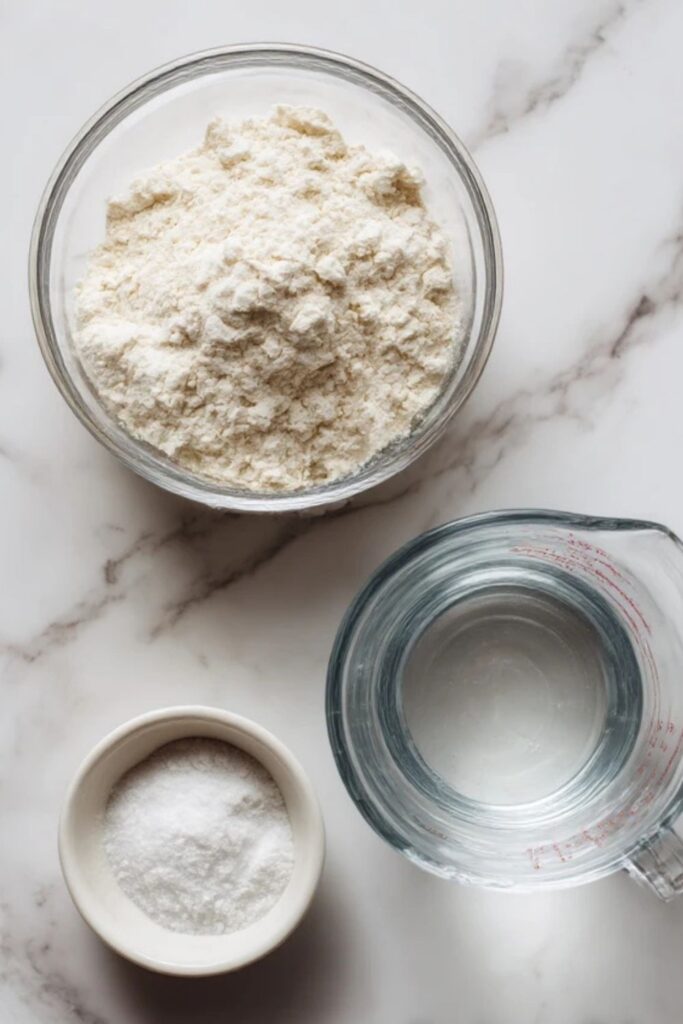
Julia Child French Bread Ingredients
From Mastering the Art of French Cooking, Vol. 2, Pages 53-74. Makes 3 loaves.
- 1 package active dry yeast (or 0.6 oz fresh yeast)
- ⅓ cup warm water (not over 100°F)
- 3½ cups all-purpose flour
- 2¼ tsp salt
- 1¼ cups tepid water (70-74°F)
That’s all. No sugar, no oil, no milk.
Flour note: Use regular all-purpose flour. Don’t use “bread flour” which has too high a gluten content for French bread.
Equipment You’ll Need
- Large mixing bowl with straight sides
- Kneading surface
- Canvas cloth or linen towels for rising
- Baking sheet (largest that fits your oven)
- Razor blade for slashing
- Spray bottle for misting
- Pizza stone or quarry tiles (optional but recommended)
How To Make Julia Child French Bread
Step 1: Mix the Dough (10 minutes)
- Dissolve yeast: Stir yeast into ⅓ cup warm water. Let liquefy completely.
- Combine ingredients: Add flour to a large bowl. Pour in yeast mixture, salt, and remaining tepid water.
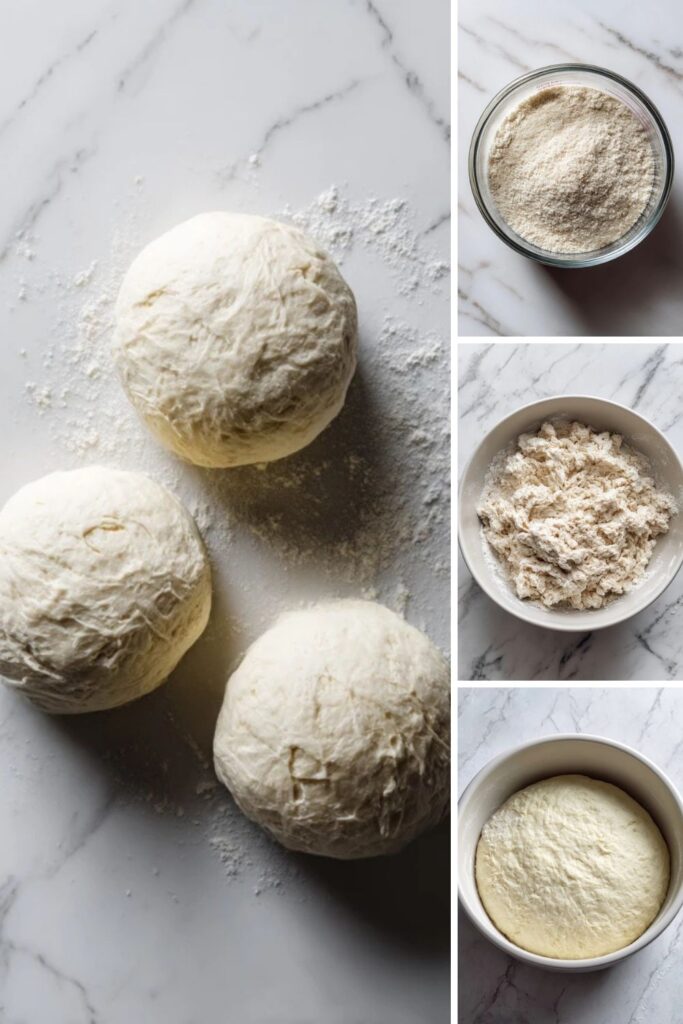
- Form dough: Stir and press with a spatula until a shaggy dough forms. Turn out onto a floured surface. Rest 2-3 minutes while you wash the bowl.
Step 2: Knead (5-10 minutes)
- Knead by hand: Lift near edge of dough, flip it over onto itself, slap down. Repeat rapidly. After a few minutes, push forward with heel of your hand as you flip.
- Check elasticity: When dough springs back after pushing, it’s ready. Surface should be smooth but dough will still be soft.
Step 3: First Rise (3-5 hours)
- Mark the bowl: Fill bowl with 10½ cups water, mark the level, then empty and dry. This is your target.
- Rise: Place dough in bowl, cover with plastic, set at 70°F. Let rise until it reaches the marked level, about 3-5 hours.
Step 4: Second Rise (1½-2 hours)
- Deflate: Turn dough onto floured surface. Flatten gently and fold like an envelope: far edge down, left side over, right side over, near edge tucked under.
- Rise again: Return to bowl, cover. Rise until almost tripled, 1½-2 hours.
Step 5: Shape the Loaves (15 minutes)
- Divide dough: Cut into 3 equal pieces. Let rest 5 minutes covered.
- Form baguettes: One at a time, flatten into oval. Fold lengthwise, seal edges. Fold again, seal. Roll into 16-inch sausage shape.
- Place on floured cloth: Set shaped loaves seam-side up on flour-rubbed canvas, with ridges of fabric between them.
Step 6: Final Rise (1½-2½ hours)
- Cover and rise: Let loaves rise until almost tripled, light and slightly springy.
- Preheat oven: Set to 450°F at least 30 minutes before baking.
Step 7: Bake (25 minutes)
- Transfer to baking sheet: Flip loaves seam-side down onto buttered baking sheet.
- Slash the tops: Make 3 diagonal cuts with a razor blade, almost horizontal.
- Create steam: Mist loaves with water. Place in oven. Mist again at 3, 6, and 9 minutes.
- Bake 25 minutes: Crust should be deep golden and bread sounds hollow when thumped.
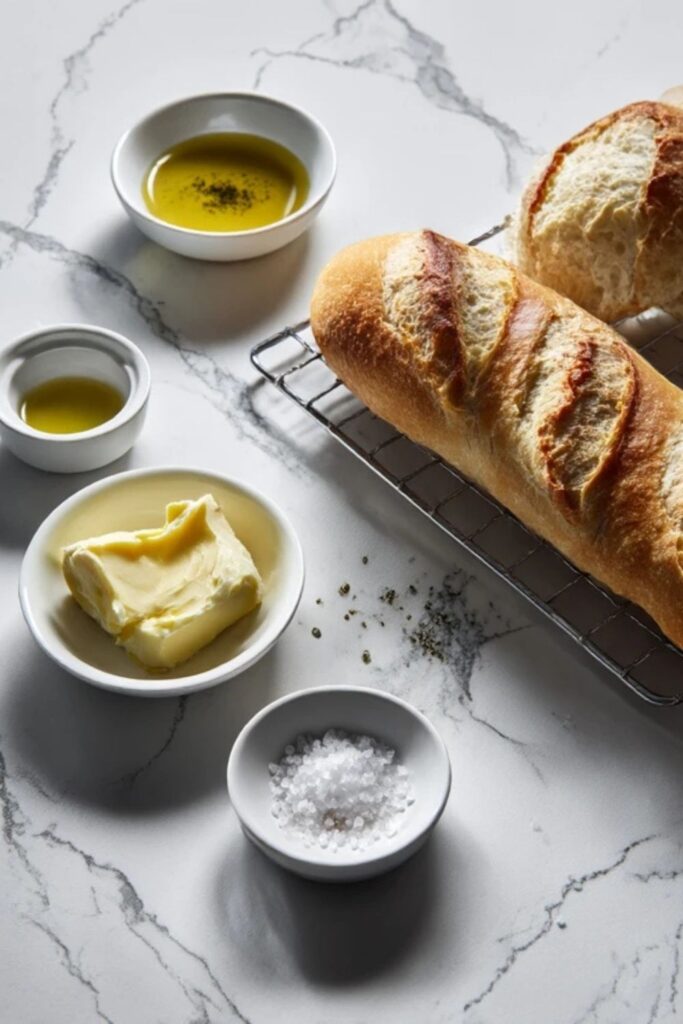
- Cool completely: Set on a rack for 2-3 hours. The flavor develops as it cools.
Recipe Tips
- Don’t rush the rises: Flavor comes from long fermentation. Speedier methods make bland bread.
- Keep dough soft: It should be slightly sticky. Resist adding too much flour.
- Temperature matters: 70°F is ideal for rising. Warmer makes it rise faster but with less flavor.
- Slash just before baking: The cuts let the bread expand. Do it right before it goes in the oven.
- Steam is crucial: Misting creates a crispy crust. A hot pan of water in the oven helps too.
- Cool completely: The inside continues to set. Cutting too soon makes it gummy.
Creating a Bakery Oven At Home
For the best crust, simulate a professional baker’s oven:
Hot baking surface: Use a pizza stone or quarry tiles. Preheat for 30+ minutes.
Steam: Place a pan of water on the bottom rack. Or put a hot brick into a pan of water for a big burst of steam.
Historical note: In the 1970s, Julia recommended baking on asbestos tiles before the health risks were known. Today, pizza stones and baking steels do the job safely.
Different Shapes
| Shape | Size | Pieces from Recipe |
|---|---|---|
| Bâtards | 16″ x 3″ | 3 loaves |
| Baguettes | 24″ x 2″ | 3 loaves |
| Ficelles | 16″ x 1½” | 5-6 thin loaves |
| Boules | Round loaf | 3 round loaves |
| Petits Pains | Oval rolls | 10-12 rolls |
Troubleshooting
| Problem | Likely Cause |
|---|---|
| Crust didn’t brown | Oven too cool or not enough salt |
| Crust too thick | Too much steam |
| Bread is heavy | Didn’t rise long enough |
| Flavor is bland | Not enough rising time |
| Tastes yeasty | Rose at too high a temperature |
| Slashes didn’t open | Over-risen or under-risen before baking |
Delayed Action Options
Not ready to bake? Julia included timing tricks:
- First rise at 55°F takes 7-8 hours
- First rise in refrigerator takes 9-10 hours
- Formed loaves can be refrigerated or frozen before final rise
This lets you stretch the process over two days or pause when convenient.
How To Store
Fresh: Best eaten the day it’s baked. Contains no preservatives.
Refrigerator: Wrap airtight, good for 1-2 days.
Freezer: Cool completely, wrap airtight, freeze up to 3 months. To revive, place frozen bread in cold oven, heat to 400°F, bake 20 minutes.
Nutrition Facts
Per 2-oz serving:
- Calories: 140 kcal
- Protein: 4g
- Total Fat: 0g
- Saturated Fat: 0g
- Carbohydrates: 29g
- Fiber: 1g
- Sugar: 0g
- Sodium: 290mg
- Cholesterol: 0mg
FAQs
That’s the secret. Long fermentation develops flavor. Fast bread tastes like nothing.
Julia says no. Bread flour has too high a gluten content for authentic French bread.
Need more steam. Mist the loaves and add a pan of water to the oven.
You can mix the dough, but Julia preferred hand kneading for control.
In the 1970s, before health risks were known. Today, use pizza stones or baking steels.

Julia Child French Bread Recipe
Course: SidesCuisine: French, AmericanDifficulty: Easy3
servings40
minutes25
minutes140
kcalThe Julia Child French Bread Recipe teaches you how to make an authentic baguette at home. With a simple dough of flour, water, yeast, and salt, plus a steam-baking technique, this recipe creates a loaf with a shattering, crispy crust and a light, airy crumb.
Ingredients
1 package active dry yeast (or 0.6 oz fresh yeast)
⅓ cup warm water (not over 100°F)
3½ cups all-purpose flour
2¼ tsp salt
1¼ cups tepid water (70-74°F)
Directions
- Step 1: Mix the Dough (10 minutes)
- Dissolve yeast: Stir yeast into ⅓ cup warm water. Let liquefy completely.
- Combine ingredients: Add flour to a large bowl. Pour in yeast mixture, salt, and remaining tepid water.
- Form dough: Stir and press with a spatula until a shaggy dough forms. Turn out onto a floured surface. Rest 2-3 minutes while you wash the bowl.
- Step 2: Knead (5-10 minutes)
- Knead by hand: Lift near edge of dough, flip it over onto itself, slap down. Repeat rapidly. After a few minutes, push forward with heel of your hand as you flip.
- Check elasticity: When dough springs back after pushing, it’s ready. Surface should be smooth but dough will still be soft.
- Step 3: First Rise (3-5 hours)
- Mark the bowl: Fill bowl with 10½ cups water, mark the level, then empty and dry. This is your target.
- Rise: Place dough in bowl, cover with plastic, set at 70°F. Let rise until it reaches the marked level, about 3-5 hours.
- Step 4: Second Rise (1½-2 hours)
- Deflate: Turn dough onto floured surface. Flatten gently and fold like an envelope: far edge down, left side over, right side over, near edge tucked under.
- Rise again: Return to bowl, cover. Rise until almost tripled, 1½-2 hours.
- Step 5: Shape the Loaves (15 minutes)
- Divide dough: Cut into 3 equal pieces. Let rest 5 minutes covered.
- Form baguettes: One at a time, flatten into oval. Fold lengthwise, seal edges. Fold again, seal. Roll into 16-inch sausage shape.
- Place on floured cloth: Set shaped loaves seam-side up on flour-rubbed canvas, with ridges of fabric between them.
- Step 6: Final Rise (1½-2½ hours)
- Cover and rise: Let loaves rise until almost tripled, light and slightly springy.
- Preheat oven: Set to 450°F at least 30 minutes before baking.
- Step 7: Bake (25 minutes)
- Transfer to baking sheet: Flip loaves seam-side down onto buttered baking sheet.
- Slash the tops: Make 3 diagonal cuts with a razor blade, almost horizontal.
- Create steam: Mist loaves with water. Place in oven. Mist again at 3, 6, and 9 minutes.
- Bake 25 minutes: Crust should be deep golden and bread sounds hollow when thumped.
- Cool completely: Set on a rack for 2-3 hours. The flavor develops as it cools.
Notes
- Don’t rush the rises: Flavor comes from long fermentation. Speedier methods make bland bread.
- Keep dough soft: It should be slightly sticky. Resist adding too much flour.
- Temperature matters: 70°F is ideal for rising. Warmer makes it rise faster but with less flavor.
- Slash just before baking: The cuts let the bread expand. Do it right before it goes in the oven.
- Steam is crucial: Misting creates a crispy crust. A hot pan of water in the oven helps too.
- Cool completely: The inside continues to set. Cutting too soon makes it gummy.
Source: Mastering the Art of French Cooking, Vol. 2 by Julia Child, Pages 53-74
– Claire