 Claire
Thirty seconds. That’s all it takes. Julia Child French Omelette is the ultimate kitchen skill: eggs shaken and stirred in a hot pan until barely set, folded onto a warm plate while still creamy inside.
Julia famously demonstrated this on national television, flipping eggs with fearless abandon. Her technique from Mastering the Art of French Cooking and countless TV appearances revolutionized how Americans cook eggs. The secret isn’t a special pan or magic ingredient. It’s speed, heat, and not being afraid to shake.
I practiced on a dozen eggs before I got it right. Worth every scrambled failure.
What is a French omelette? Eggs cooked rapidly in butter, stirred constantly, then rolled or folded while the center remains creamy and barely set. Pale gold outside, soft inside.
Jump to RecipeWhy You’ll Love This Recipe
- Ready in 30 seconds: The fastest real cooking you’ll ever do.
- Three ingredients: Eggs, butter, salt. That’s the whole list.
- Technique you’ll use forever: Once learned, never forgotten.
- Infinitely fillable: Cheese, herbs, ham, mushrooms. Your call.
- The ultimate kitchen test: Master this and you can cook anything.
Julia Child French Omelette Ingredients
Based on Julia Child’s technique. Serves 1.
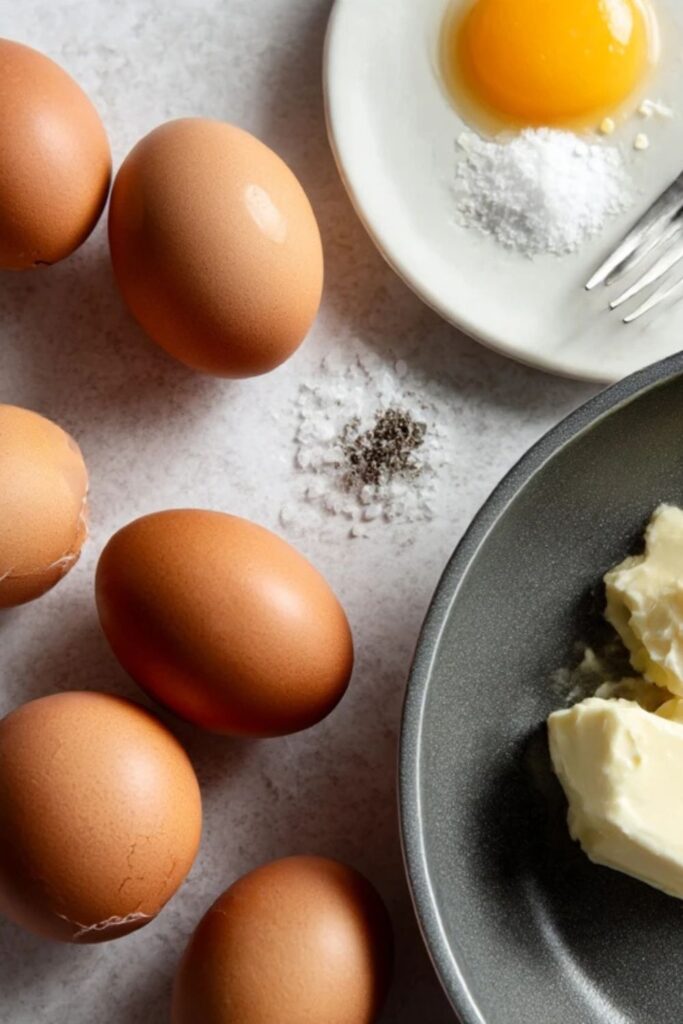
- 2-3 large eggs
- Pinch of salt
- Pinch of pepper
- 1 Tb butter
- Optional fillings: grated cheese, fresh herbs, sautéed mushrooms, ham
Equipment
- 7-8 inch nonstick or well-seasoned omelet pan
- Fork for stirring
- Warm plate
How To Make Julia Child French Omelette
Step 1: Prep
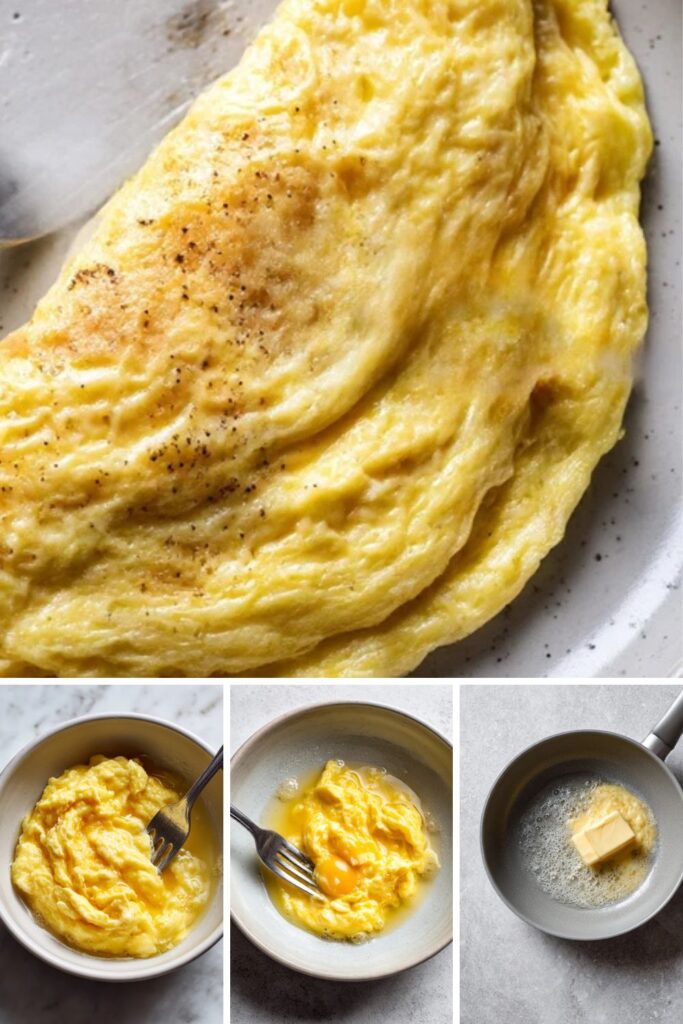
- Beat eggs lightly: Just until yolks and whites are blended. Don’t overbeat.
- Season: Add salt and pepper.
- Warm a plate: The omelette cools fast.
Step 2: Cook (30 seconds)
- Heat butter: Set pan over high heat. Add butter. When foam subsides and butter is just starting to brown, add eggs.
- Shake and stir: Immediately shake pan back and forth while stirring eggs with flat of fork. This creates small curds.
- Let set: After a few seconds, stop stirring. Let bottom set while top stays creamy.
- Add fillings now: If using cheese or herbs, sprinkle across the center.
Step 3: Fold and Plate
- Tilt and fold: Tilt pan, use fork to fold near edge toward center.
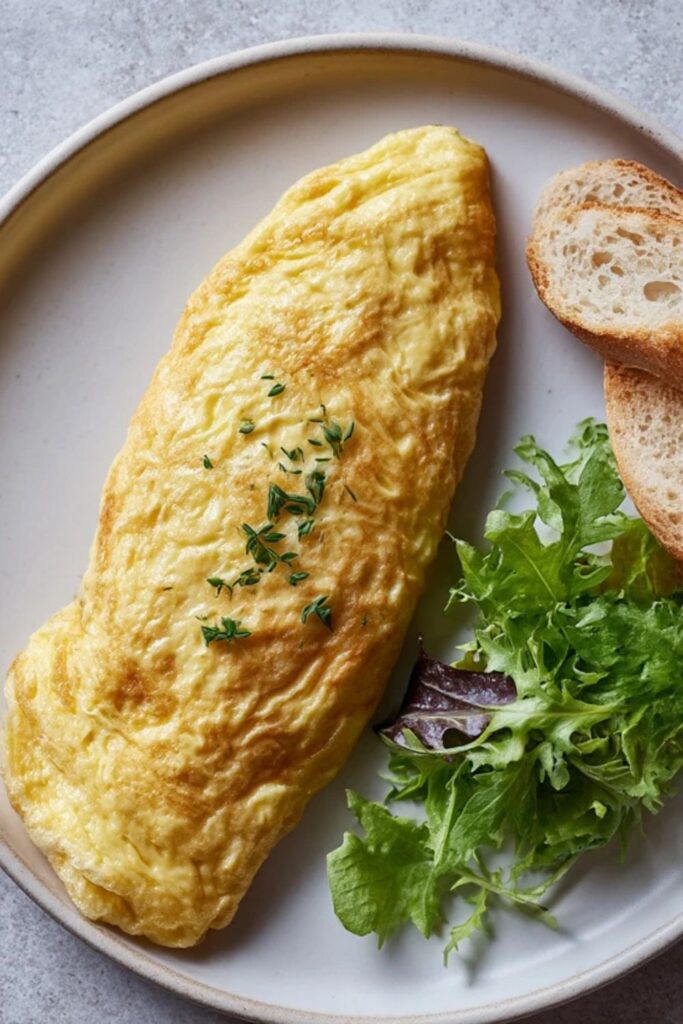
- Roll onto plate: Slide omelette to edge of pan, flip onto warm plate seam-side down.
- Serve immediately: An omelette waits for no one.
Recipe Tips
- High heat is essential: The pan must be hot enough that butter browns in seconds. Hesitation makes rubbery eggs.
- Shake constantly: The jerking motion keeps eggs moving so they cook evenly.
- Stop just before done: Residual heat finishes cooking. If it looks done in the pan, it’s overdone on the plate.
- Practice makes perfect: Your first few will be scrambled. That’s fine. Keep going.
- One at a time: Never try to make an omelette for more than one person in one pan.
- Warm the plate: Cold plates steal heat and make the omelette rubbery.
Classic Fillings
| Style | Filling |
|---|---|
| Aux Fines Herbes | Parsley, chives, tarragon, chervil |
| Au Fromage | Gruyère or Parmesan, grated |
| Au Jambon | Thin strips of ham |
| Aux Champignons | Sautéed mushrooms |
| Provençale | Tomatoes, garlic, herbs |
Add fillings after eggs set but before folding. About 2 Tb per omelette.
The Jerking Motion
Julia’s famous technique explained:
Hold the pan handle with your dominant hand. Jerk the pan sharply toward you while simultaneously pushing it slightly forward. This causes eggs to jump and flip. Practice with dry beans first if nervous.
The goal: keep eggs moving constantly so curds form but nothing sticks.
Julia’s Television Moment
Julia demonstrated this technique countless times, most memorably stating that if your first omelette fails, just dump it out and try again. Nobody needs to know.
Her point: don’t be precious about it. Speed and confidence matter more than caution.
Recipe Variations
Rolled omelette (classic French): Fold in thirds like a letter, roll onto plate.
Folded omelette (American style): Fold in half as it slides onto plate.
Flat omelette (frittata-style): Don’t fold. Finish under broiler. Cut in wedges.
What To Serve Alongside
Keep it simple:
- Crusty bread or toast
- Green salad
- Crispy bacon or sausage
- Fresh fruit
- Coffee
How To Store
Omelettes don’t store. Eat immediately. Cold omelette is rubbery omelette.
Leftover eggs: If you’ve beaten too many, refrigerate the raw beaten eggs and use within a day.
Nutrition Facts
Per omelette (2 eggs, no filling):
- Calories: 220 kcal
- Protein: 13g
- Total Fat: 18g
- Saturated Fat: 8g
- Carbohydrates: 1g
- Fiber: 0g
- Sugar: 0g
- Sodium: 210mg
- Cholesterol: 400mg
FAQs
Pan was too hot, or you cooked too long. French omelettes should be pale yellow, not browned.
Overcooked. Remove from heat while center is still creamy.
A well-seasoned or nonstick 7-8 inch pan works best. The eggs must release easily.
Not really. More than 3 eggs and the outside overcooks before the inside sets. Make two.
Stir with a fork instead. Not as elegant, but works.

Julia Child French Omelette Recipe
Course: BreakfastCuisine: AmericanDifficulty: Easy1
servings2
minutes1
minute220
kcalMaster the art of the 60-second Julia Child French Omelette. This recipe uses high heat and speed to create a tender, pale yellow roll of eggs with a creamy, custard-like center. It is the ultimate test of a cook’s skill, yet simple enough for breakfast.
Ingredients
2-3 large eggs
Pinch of salt
Pinch of pepper
1 Tb butter
Optional fillings: grated cheese, fresh herbs, sautéed mushrooms, ham
Directions
- Step 1: Prep
- Beat eggs lightly: Just until yolks and whites are blended. Don’t overbeat.
- Season: Add salt and pepper.
- Warm a plate: The omelette cools fast.
- Step 2: Cook (30 seconds)
- Heat butter: Set pan over high heat. Add butter. When foam subsides and butter is just starting to brown, add eggs.
- Shake and stir: Immediately shake pan back and forth while stirring eggs with flat of fork. This creates small curds.
- Let set: After a few seconds, stop stirring. Let bottom set while top stays creamy.
- Add fillings now: If using cheese or herbs, sprinkle across the center.
- Step 3: Fold and Plate
- Tilt and fold: Tilt pan, use fork to fold near edge toward center.
- Roll onto plate: Slide omelette to edge of pan, flip onto warm plate seam-side down.
- Serve immediately: An omelette waits for no one.
Notes
- High heat is essential: The pan must be hot enough that butter browns in seconds. Hesitation makes rubbery eggs.
- Shake constantly: The jerking motion keeps eggs moving so they cook evenly.
- Stop just before done: Residual heat finishes cooking. If it looks done in the pan, it’s overdone on the plate.
- Practice makes perfect: Your first few will be scrambled. That’s fine. Keep going.
- One at a time: Never try to make an omelette for more than one person in one pan.
- Warm the plate: Cold plates steal heat and make the omelette rubbery.
Source: Based on Julia Child’s technique from Mastering the Art of French Cooking and her television demonstrations
– Claire