 Claire
This thick, glossy Julia Child homemade mayonnaise is made with egg yolks, good oil, wine vinegar, and dry mustard — and it comes together in about 10 minutes by hand or 3 minutes in a food processor. Adapted from pages 86-91 of Mastering the Art of French Cooking, it’s the foundation for aioli, tartar sauce, rémoulade, and dozens of classic French cold sauces.
I avoided making mayonnaise by hand for years — it seemed fussy and easy to mess up. Then I followed Julia’s method exactly, and within five minutes I had something silky and bright that made jarred mayo taste like plastic by comparison. Now I keep a batch in the fridge at all times.
Jump to RecipeHow Is Julia Child’s Mayonnaise Different From Other Recipes?
Julia’s method from 1961 is different from modern internet recipes in three key ways.
First, she insists on warming the bowl in hot water before starting. Cold ceramic kills emulsification before it begins — most recipes skip this, and most failures start here.
Second, she adds 2 tablespoons of boiling water at the very end. Almost nobody teaches this anymore, but it stabilises the emulsion so the mayo holds for days in the fridge instead of breaking overnight.
Third, she gives you exact safety limits: no more than ¾ cup of oil per yolk maximum, with ½ cup being the safe ratio for beginners. Other recipes just say “add oil until thick” — Julia tells you the science of why it breaks if you go too far.
Hand-Whisked vs. Food Processor (and Blender)
Julia taught both. Both work.
| Hand-Whisked | Food Processor |
|---|---|
| 10 minutes | 3 minutes |
| Meditative, teaches technique | Foolproof, faster |
| 3 yolks, up to 2¼ cups oil | 1 egg + 2 yolks, 2 cups oil |
| Better for small batches | Better for larger batches |
Start with the processor if you’ve never made mayo. Move to hand-whisked once you want to understand what’s happening.
Julia also covers the electric blender method, which works but produces slightly thinner results. The food processor gives the best machine-made texture. If you only have a blender, use the food processor proportions and add the oil as slowly as the machine allows.
What Do You Need for Julia Child’s Homemade Mayonnaise?
From Mastering the Art of French Cooking, Vol. 1, Pages 86-91.
Hand-Whisked (2-2¼ cups):
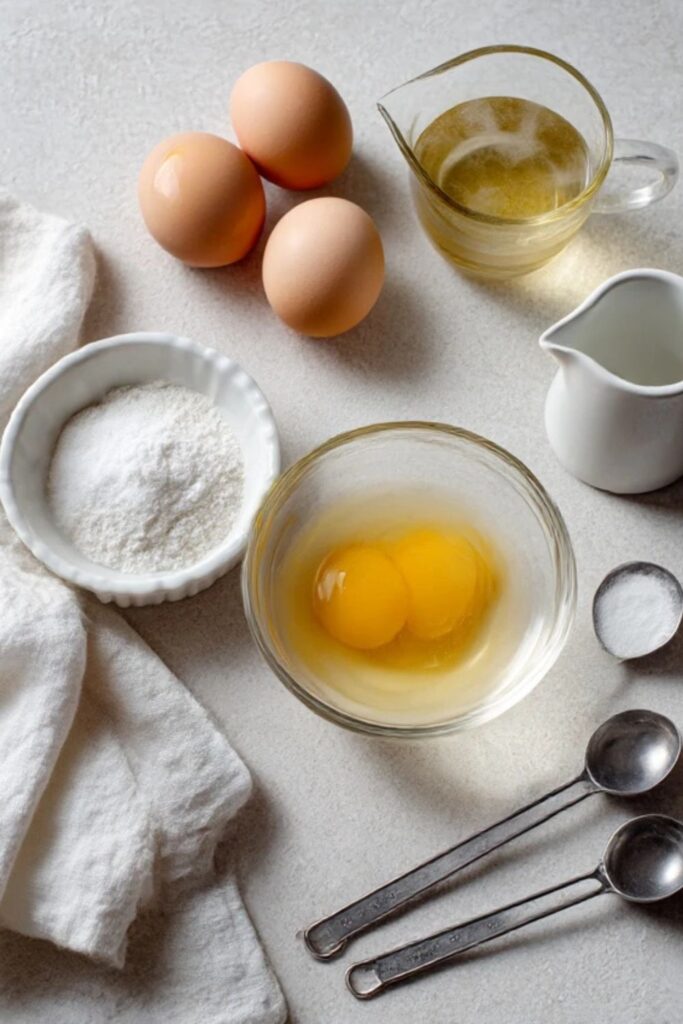
- 3 egg yolks, room temperature
- 1 Tb wine vinegar or lemon juice
- ½ tsp salt
- ¼ tsp dry mustard
- 1½-2¼ cups oil (olive, vegetable, or mix)
- 2 Tb boiling water (anti-curdling insurance)
Food Processor (2 cups):
- 1 whole egg + 2 egg yolks
- ¼ tsp dry mustard
- ½ tsp salt
- 1 tsp lemon juice or vinegar
- 2 cups oil
How Do You Make Julia Child’s Mayonnaise by Hand?
Step 1: Prep
- Warm the bowl: Rinse in hot water, dry completely.
- Beat yolks until thick: 1-2 minutes until sticky and pale.
- Add vinegar, salt, mustard: Beat 30 seconds more.
Step 2: Add Oil Slowly
- Start drop by drop: Literally drops. Watch the oil, not the sauce.
- Beat constantly at 2 strokes per second: Don’t stop until it thickens.
- After ⅓-½ cup, it thickens: You’ll know the emulsion has formed when the mixture suddenly shifts from thin and liquidy to thick and creamy — it happens fast, almost in a single stroke. That’s the moment Julia wanted you to feel. The crisis is over. Your arm can rest.
Step 3: Continue and Finish
- Add remaining oil in dollops: 1-2 Tb at a time, beating after each.
- Thin if needed: Add drops of lemon juice if sauce gets too thick.
- Beat in boiling water: 2 Tb prevents curdling later.
- Season to taste.

How Do You Make Julia Child’s Mayonnaise in a Food Processor?
- Process egg and yolks 1 minute.
- Add mustard, salt, 1 tsp lemon juice. Process briefly.
- With machine running, add oil in thin stream. Don’t stop until thick (after about half the oil).
- Thin with more lemon juice. Continue adding oil.
- Season carefully. Taste and adjust.
What Are the Most Common Mayonnaise Mistakes?
- Using extra virgin olive oil in the blender or food processor. The blade creates friction that releases bitter compounds from EVOO. Use light olive oil or a neutral oil for machine methods. Save the good extra virgin for hand-whisked mayo where it won’t turn bitter.
- Adding oil too fast in the first 30 seconds. This is where 90% of failures happen. Julia says “drop by drop” and she means it. After the first ⅓ cup absorbs and the sauce visibly thickens, you can speed up. Not before.
- Using cold eggs straight from the fridge. The proteins in cold yolks resist bonding with oil. Pull your eggs out 30 minutes before starting, or warm them in a bowl of lukewarm water for 5 minutes.
- Making too much in one batch. Stick to 3 yolks maximum per batch by hand. If you need more, make two separate batches and combine them after. Overloading the yolks is how you exceed the ¾ cup per yolk limit and end up with soup.
What Do You Do If Your Mayonnaise Breaks?
It happens. Julia’s remedy always works:
- Warm a clean bowl in hot water. Dry it.
- Add 1 tsp prepared mustard and 1 Tb of the broken sauce.
- Beat until they thicken together.
- Add the rest of the broken sauce, 1 tsp at a time, thickening after each.
- It will come back.
Classic Variations
- Mayonnaise Verte (Green Herb Mayo): Blanch a handful each of spinach, watercress, and parsley for 10 seconds, then squeeze completely dry and purée until smooth. Stir the green paste into finished mayonnaise for a bright, herbaceous sauce. Julia serves this with cold fish, poached eggs, and cold vegetables.
- Sauce Tartare: Stir finely chopped cornichons, capers, shallots, and fresh tarragon into your finished mayonnaise. The classic accompaniment to fried fish in French cooking. Add a squeeze of lemon just before serving.
- Sauce Rémoulade: A more assertive variation with anchovy paste, Dijon mustard, chopped cornichons, capers, and herbs stirred into the base mayonnaise. Julia pairs this with cold shellfish, cold meats, and céleri rémoulade.
- Aioli (Garlic Mayonnaise): Traditional Provençal aioli starts with garlic pounded to a paste in a mortar, then builds the emulsion with olive oil and egg yolk. Julia says the mortar and pestle version is superior to any machine method. See our Julia Child Aioli Recipe →
Oil Choices
| Oil | Flavor | Best For |
|---|---|---|
| Neutral/vegetable | Mild, clean | All-purpose mayo |
| Light olive | Subtle fruitiness | Mediterranean dishes |
| Extra virgin olive | Strong, peppery | Bold, traditional — can turn bitter in blender |
| Mix of neutral + olive | Balanced | Best of both |
| Canola | Very mild, neutral | Most popular for beginners |
How To Store
- Refrigerator: Up to 1 week in sealed container.
- May thin when cold: Wait until room temperature to stir, or use Julia’s rescue if it breaks.
- No freezing: Texture is destroyed.
- Raw egg note: Uses raw yolks. Use fresh eggs from a trusted source.

Nutrition Facts
Per 1 Tb serving:
- Calories: 95 kcal
- Protein: 0g
- Total Fat: 10g
- Saturated Fat: 1.5g
- Carbohydrates: 0g
- Fiber: 0g
- Sugar: 0g
- Sodium: 40mg
- Cholesterol: 15mg

Julia Child’s Homemade Mayonnaise Recipe
Course: SauceCuisine: French, AmericanDifficulty: Easy2
servings10
minutes98
kcalJulia Child Mayonnaise is the gold standard of French condiments. By hand-whisking yolks and oil, you create a silky, golden sauce with a depth of flavor that mass-produced versions cannot match. It is rich, lemony, and perfect for salads or sandwiches.
Ingredients
- Hand-Whisked (2-2¼ cups):
3 egg yolks, room temperature
1 Tb wine vinegar or lemon juice
½ tsp salt
¼ tsp dry mustard
1½-2¼ cups oil (olive, vegetable, or mix)
2 Tb boiling water (anti-curdling insurance)
- Food Processor (2 cups):
1 whole egg + 2 egg yolks
¼ tsp dry mustard
½ tsp salt
1 tsp lemon juice or vinegar
2 cups oil
Directions
- Step 1: Prep
- Warm the bowl: Rinse in hot water, dry completely.
- Beat yolks until thick: 1-2 minutes until sticky and pale.
- Add vinegar, salt, mustard: Beat 30 seconds more.
- Step 2: Add Oil Slowly
- Start drop by drop: Literally drops. Watch the oil, not the sauce.
- Beat constantly at 2 strokes per second: Don’t stop until it thickens.
- After ⅓-½ cup, it thickens: The crisis is over. Your arm can rest.
- Step 3: Continue and Finish
- Add remaining oil in dollops: 1-2 Tb at a time, beating after each.
- Thin if needed: Add drops of lemon juice if sauce gets too thick.
- Beat in boiling water: 2 Tb prevents curdling later.
- Season to taste.
Notes
- Room temperature everything: Cold ingredients resist emulsifying. Warm the bowl. Use room-temp eggs.
- Drops first, then stream: First ½ cup of oil must go in slowly. After that, faster is fine.
- Never stop whisking (hand method): Constant motion keeps the emulsion forming.
- ½ cup oil per yolk is safe: Yolks can absorb up to ¾ cup each, but don’t push it if you’re new.
- Boiling water at the end: Julia’s insurance policy against separating later.
- Quality oil matters: Use something mild unless you want strong olive flavor.
Source: Mastering the Art of French Cooking, Vol. 1 by Julia Child, Pages 86-91
– Claire