 Claire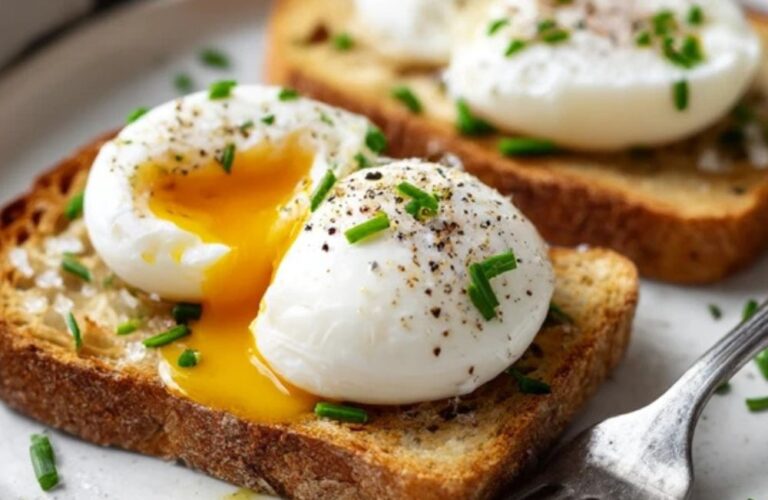
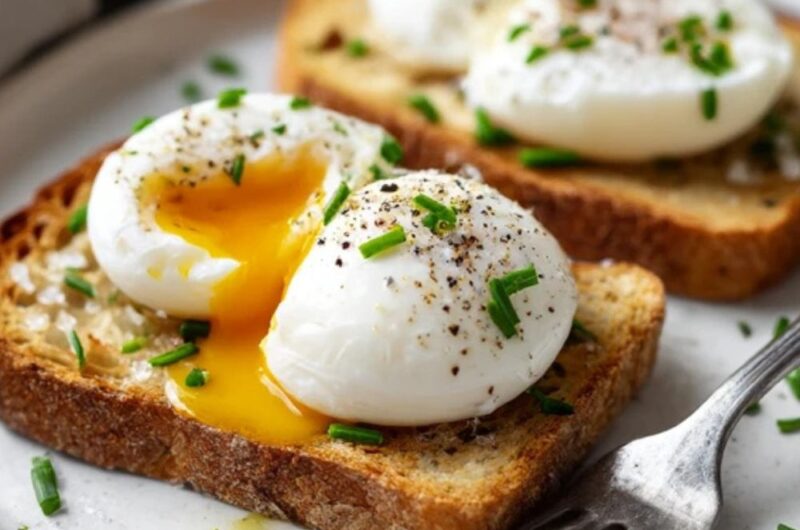
There’s a moment when a perfectly poached egg sits on your plate, and you press your fork into it, and the yolk breaks and runs out in a slow golden river. That’s the goal. Julia Child Poached Eggs are tender, shapely, with whites that cling to themselves and yolks that stay runny.
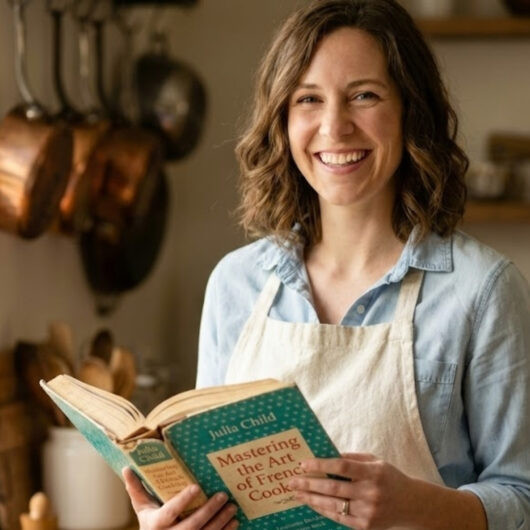
Julia taught poaching throughout her career, in Mastering the Art of French Cooking and on television. Her approach is practical, not fussy. Fresh eggs. Simmering water. A quick swirl. No gadgets, no drama, no vinegar if you don’t want it.
I used to think poached eggs were restaurant magic. Turns out they’re just about temperature and timing.
What are poached eggs? Eggs cooked gently in simmering water, out of the shell, until the whites set and the yolks remain runny. The base for Eggs Benedict, eggs Florentine, and dozens of French preparations.
Jump to RecipeWhy You’ll Love This Recipe
- Runny yolks, set whites: The entire point of poaching.
- No special equipment: A pot and a slotted spoon is all you need.
- Healthier than fried: No added fat in the cooking.
- Make-ahead friendly: Poach in advance, reheat in warm water.
- Foundation for classics: Eggs Benedict, eggs in aspic, eggs Meurette.
The Vinegar Debate
Some add vinegar to the water. Julia’s view: it helps the whites coagulate, but if your eggs are fresh, you don’t need it. Slightly stale eggs benefit from a tablespoon of vinegar. Fresh eggs from a good source hold together on their own.
Julia Child Poached Eggs Ingredients
Based on Julia Child’s technique. Per serving.
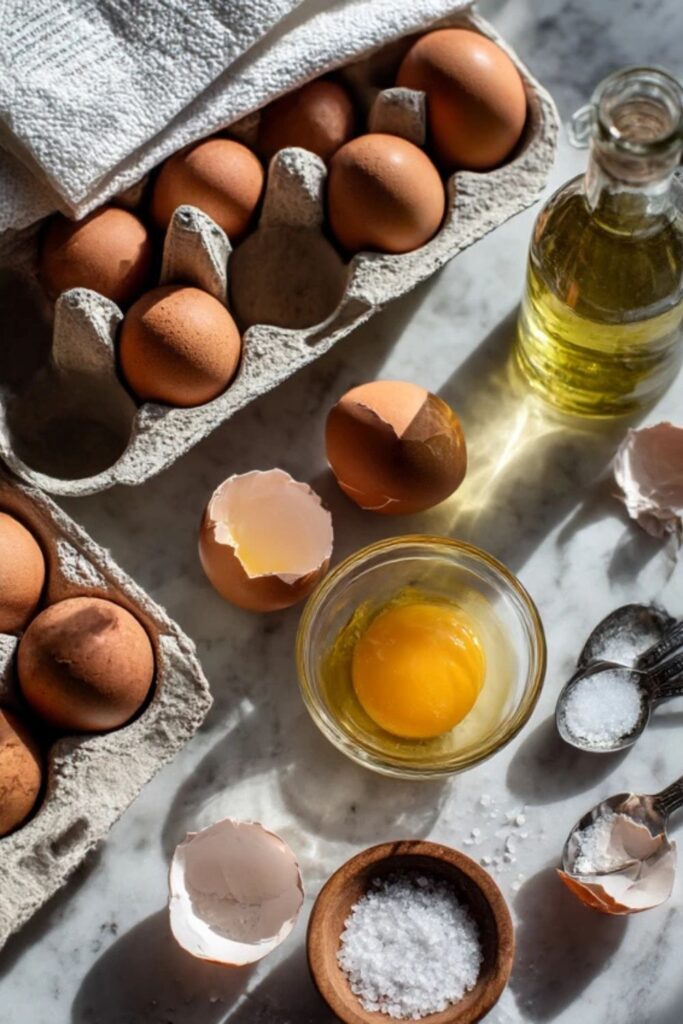
- 1-4 large eggs, as fresh as possible
- Water, about 3 inches deep
- 1 Tb white vinegar (optional)
- Pinch of salt (optional)
Equipment
- Wide saucepan or deep skillet
- Slotted spoon
- Small bowl or cup for cracking eggs
- Paper towels for draining
- Bowl of warm water for holding
How To Make Julia Child Poached Eggs
Step 1: Prep
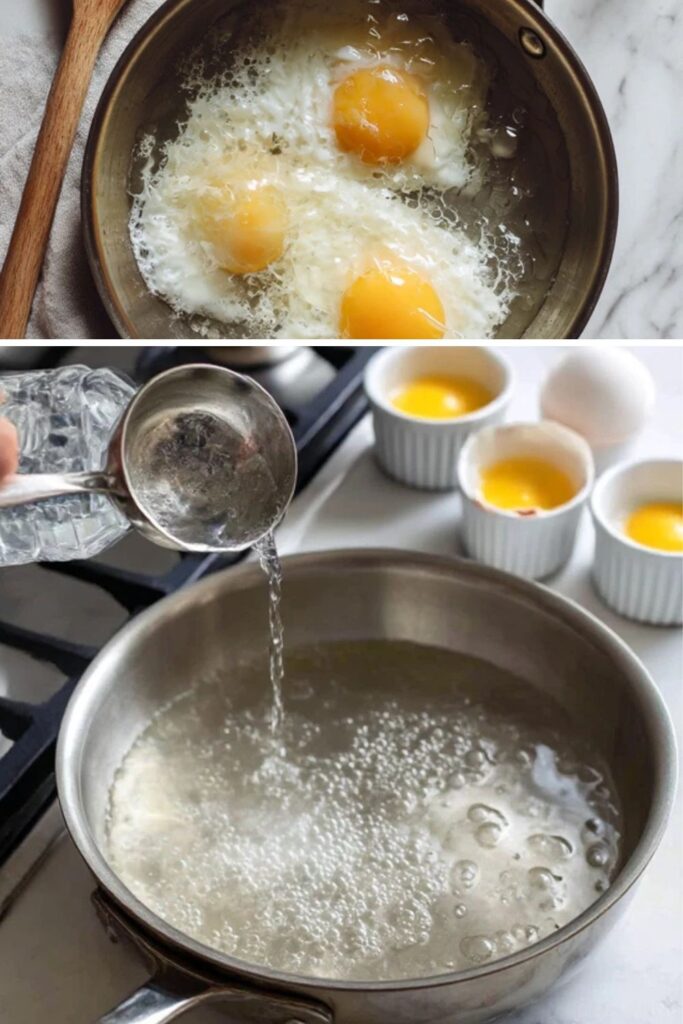
- Bring water to a simmer: Fill pan with 3 inches of water. Heat until tiny bubbles appear on the bottom, around 180°F. Not a rolling boil.
- Add vinegar if using: A tablespoon helps whites set faster. Optional.
- Crack eggs into cups: One egg per small bowl or cup. This makes adding easier.
Step 2: Poach
- Create a gentle swirl: Use a spoon to stir the water in one direction. The vortex helps the white wrap around the yolk.
- Slip egg into center: Lower the cup to the water’s surface and let the egg slide in gently.
- Don’t touch it yet: Let it set for 30 seconds before you fuss with it.
- Cook 3-4 minutes: Until whites are set but yolks still feel soft when gently pressed.
Step 3: Remove and Drain
- Lift with slotted spoon: Let water drain back into the pan.
- Trim if needed: Snip any ragged edges with scissors for a cleaner look.
- Blot on paper towel: Removes excess water.
- Serve immediately or hold in warm water: See make-ahead section below.
Recipe Tips
- Fresh eggs are essential: Old eggs have watery whites that spread out in the water. Fresh eggs hold together in a tight oval.
- Simmer, don’t boil: Rolling boil tears the eggs apart. You want gentle bubbles barely breaking the surface.
- One at a time (at first): Until you’re confident. Then you can do 2-3 at once.
- The swirl helps: Creates a vortex that wraps the white around the yolk. Not required, but makes prettier eggs.
- Trim the stragglers: Scissors make quick work of wispy edges.
- Warm water holds them: Drop finished eggs into a bowl of warm (not hot) water until ready to serve.
Make-Ahead Poached Eggs
This is the restaurant secret.
To make ahead:
- Poach eggs until just barely set.
- Immediately transfer to ice water to stop cooking.
- Refrigerate in cold water for up to 24 hours.
To reheat:
- Lower cold eggs into simmering water for 30-60 seconds.
- Just long enough to warm through but not cook further.
- Drain and serve.
This is how brunch restaurants serve dozens of Eggs Benedicts at once.
What To Serve With Poached Eggs
- Eggs Benedict: English muffin, Canadian bacon, hollandaise.
- Eggs Florentine: Sautéed spinach, toasted bread, hollandaise.
- Eggs in Aspic: Chilled poached eggs set in savory meat jelly. Very French.
- Eggs Meurette: Poached in red wine sauce from Burgundy.
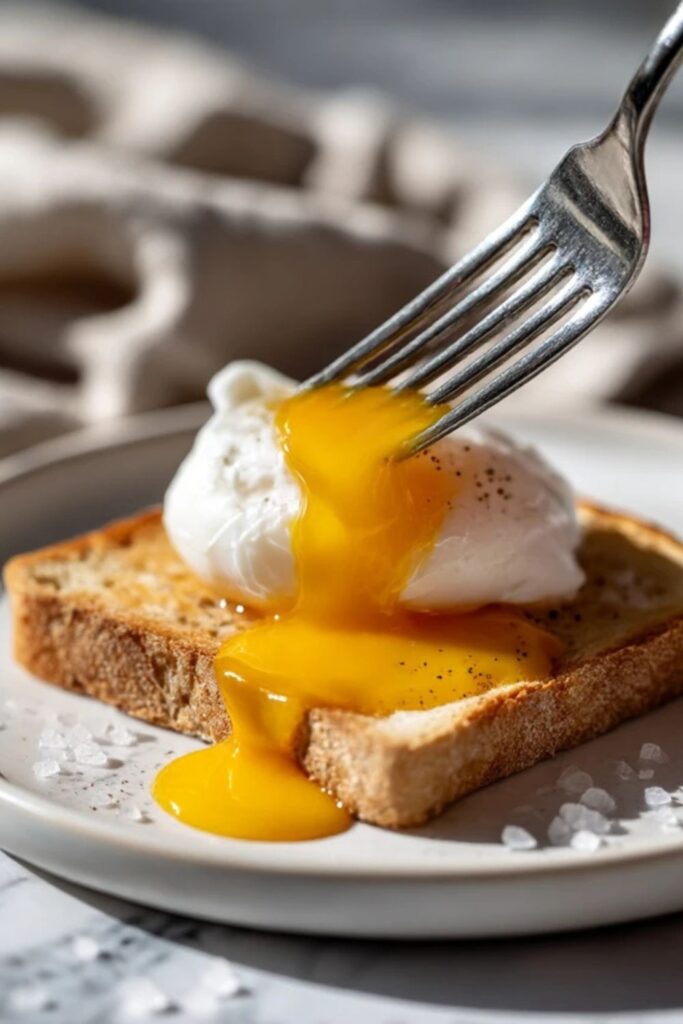
- On toast: Simple. Butter. Salt. Sometimes that’s all you need.
- Over salad: Frisée aux lardons with a poached egg is a French bistro classic.
Troubleshooting
| Problem | Cause | Fix |
|---|---|---|
| Whites spread everywhere | Eggs not fresh enough | Add vinegar or use fresher eggs |
| Yolks overcooked | Water too hot or too long | Lower to simmer, reduce time |
| Eggs stuck together | Poached too close | Give each egg space |
| Ugly shape | Didn’t swirl, or eggs added too roughly | Swirl first, lower gently |
How To Store
Fresh: Serve immediately for best texture.
Make-ahead: Poach, chill in ice water, refrigerate in water for up to 24 hours. Reheat in simmering water 30-60 seconds.
Cannot freeze: Texture becomes rubbery.
Nutrition Facts
Per egg:
- Calories: 70 kcal
- Protein: 6g
- Total Fat: 5g
- Saturated Fat: 1.5g
- Carbohydrates: 0g
- Fiber: 0g
- Sugar: 0g
- Sodium: 70mg
- Cholesterol: 185mg
FAQs
Not if eggs are fresh. Vinegar helps older eggs hold together.
Whites are fully set, yolk feels soft when gently pressed. About 3-4 minutes.
Yes, once you’re comfortable. Add them one by one with a few seconds between. Give each space.
Water was boiling too hard, or egg wasn’t fresh. Simmer gently.
They poach ahead and hold in cold water. Reheat to order.
Julia Child Poached Eggs Recipe
Course: BreakfastCuisine: American, FrenchDifficulty: Easy2
servings4
minutes5
minutes70
kcalMaster the Julia Child Poached Eggs technique. By using fresh eggs, vinegar, and a gentle simmer, you can create restaurant-quality eggs with tidy whites and perfectly runny yolks. Ideal for Eggs Benedict or simple toast.
Ingredients
1-4 large eggs, as fresh as possible
Water, about 3 inches deep
1 Tb white vinegar (optional)
Pinch of salt (optional)
Directions
- Step 1: Prep
- Bring water to a simmer: Fill pan with 3 inches of water. Heat until tiny bubbles appear on the bottom, around 180°F. Not a rolling boil.
- Add vinegar if using: A tablespoon helps whites set faster. Optional.
- Crack eggs into cups: One egg per small bowl or cup. This makes adding easier.
- Step 2: Poach
- Create a gentle swirl: Use a spoon to stir the water in one direction. The vortex helps the white wrap around the yolk.
- Slip egg into center: Lower the cup to the water’s surface and let the egg slide in gently.
- Don’t touch it yet: Let it set for 30 seconds before you fuss with it.
- Cook 3-4 minutes: Until whites are set but yolks still feel soft when gently pressed.
- Step 3: Remove and Drain
- Lift with slotted spoon: Let water drain back into the pan.
- Trim if needed: Snip any ragged edges with scissors for a cleaner look.
- Blot on paper towel: Removes excess water.
- Serve immediately or hold in warm water: See make-ahead section below.
Notes
- Fresh eggs are essential: Old eggs have watery whites that spread out in the water. Fresh eggs hold together in a tight oval.
- Simmer, don’t boil: Rolling boil tears the eggs apart. You want gentle bubbles barely breaking the surface.
- One at a time (at first): Until you’re confident. Then you can do 2-3 at once.
- The swirl helps: Creates a vortex that wraps the white around the yolk. Not required, but makes prettier eggs.
- Trim the stragglers: Scissors make quick work of wispy edges.
- Warm water holds them: Drop finished eggs into a bowl of warm (not hot) water until ready to serve.
Source: Based on Julia Child’s technique from Mastering the Art of French Cooking
– Claire