 Claire
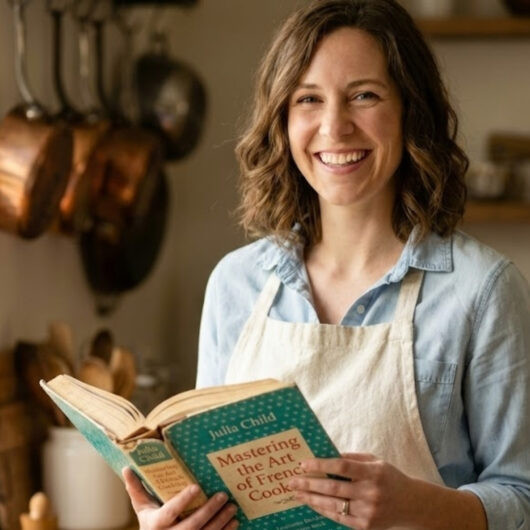
Julia Child Roast Chicken is her definitive test of a cook. Julia writes in Mastering the Art of French Cooking (pages 240-243): “You can always judge the quality of a cook or a restaurant by roast chicken. While it does not require years of training to produce a juicy, brown, buttery, crisp-skinned, heavenly bird, it does entail such a greed for perfection that one is under compulsion to hover over the bird, listen to it, above all see that it is continually basted.”
I’ve made hundreds of roast chickens in my life, and Julia’s method remains the gold standard. The secret? High-heat browning, constant basting, and turning the bird so every side gets its moment of glory. The result is crispy, burnished skin and meat so juicy it practically swoons off the bone.
Why Julia’s method works: Start at 425°F to brown the skin, drop to 350°F and baste every 8-10 minutes. Turn the bird on its sides during roasting so the thighs get direct heat. Rest before carving.
Jump to RecipeWhy You’ll Love This Recipe
- The Julia standard: She said it herself – this is how you judge a cook.
- Crispy skin, juicy meat: High-heat browning plus constant basting creates perfection.
- Simple but precise: No fancy ingredients. Just butter, salt, and perfect technique.
- Built-in pan sauce: The deglazing sauce takes just minutes and transforms the dish.
- Foundational recipe: Master this and you understand Julia’s philosophy.
Roasting Timetable
| Chicken Weight | Roasting Time (at 350°F after browning) |
|---|---|
| 3 lbs | 1 hour 10-20 minutes |
| 4 lbs | 1 hour 15-25 minutes |
| 5 lbs | 1 hour 20-30 minutes |
| 6 lbs | 1 hour 25-35 minutes |
| 7 lbs | 1 hour 30-40 minutes |
Stuffed chicken: add 10-30 minutes. Final temperature: 175-180°F (190°F for well-done).
Julia Child Roast Chicken Ingredients
From Mastering the Art of French Cooking, Vol. 1, Pages 240-243. Serves 4.
For the Chicken:
- 1 (3 lb) roasting or frying chicken
- ¼ tsp salt (for cavity)
- 2 Tb softened butter (1 for cavity, 1 for skin)
For Basting:
- 2 Tb melted butter
- 1 Tb good cooking oil
- A basting brush
For Roasting:
- A shallow roasting pan just large enough for the chicken
- 1 small carrot, sliced
- 1 small onion, sliced
For the Deglazing Sauce:
- ½ Tb minced shallot or green onion
- 1 cup brown chicken stock (or canned broth)
- Salt and pepper
- 1-2 Tb softened butter (enrichment)

How To Make Julia Child Roast Chicken
- Preheat Oven: Set to 425°F.
- Season the Cavity: Sprinkle inside of chicken with ¼ tsp salt and smear in 1 Tb butter.
- Truss the Chicken: See trussing instructions below.
- Butter the Skin: Dry chicken thoroughly and rub skin with remaining 1 Tb butter.
- Set Up for Roasting: Place chicken breast-up in roasting pan. Scatter sliced carrot and onion around it.
- Initial Browning (15 minutes at 425°F): Roast breast-up for 5 minutes, turn to left side for 5 minutes, turn to right side for 5 minutes. Baste with melted butter and oil after each turn.
- Reduce Heat: Lower oven to 350°F.
- Roast with Basting: Leave chicken on its side. Baste every 8-10 minutes using pan fat.
- Halfway Through: Salt the chicken (¼ tsp) and turn to the other side. Continue basting.
- 15 Minutes Before End: Salt again (¼ tsp) and turn breast-up. Continue basting.
- Check Doneness: Drumstick should feel tender and move in its socket. Prick thickest part – juices should run clear yellow. Drain vent – last drops should be clear yellow.
- Rest: Remove from oven, discard trussing strings, set on hot platter. Let rest 5-10 minutes before carving.
- Make Sauce: Remove all but 2 Tb fat from pan. Stir in minced shallot, cook 1 minute. Add stock, boil rapidly while scraping up juices. Reduce to ½ cup. Season. Off heat, swirl in butter. Pour spoonful over chicken.

How To Truss a Chicken (Julia’s Method)
Julia’s French trussing method uses a needle and white string:
Tie 1 (at the tail):
- Thrust needle through the lower carcass
- Come back over one drumstick, through the breastbone tip, over the second drumstick
- Tie securely
Tie 2 (at the breast):
- Push needle through where thigh meets drumstick, coming out the other side
- Turn chicken breast-down
- Fold wings akimbo
- Go through one wing, catch neck skin against backbone, come out other wing
- Draw tightly and tie
For simpler trussing, tie legs together with kitchen string and tuck wing tips under the bird.
Recipe Tips
- Quality chicken matters. Julia says: “A chicken should taste like chicken and be so good in itself that it is an absolute delight to eat.”
- Room temperature bird. Remove from refrigerator 30 minutes before roasting for even cooking.
- Basting is everything. Julia calls this the secret to a perfect roast. Every 8-10 minutes.
- Turn the bird. Roasting on its sides ensures the thighs cook properly.
- Don’t overcook. “While an underdone chicken is not fit to eat, it is a shame to overcook chicken, allowing the meat to dry out.”
- Let it rest. 5-10 minutes so juices redistribute.
- Thaw frozen chicken slowly. Julia says the best method is the slowest: leave it in its wrapper and thaw in the refrigerator. It loses less juice and flavor.
- Never stuff ahead of time. Stuffings may be prepared in advance, but never stuff a chicken until just before cooking – the mixture may sour and spoil the meat.
Recipe Variations
Poulet Rôti à la Normande (Cream-Basted): Roast as usual, but during the last 10 minutes, baste every 3-4 minutes with whipping cream (1 cup total). The cream combines with pan juices for an incredibly rich sauce. Serve with sautéed mushrooms.
Poulet au Porto (Port Wine & Mushrooms): Roast the chicken, then carve and flame with cognac. Steep for 5 minutes in a sauce of sautéed mushrooms, port wine, and cream thickened with cornstarch.
Herb Butter Variation: Mix 4 Tb softened butter with fresh herbs (thyme, rosemary, tarragon). Loosen the skin and spread herb butter under the skin before roasting.
What To Serve With Roast Chicken
Julia’s suggestions:
- Broiled tomatoes with buttered green beans or peas
- Sautéed, roasted, or fried potatoes
- Potato crêpes or a potato casserole
- Stuffed mushrooms with glazed carrots and onions
- Ratatouille with sautéed potatoes
Wine: A light red Bordeaux-Médoc or a rosé.

Make-Ahead Tips
The Day Before:
- Remove giblets and pat chicken dry
- Season with salt, refrigerate uncovered for crispier skin
30 Minutes Before:
- Remove chicken from refrigerator to come to room temperature
- Prepare vegetables for the pan
Holding After Roasting: Julia says: “Roast chicken can wait for 20 to 30 minutes in the turned-off hot oven, its door ajar. It cannot be reheated or it loses its fresh and juicy quality.”
How To Store
Refrigerator: Carved chicken in airtight container for up to 4 days.
Freezer: Up to 3 months. Best for using in other dishes (salads, sandwiches).
Reheat: Gently in oven at 325°F with a splash of stock, or use cold in chicken salad.
Nutrition Facts
Per serving (1/4 chicken with skin):
- Calories: 350 kcal
- Protein: 35g
- Total Fat: 22g
- Saturated Fat: 8g
- Carbohydrates: 0g
- Fiber: 0g
- Sugar: 0g
- Sodium: 320mg
- Cholesterol: 130mg
FAQs
The thighs cook slower than the breast. Turning them toward the heat source ensures even cooking.
Every 8-10 minutes once you drop to 350°F. Julia says this is the secret to perfect roast chicken.
175-180°F in the thickest part of the thigh. Julia says 190°F for “well-done American style.”
No. You can simply tie the legs together with kitchen string and tuck the wing tips under the bird.
The 5-10 minute rest allows juices to retreat back into the tissues, making the meat more moist and flavorful.
Yes, but you’ll get more even cooking and crispier skin all around with Julia’s turning method.

Julia Child Roast Chicken Recipe
Course: Dinner, MainCuisine: French, AmericanDifficulty: Easy4
servings20
minutes1
hour20
minutes350
kcalJulia Child Roast Chicken is a definitive French recipe that yields a perfectly golden, crispy-skinned bird. By turning the chicken during roasting and basting frequently with butter, the breast meat stays incredibly moist while the legs cook to tenderness.
Ingredients
- For the Chicken:
1 (3 lb) roasting or frying chicken
¼ tsp salt (for cavity)
2 Tb softened butter (1 for cavity, 1 for skin)
- For Basting:
2 Tb melted butter
1 Tb good cooking oil
A basting brush
- For Roasting:
A shallow roasting pan just large enough for the chicken
1 small carrot, sliced
1 small onion, sliced
- For the Deglazing Sauce:
½ Tb minced shallot or green onion
1 cup brown chicken stock (or canned broth)
Salt and pepper
1-2 Tb softened butter (enrichment)
Directions
- Preheat Oven: Set to 425°F.
- Season the Cavity: Sprinkle inside of chicken with ¼ tsp salt and smear in 1 Tb butter.
- Truss the Chicken: See trussing instructions below.
- Butter the Skin: Dry chicken thoroughly and rub skin with remaining 1 Tb butter.
- Set Up for Roasting: Place chicken breast-up in roasting pan. Scatter sliced carrot and onion around it.
- Initial Browning (15 minutes at 425°F): Roast breast-up for 5 minutes, turn to left side for 5 minutes, turn to right side for 5 minutes. Baste with melted butter and oil after each turn.
- Reduce Heat: Lower oven to 350°F.
- Roast with Basting: Leave chicken on its side. Baste every 8-10 minutes using pan fat.
- Halfway Through: Salt the chicken (¼ tsp) and turn to the other side. Continue basting.
15 Minutes Before End: Salt again (¼ tsp) and turn breast-up. Continue basting. - Check Doneness: Drumstick should feel tender and move in its socket. Prick thickest part – juices should run clear yellow. Drain vent – last drops should be clear yellow.
- Rest: Remove from oven, discard trussing strings, set on hot platter. Let rest 5-10 minutes before carving.
- Make Sauce: Remove all but 2 Tb fat from pan. Stir in minced shallot, cook 1 minute. Add stock, boil rapidly while scraping up juices. Reduce to ½ cup. Season. Off heat, swirl in butter. Pour spoonful over chicken.
Source: Mastering the Art of French Cooking, Vol. 1 by Julia Child, Pages 240-243
– Claire